Two restaurant technology and services platforms are positioning themselves as alternatives to the high-commission third-party delivery model that has squeezed independent operator margins for years. 5L Direct and 5L Food Services each attack a different side of the revenue problem — one focused on recapturing direct customer relationships, the other on monetizing idle kitchen capacity through wholesale order flow.
The Two Models
5L Direct provides independent restaurants with branded online ordering, customer relationship management, and integrated marketing tools designed to shift volume away from high-commission delivery marketplaces. The pitch is straightforward: operators that route repeat customers through a proprietary channel retain more margin per transaction and accumulate first-party data that fuels ongoing engagement — advantages that evaporate when orders run through aggregator platforms that collect commissions typically ranging from 15% to 30% of order value.
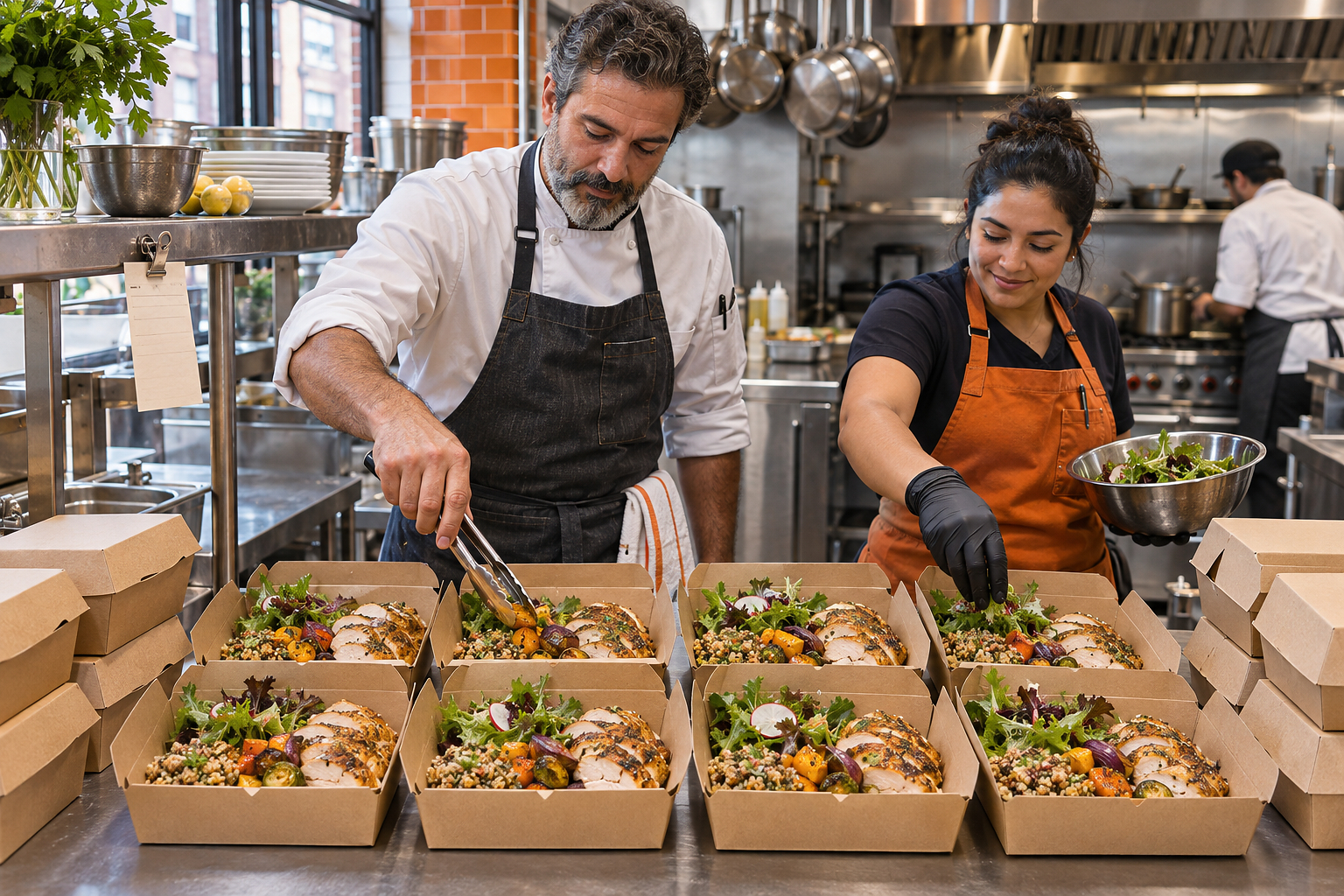
5L Food Services takes a structurally different approach. The company acts as a wholesale purchasing and marketing partner, sourcing orders from new customer pools and placing them with local restaurant kitchens at pre-agreed wholesale prices. Participating operators pay no upfront marketing fees and prepare food only against confirmed orders — a consignment-style arrangement that lets established kitchens generate incremental revenue without adding locations, dedicated sales headcount, or customer acquisition spend.
Why It Matters for Independents
The timing reflects persistent unit-economics pressure across the independent segment. Food and labor costs remain elevated versus pre-pandemic baselines, and the aggregator take rate has become a structural drag on store-level margin. For operators with excess capacity during off-peak dayparts, the 5L Food Services wholesale model offers a way to absorb fixed costs without discounting on-premise covers or running their own off-premise marketing.
The direct-ordering category has grown crowded — competitors include Olo, Owner.com, and a range of point-of-sale-integrated solutions — meaning 5L Direct will need to differentiate on price, ease of migration, or bundled marketing services to gain traction with cost-sensitive independent operators. The wholesale kitchen partnership model that 5L Food Services is pursuing shares conceptual DNA with virtual-brand incubators and ghost-kitchen networks, though the no-upfront-fee structure removes a barrier that has limited adoption of some earlier ghost-kitchen formats. For context on how virtual brands have evolved for independent operators, see our coverage in /category/technology-innovation.
Both platforms are designed to layer onto existing restaurant infrastructure rather than require capital investment, an asset-light posture that aligns with how many independents are approaching growth in a high-cost environment. Whether the wholesale pricing that 5L Food Services offers leaves enough margin to be meaningful for kitchen partners will be the operational question operators need to answer before signing on. Independent operators weighing off-premise channel strategy can review related analysis in /category/off-premise.
Restaurant Insider Magazine flagged both platforms as notable choices for restaurant growth, lending third-party editorial credibility to the launch messaging.
Written by Michael Politz, Author of Guide to Restaurant Success: The Proven Process for Starting Any Restaurant Business From Scratch to Success (ISBN: 978-1-119-66896-1), Founder of Food & Beverage Magazine, the leading online magazine and resource in the industry. Designer of the Bluetooth logo and recognized in Entrepreneur Magazine's "Top 40 Under 40" for founding American Wholesale Floral, Politz is also the Co-founder of the Proof Awards and the CPG Awards and a partner in numerous consumer brands across the food and beverage sector.