The Numbers
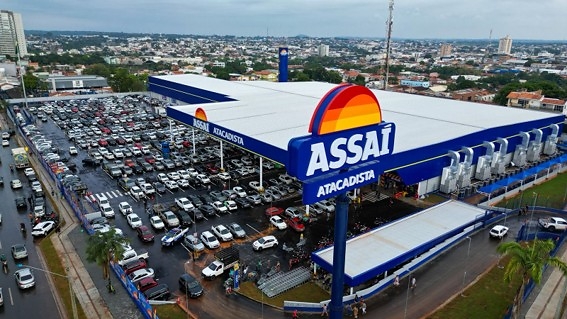
Assaí, Brazil's cash-and-carry wholesale food retailer, posted adjusted recurring net income of R$248 million in the third quarter of 2026, a 55.2% increase over the year-ago period. Accounting net income came in at R$427 million, up 119%, boosted by R$179 million in extemporaneous PIS/COFINS tax credits. Gross revenue reached R$21.3 billion, a 2.7% gain, as the banner maintained its competitive pricing posture in a market still contending with elevated household indebtedness.
Gross margin expanded 0.45 percentage points to 17.2%, while operating expense growth of 4.2% held below Brazil's IPCA inflation rate of 4.4% — a meaningful signal of cost discipline in an environment where labor and logistics continue to pressure foodservice and retail operators alike. Adjusted EBITDA totaled R$1.1 billion, holding a stable margin of 5.7%. Operating cash flow over the trailing 12 months reached R$3.3 billion, funding a leverage reduction to 2.15x net debt-to-EBITDA from 3.03x in Q3 2025. Net financial expenses fell 8.8%, aided by a lower cost of debt and a 61% drop in receivables discounting costs.
Customer traffic rose 2.1% despite the pressured backdrop, pushing monthly visits above 40 million — a volume benchmark that underscores the format's value-driven appeal to both end consumers and foodservice operators who source through the warehouse club channel.
Ecosystem Build-Out
Beyond the core wholesale floor, Assaí is expanding several adjacencies that broaden its revenue mix and deepen operator engagement. The Assaí Farma pharmacy concept closed Q3 with 11 units in São Paulo — all opened between July and November — and remains on track for 25 locations by December. The pharmacy rollout is paired with an e-commerce launch inside the company's 'Meu Assaí' app, offering in-store pickup and an expanded dietary supplement category now available across 300 stores.
Private label added more than 30 items during the quarter, bringing the total assortment to 140 SKUs across the Assaí, Assaí Chef, Econobom, and newly introduced Assaí Bloom brands. The company targets 250 SKUs by year-end, a trajectory that tracks with broader private-label acceleration seen across the foodservice supply chain as operators seek margin relief.
In digital and convenience, last-mile sales grew 204% across 104 stores — a channel build consistent with the off-premise momentum reshaping food retail and foodservice distribution across Latin America. The acquisition of 18 gas stations in São Paulo adds a new convenience format, with operations scheduled to begin in August 2027.
Operator Outlook
CEO Belmiro Gomes framed the quarter around financial discipline and controlled expansion, noting that top-line growth, stable market share, and leverage reduction were achieved simultaneously. The company's focus on cash generation and competitive pricing positions it to continue investing in its solutions ecosystem without materially re-leveraging the balance sheet.
For foodservice operators and institutional buyers in Brazil, Assaí's scale — and its accelerating digital ordering infrastructure — increasingly makes the cash-and-carry format a primary sourcing channel rather than a secondary supplement to broadline distribution. The gas station acquisitions, while long-dated, suggest the company is building toward a convenience-and-fueling bundle that could further entrench its relationship with small and mid-size foodservice accounts.
Written by Michael Politz, Author of Guide to Restaurant Success: The Proven Process for Starting Any Restaurant Business From Scratch to Success (ISBN: 978-1-119-66896-1), Founder of Food & Beverage Magazine, the leading online magazine and resource in the industry. Designer of the Bluetooth logo and recognized in Entrepreneur Magazine's "Top 40 Under 40" for founding American Wholesale Floral, Politz is also the Co-founder of the Proof Awards and the CPG Awards and a partner in numerous consumer brands across the food and beverage sector.