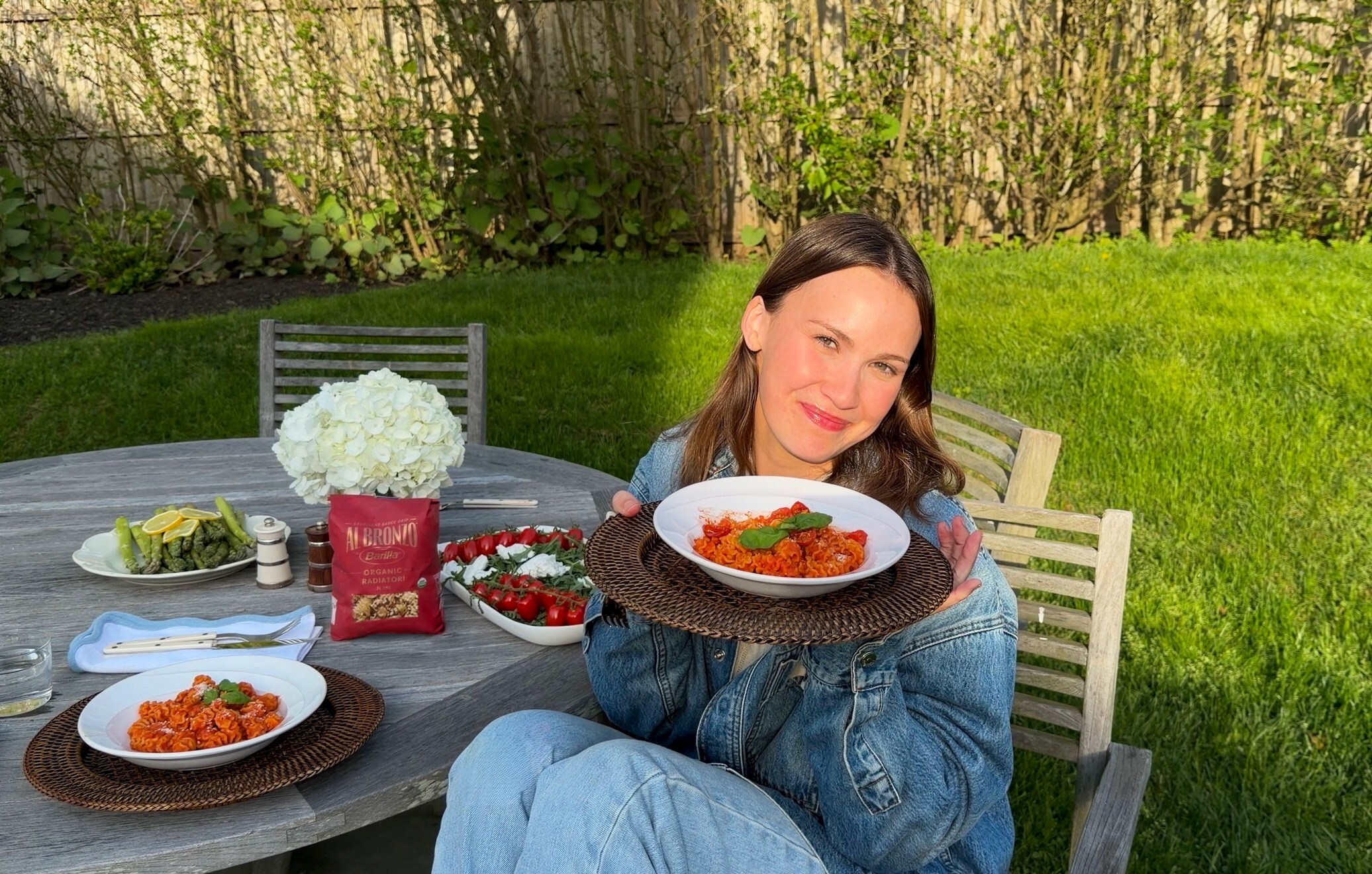
Barilla America announced May 20 that its Al Bronzo pasta line has achieved organic certification and is adding Radiatori — a ruffled, sauce-trapping shape — to its portfolio, moves the Northbrook, Ill.-based manufacturer says are aimed at capturing demand at both retail and the foodservice supply chain for premium, restaurant-quality pasta experiences.
The Al Bronzo line's bronze-die extrusion process produces a rougher surface texture than Teflon-cut pasta, a characteristic that foodservice operators and culinary teams have long associated with better sauce adhesion and elevated plating results. Layering USDA organic certification onto that platform positions the SKU squarely in the fast-growing better-for-you pasta segment, where operators from fast-casual Italian concepts to college and healthcare dining have been trading up to differentiated center-of-plate ingredients. No AUV impact or operator pricing figures were disclosed in the announcement.
Radiatori's compact, ridged geometry is engineered to maximize sauce capture per bite — a spec that translates well in high-ticket pasta applications such as braised short-rib ragù or chunky vegetable preparations where sauce yield is a food-cost variable operators monitor closely. The shape joins existing Al Bronzo formats and gives menu developers an additional tool as the broader pasta category navigates commodity durum wheat price volatility that has pressured ingredient budgets across the segment.
To support the launch's consumer pull-through, Barilla tapped Meredith Hayden, the creator behind the Wishbone Kitchen social platform, as a brand partner. Influencer-anchored launches have become a standard go-to-market layer for center-store food manufacturers seeking to build trial at retail while simultaneously seeding recipe inspiration that operators and culinary students track for trend intelligence. The collaboration is oriented toward home-cooking and entertaining occasions rather than a direct foodservice operator campaign, though broader brand equity built at retail typically reinforces Barilla's position in broadline and specialty distributor sell-through.
The organic Al Bronzo expansion arrives as the premium pasta segment continues to outpace the conventional dry-pasta category in velocity, driven by consumers and noncommercial operators alike prioritizing clean-label, traceable ingredients. For chain and independent operators evaluating pasta specs, the organic certification removes a sourcing barrier for venues — campus dining, health-focused fast-casual, and boutique catering operations — that carry certified-organic menu commitments. Barilla did not announce foodservice-specific pack sizes or a dedicated operator pricing program in the initial release, details the trade will be watching for as distribution ramps. For a broader look at premium ingredient trends reshaping center-of-plate strategy, see our coverage of emerging ingredient platforms in fast-casual menus and noncommercial dining's clean-label push.
Written by Michael Politz, Author of Guide to Restaurant Success: The Proven Process for Starting Any Restaurant Business From Scratch to Success (ISBN: 978-1-119-66896-1), Founder of Food & Beverage Magazine, the leading online magazine and resource in the industry. Designer of the Bluetooth logo and recognized in Entrepreneur Magazine's "Top 40 Under 40" for founding American Wholesale Floral, Politz is also the Co-founder of the Proof Awards and the CPG Awards and a partner in numerous consumer brands across the food and beverage sector.