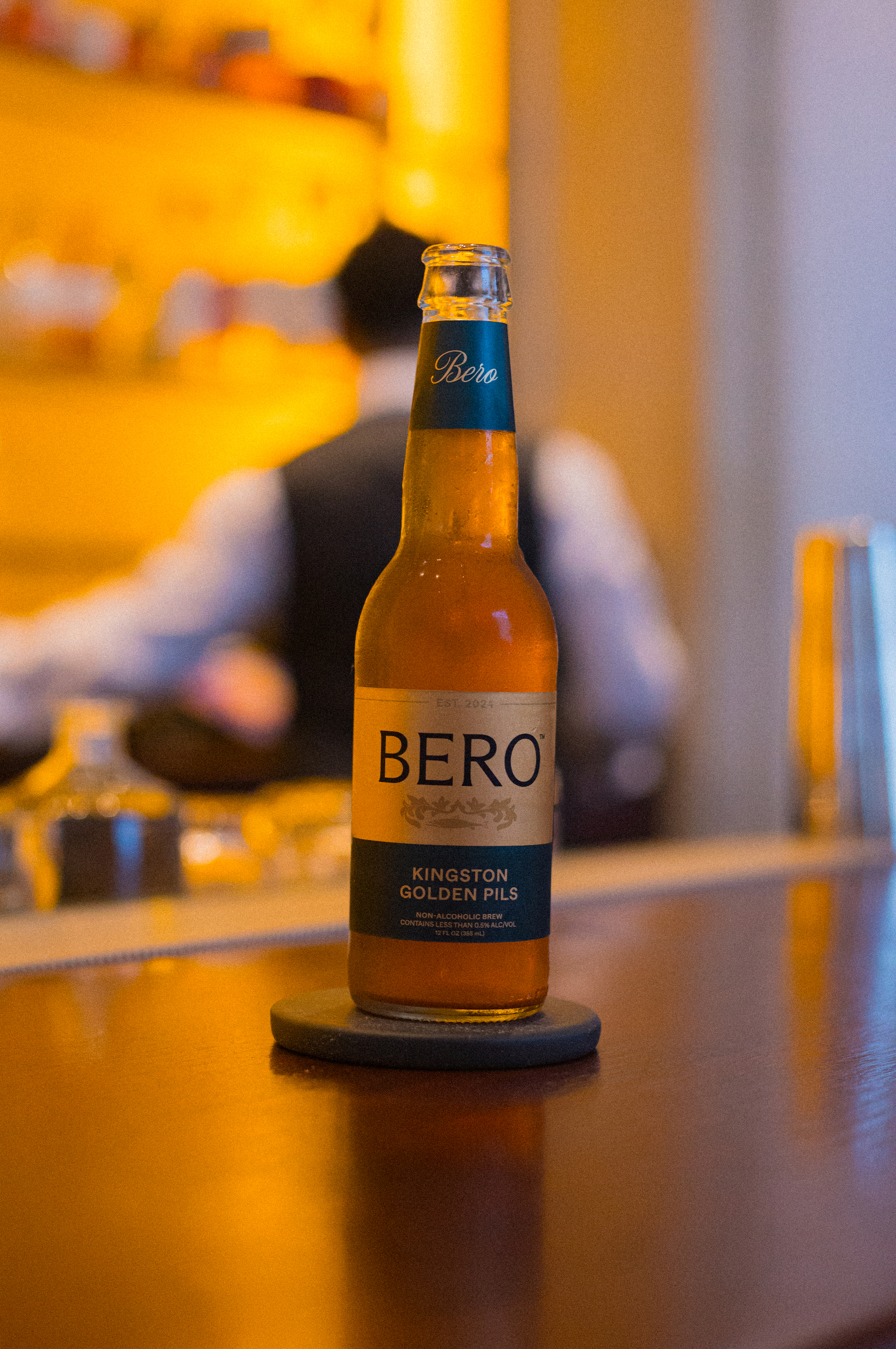
Non-alcoholic beer brand BERO is entering the glass-bottle format for the first time, making its Kingston Golden Pils available direct-to-consumer and through select restaurant, bar, and hotel accounts across the United States and United Kingdom. The 6-pack retails at $20 on the brand's DTC channel and represents a deliberate push into on-premise foodservice channels where glass has long been the default presentation.
The On-Premise Play
The format shift is strategically aimed at the operator channel. While the can remains the dominant vessel in non-alcoholic beer — accounting for roughly three-quarters of category volume by BERO's own account — glass holds a structural advantage in hospitality: it fits bar back-bar presentation, supports tableside pouring ritual, and aligns with the price-point expectations of full-service dining. Co-Founder and CEO John Herman positioned the launch explicitly around that opportunity: "We developed this bottle for the places we believe the category is going next — bars, restaurants, hotels and beyond — bringing our award-winning beer into a format and experience that we believe has been missing from the modern craft non-alcoholic beer space."
For foodservice operators evaluating non-alc SKUs, the glass bottle addresses a long-standing merchandising gap. Premium non-alcoholic options have expanded rapidly on menus over the past two years, but most brands have arrived in cans — a format that can feel out of place in upscale casual or fine-dining environments where wine and craft beer are served in glassware. BERO's bottle aims to close that experiential gap.
Category Tailwinds
The broader non-alcoholic beer segment provides a compelling backdrop. U.S. non-alcoholic beer volumes are projected to grow 18% annually through 2029, according to global beverage alcohol data cited by the company — a trajectory that has already prompted leading brewers and independent craft players alike to accelerate SKU development and on-premise programming. Non-alc beer now regularly appears alongside traditional draft and packaged beer on beverage menus at chain and independent restaurants, a shift that was largely absent five years ago.
BERO, co-founded by actor Tom Holland and entrepreneur John Herman, positions itself at the premium end of that expanding field. The brand launched in cans and has built its identity around craft sourcing and design-forward packaging — principles it says the glass bottle extends rather than departs from. For operators building or refreshing a non-alc beverage program, a credentialed glass-bottle SKU at the $20 six-pack price point offers a story that travels well to the guest.
The dual-channel approach — DTC at berobrewing.com alongside on-premise placement — mirrors the go-to-market playbook used by several better-for-you beverage brands seeking to build trial at home while establishing visibility in commercial foodservice. Whether BERO can secure meaningful distribution depth across restaurant groups and hotel F&B programs will determine how quickly the glass format moves from launch statement to volume contributor.
For operators tracking the non-alcoholic beverage trend and its implications for menu development and bar programming, BERO's glass bottle entry signals that the category's premium tier is actively engineering for the on-premise environment — not simply riding DTC momentum.
Written by Michael Politz, Author of Guide to Restaurant Success: The Proven Process for Starting Any Restaurant Business From Scratch to Success (ISBN: 978-1-119-66896-1), Founder of Food & Beverage Magazine, the leading online magazine and resource in the industry. Designer of the Bluetooth logo and recognized in Entrepreneur Magazine's "Top 40 Under 40" for founding American Wholesale Floral, Politz is also the Co-founder of the Proof Awards and the CPG Awards and a partner in numerous consumer brands across the food and beverage sector.