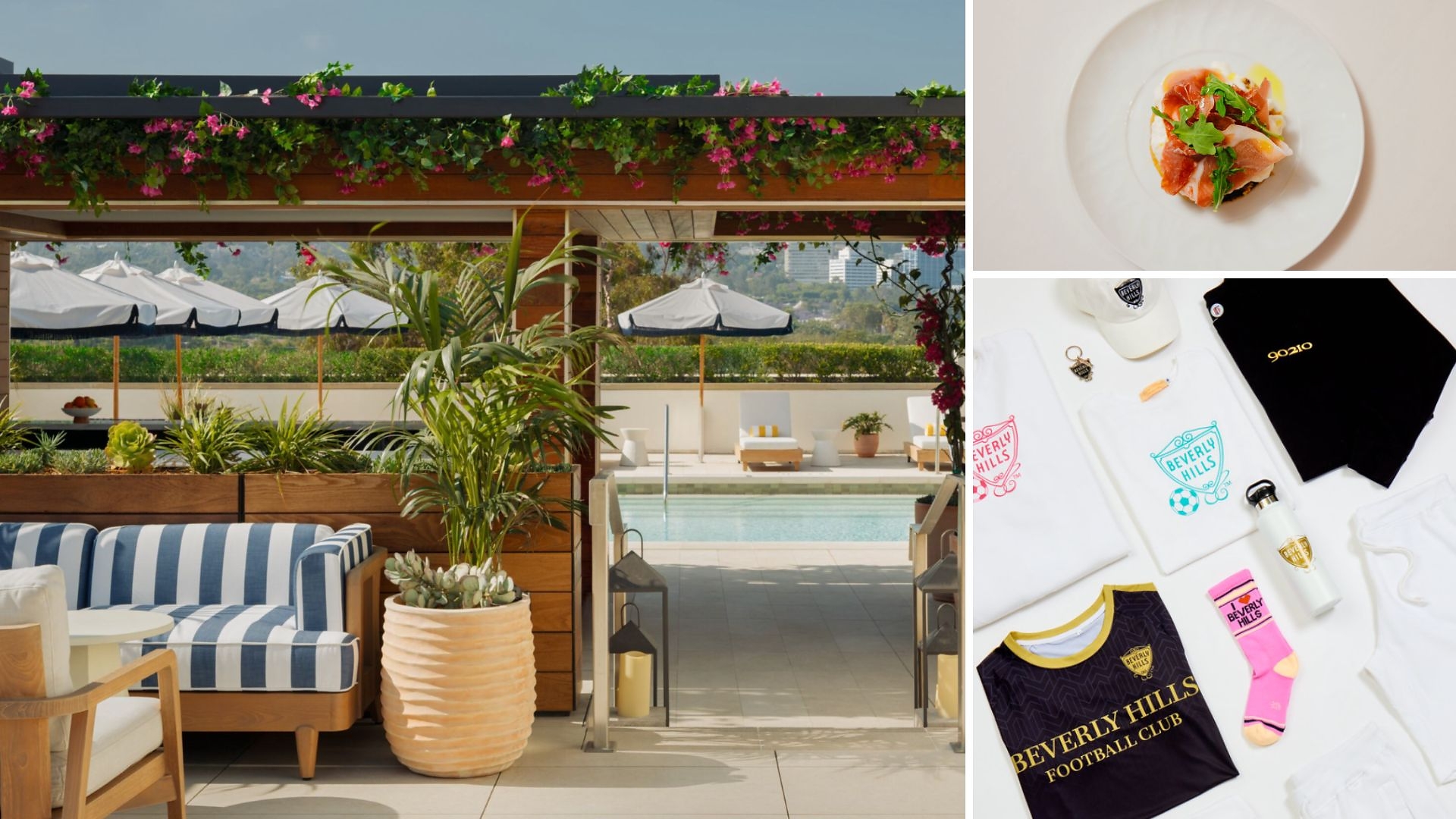
Beverly Hills is positioning its roughly 5.71-square-mile dining and hospitality corridor as a premier between-match destination for the 2026 FIFA World Cup, with the Beverly Hills Conference & Visitors Bureau (BHCVB) orchestrating a coordinated push across the city's hotels and independent restaurants. The initiative centers on globally inspired small-plate menus, specialty cocktail programs and limited-edition merchandise timed to the tournament, which kicks off as Los Angeles assumes its role as one of the host metro areas for the world's most-watched sporting event.
The foodservice activation leans heavily on LTO strategy — globally inspired small bites and curated cocktail menus designed to drive incremental covers and elevated check averages during the tournament window. Operators in the Beverly Hills corridor, which skews toward full-service, high-AUV independents and flagship hotel outlets, are well-positioned to capture the premium international traveler daypart that major sporting events reliably deliver. No aggregate revenue projections or comp-sales targets were disclosed by the BHCVB.
The broader Los Angeles market is expected to see a significant uplift in foodservice traffic during the World Cup cycle, a pattern consistent with prior mega-event hosting windows. Operators across the region are accelerating off-premise and large-format catering buildouts ahead of the tournament, while hotel F&B outlets are investing in staffing and supply-chain depth to handle volume spikes across multiple simultaneous dayparts. Labor remains a pressure point in the Southern California market, where minimum wage increases have compressed store-level margins for table-service concepts.
The BHCVB is also producing a soccer-themed installment of its 'Cuisine & Couture' social content series, lending a media amplification layer to participating restaurant and hotel partners. That content play reflects a wider trend in destination-level foodservice marketing, where CVBs function as de facto channel partners for independent operators who lack the marketing budgets of national chains. For full-service independents competing against chain flagships during a high-traffic event period, co-branded destination content can serve as a meaningful traffic driver without requiring incremental ad spend.
For operators eyeing the model, the Beverly Hills activation underscores the revenue opportunity that attaches to mega-event tourism even for non-stadium-adjacent concepts. Globally themed LTO programs have demonstrated strong attach rates during international sporting windows, and the premium beverage component — specialty cocktails with a global flavor narrative — offers margin expansion potential that offsets any incremental prep labor. How individual operators convert tourist foot traffic into repeat covers will be the longer-term test of the program's unit-economics value.
Written by Michael Politz, Author of Guide to Restaurant Success: The Proven Process for Starting Any Restaurant Business From Scratch to Success (ISBN: 978-1-119-66896-1), Founder of Food & Beverage Magazine, the leading online magazine and resource in the industry. Designer of the Bluetooth logo and recognized in Entrepreneur Magazine's "Top 40 Under 40" for founding American Wholesale Floral, Politz is also the Co-founder of the Proof Awards and the CPG Awards and a partner in numerous consumer brands across the food and beverage sector.