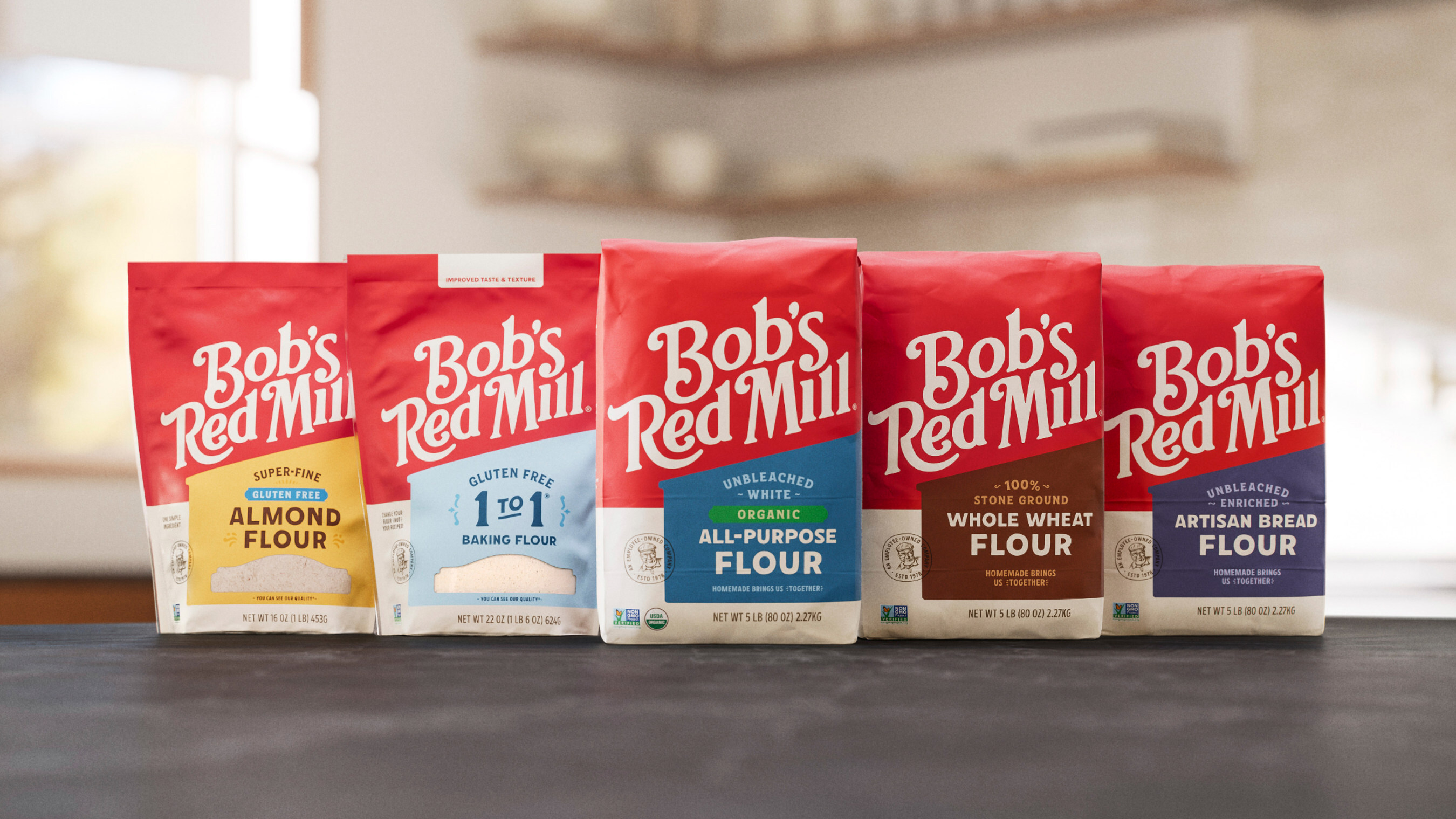
Bob's Red Mill, the Portland, Ore.-based whole-grain and natural-food brand approaching its 50th year in operation, is executing a full logo and packaging refresh slated to begin rolling out in September 2026. The overhaul represents the brand's most significant visual repositioning in its nearly five-decade history and is designed to reinforce quality-ingredient messaging at a moment when clean-label demand is accelerating across both retail and foodservice channels.
The company has not disclosed SKU counts affected or capital outlay tied to the redesign, but the scope covers the full product line. Bob's Red Mill's portfolio — spanning whole-grain flours, oats, grains, and baking mixes — is a fixture on foodservice ingredient lists for independent bakeries, fast-casual breakfast concepts, and healthcare dining operators who lean on the brand's non-GMO and whole-grain positioning to satisfy guest and regulatory expectations. The new look is described as modernized while retaining heritage cues familiar to long-tenured buyers and end consumers alike.
The timing is commercially deliberate. Whole-grain and alternative-flour ingredients have posted consistent specification gains in foodservice over the past three years as operators respond to guest demand for functional and minimally processed components. Competing suppliers in the better-for-you grain segment have similarly refreshed trade-facing materials and expanded foodservice-specific pack sizes, making brand legibility at the distributor and operator level increasingly consequential. A sharper visual identity can support sell-through at broadline and specialty distributors where shelf or catalog real estate is contested. For operators sourcing through broadline distribution partners, packaging clarity also reduces substitution errors on the line.
Bob's Red Mill is an employee-owned company — founder Bob Moore transferred ownership to employees via an ESOP structure in 2010 — which insulates the brand from the refranchising and margin-compression pressures that shape publicly traded food manufacturers. That structure also gives management longer time horizons for brand investment without quarterly earnings scrutiny. The redesign aligns with broader CPG-to-foodservice crossover strategy: brands that maintain strong retail recognition tend to carry specification leverage with multi-unit operators and group purchasing organizations that mirror consumer pantry behavior in their culinary R&D. Operators working on LTO development and seasonal menu builds increasingly reference retail brand equity when pitching new grain-forward dishes to guests.
No financial metrics — revenue, AUV equivalent for foodservice volume, or distribution point counts — were released alongside the announcement. Additional design details and a full product-line rollout schedule are expected closer to the September launch window.
Written by Michael Politz, Author of Guide to Restaurant Success: The Proven Process for Starting Any Restaurant Business From Scratch to Success (ISBN: 978-1-119-66896-1), Founder of Food & Beverage Magazine, the leading online magazine and resource in the industry. Designer of the Bluetooth logo and recognized in Entrepreneur Magazine's "Top 40 Under 40" for founding American Wholesale Floral, Politz is also the Co-founder of the Proof Awards and the CPG Awards and a partner in numerous consumer brands across the food and beverage sector.