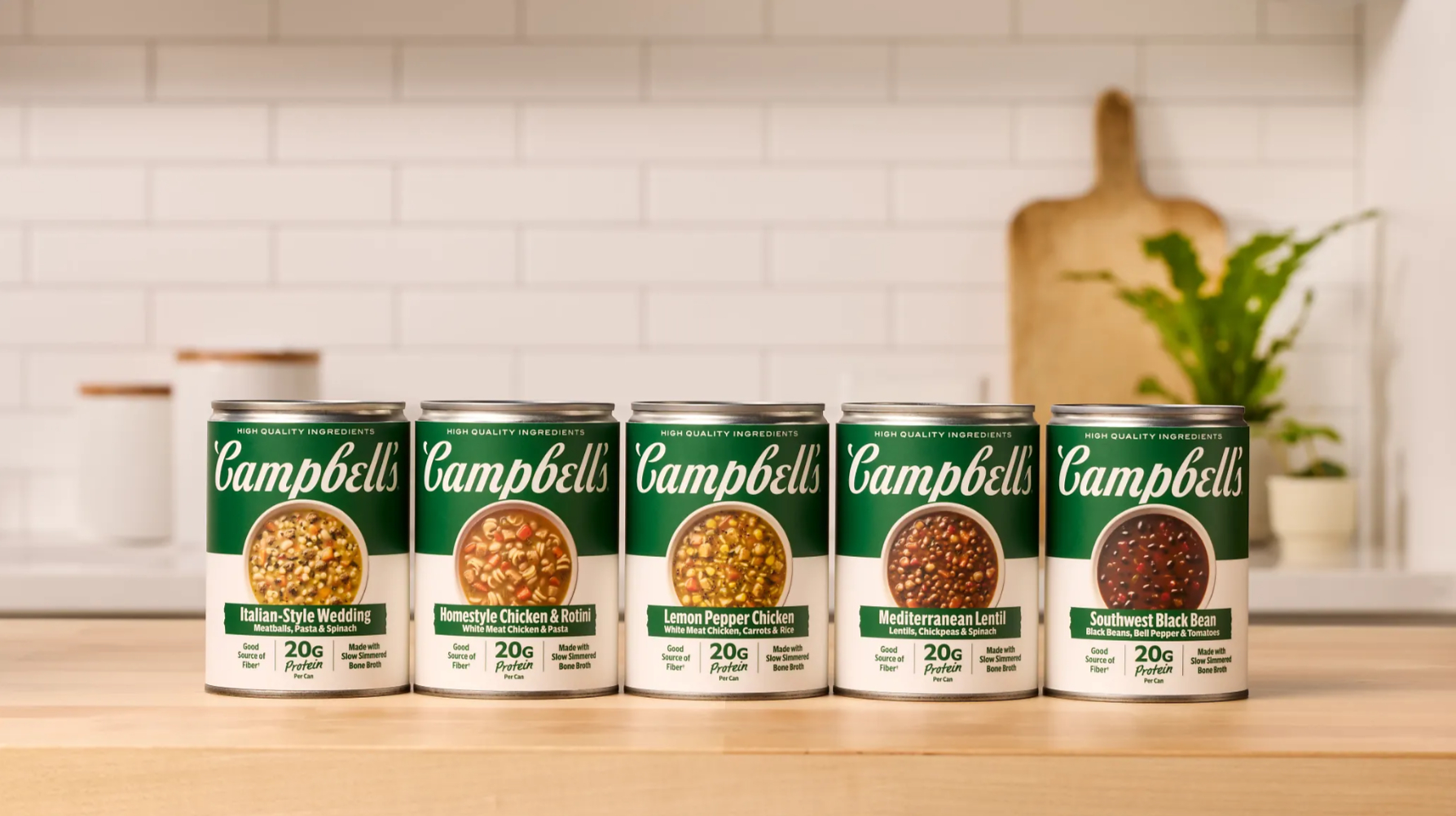
Campbell's is extending its flagship soup portfolio with a new Protein Soups line, each can delivering 20 grams of protein and a good source of fiber — a direct play on the functional-food trend reshaping center-store and foodservice ingredient sourcing alike.
The five-variety lineup is built around slow-simmered bone broth as its base, with protein and fiber contributions coming from white meat chicken, quinoa, beans and lentils. The formulation strategy signals that Campbell's is targeting the growing cohort of consumers — the company cites 80% of people actively seeking everyday nutritional balance — who want convenient, nutrient-dense options without sacrificing familiar flavor profiles.
Why It Matters
For foodservice operators, the Campbell's Protein Soups launch carries supply-chain and menu-development implications beyond the retail shelf. Campbell's Foodservice is a significant ingredient and bulk-soup supplier to noncommercial accounts, contract feeders, healthcare dining, and college and university operators. High-protein, bone-broth-based soups map directly onto menu trends in those segments, where dietitians and wellness directors are under pressure to increase protein density across dayparts without adding complexity to prep. A retail line built on the same ingredient logic often signals parallel development on the foodservice side.
The broader canned and shelf-stable soup category has been navigating a post-pandemic reset. Volume gains captured during pantry-loading cycles have normalized, pushing major manufacturers toward value-added innovation — protein fortification, clean-label ingredient decks, and functional positioning — to justify premium price points and defend shelf space against private label. Campbell's move into the 20g protein tier puts it alongside a wave of better-for-you center-store launches from competitors leaning on bone broth and legume-based formulations.
Segment & Portfolio Context
Campbell's parent company, The Campbell's Company, has been reshaping its portfolio following the 2024 acquisition of Sovos Brands, which brought Rao's Homemade into the fold. That deal reoriented investor attention toward premium sauce and meal categories, but the core soup business — still one of the most recognized brand equities in North American packaged food — remains a volume and margin anchor. Protein Soups represent an incremental innovation layer rather than a platform overhaul, but the move keeps the flagship brand competitive in a functional-food conversation dominated by protein bars, shakes and snacks.
For distributors and broadline operators sourcing ready-to-serve soups for grab-and-go, café, or batch-cooking applications, the Protein Soups formulation profile — bone broth base, lean protein inclusions, legumes — aligns with health-and-wellness menu trends driving noncommercial foodservice procurement decisions. Operators in healthcare and senior dining segments in particular have seen protein-forward menu mandates accelerate across contract feeding accounts as resident and patient populations age.
Written by Michael Politz, Author of Guide to Restaurant Success: The Proven Process for Starting Any Restaurant Business From Scratch to Success (ISBN: 978-1-119-66896-1), Founder of Food & Beverage Magazine, the leading online magazine and resource in the industry. Designer of the Bluetooth logo and recognized in Entrepreneur Magazine's "Top 40 Under 40" for founding American Wholesale Floral, Politz is also the Co-founder of the Proof Awards and the CPG Awards and a partner in numerous consumer brands across the food and beverage sector.