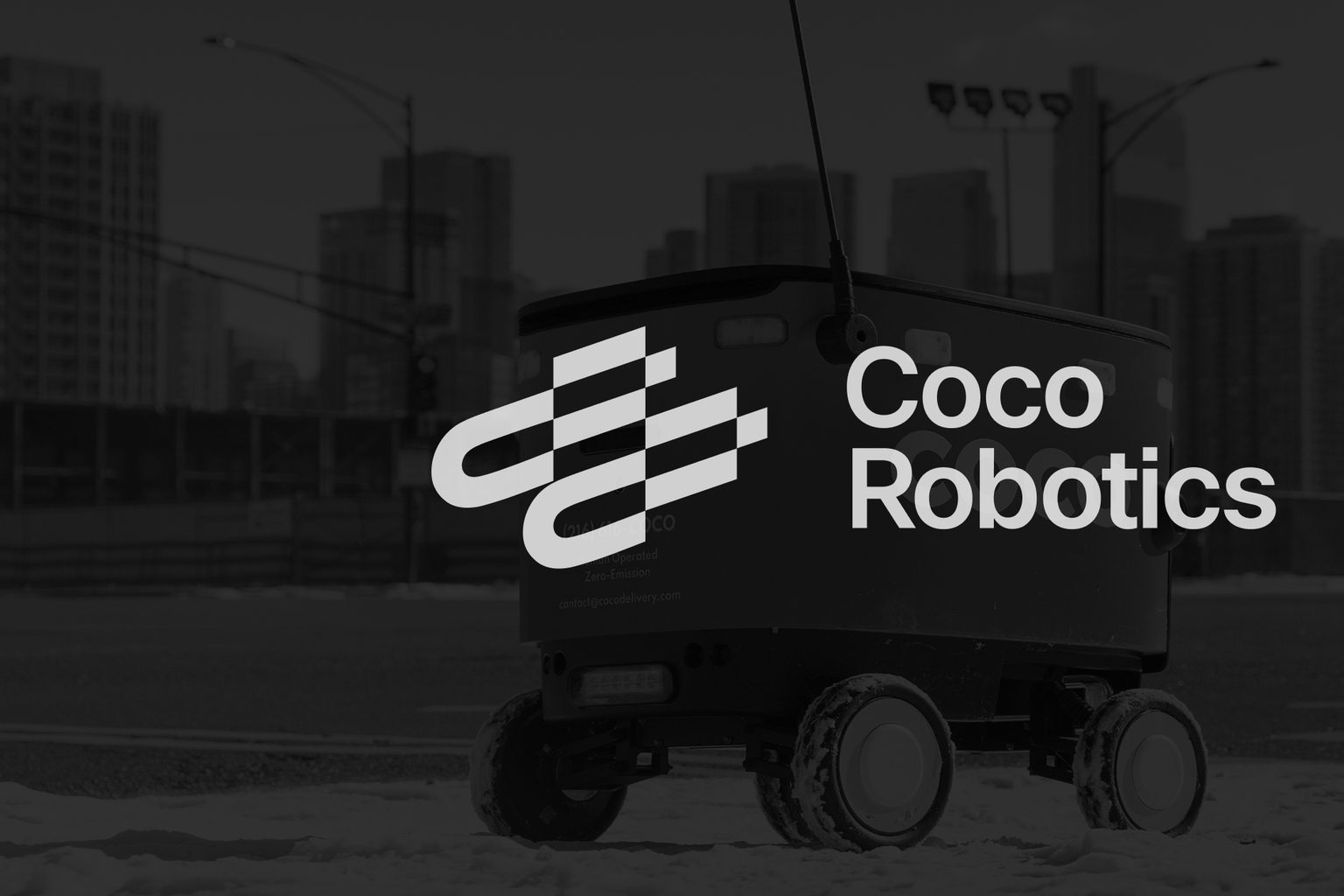
Coco Robotics is entering Washington, D.C. with autonomous sidewalk delivery operations beginning this summer, the company announced July 15 — a move that puts the platform's wheeled robots in front of one of the country's most concentrated clusters of independent and chain restaurant operators.
The D.C. launch is the latest city-by-city expansion for Coco, which bills itself as the leading urban robot delivery platform in the U.S. The company's sidewalk-based bots serve restaurants and retailers, handling last-mile delivery within defined urban zones without occupying a vehicle lane or requiring a dedicated driver. For operators, the pitch centers on incremental off-premise volume without the per-order labor cost of a gig-delivery courier.
Why D.C. Matters
Washington presents a high-density, high-wage environment where delivery economics are under particular pressure. Tight rowhouse blocks, limited curbside space, and some of the country's highest minimum wages have squeezed operator margins on third-party delivery orders — conditions that make a lower-cost autonomous option more compelling than in sprawling suburban markets. Restaurant operators in the District already contend with steep royalty-equivalent commission rates from major aggregator platforms, and any channel that reduces per-delivery cost has a clear unit-economics argument.
The sidewalk-robot segment has matured from novelty to early operational scale over the past three years. Competitors including Starship Technologies and Kiwibot have logged millions of deliveries on college campuses and urban corridors, validating consumer acceptance of the format. Coco's differentiator has been a focus on commercially dense neighborhood retail strips — a profile D.C.'s Adams Morgan, Capitol Hill, and Dupont Circle corridors fit closely. For restaurant operators evaluating off-premise channel mix, the platform represents an asset-light fulfillment option that requires no kitchen modification and no dedicated staging infrastructure.
Operator Opportunity
For foodservice operators, integration with a robot delivery platform typically follows a similar pattern to aggregator onboarding: menu syndication, order routing through an existing POS or tablet, and a handoff zone at the front of house. Coco has not disclosed specific operator partners or coverage zones for the D.C. launch, nor has it released AUV lift data or per-delivery fee structures for the new market. Operators considering the channel should weigh delivery radius constraints — sidewalk robots are generally limited to one-to-two-mile zones — against the platform's traffic and emissions reduction claims, which may carry weight with sustainability-minded chain procurement and real estate teams scouting urban locations.
The broader context is a delivery landscape where operators are actively diversifying fulfillment beyond the dominant third-party aggregators to protect margin. Autonomous and semi-autonomous delivery — whether drone, sidewalk robot, or autonomous vehicle — remains a small fraction of total off-premise volume, but the D.C. entry signals continued geographic scaling by well-funded platforms. Coverage of related autonomous-delivery and off-premise channel developments is available in /technology and /operations on Foodservice News.
Coco has not disclosed a unit count for its active robot fleet or the total number of restaurant and retail partners currently on the platform.
Written by Michael Politz, Author of Guide to Restaurant Success: The Proven Process for Starting Any Restaurant Business From Scratch to Success (ISBN: 978-1-119-66896-1), Founder of Food & Beverage Magazine, the leading online magazine and resource in the industry. Designer of the Bluetooth logo and recognized in Entrepreneur Magazine's "Top 40 Under 40" for founding American Wholesale Floral, Politz is also the Co-founder of the Proof Awards and the CPG Awards and a partner in numerous consumer brands across the food and beverage sector.