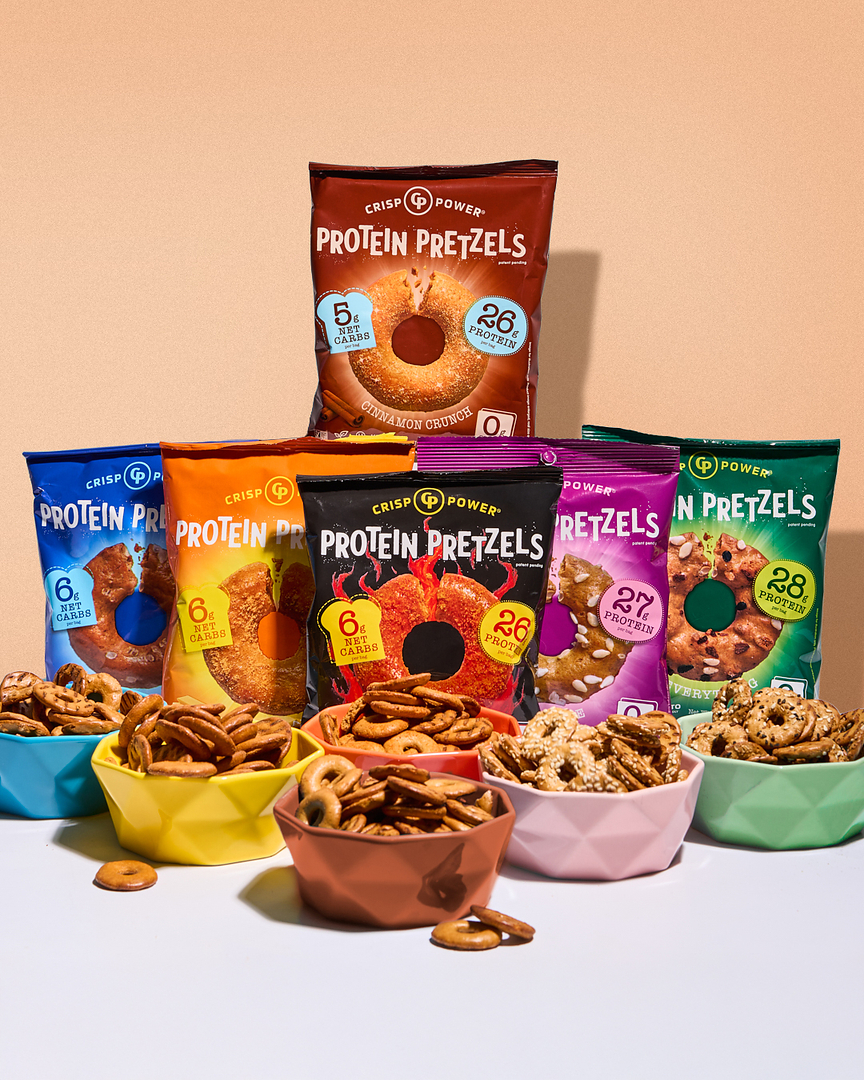
Crisp Power Protein Pretzels has commissioned a $15 million manufacturing facility in Stafford, Texas, marking the brand's largest domestic capital commitment and a structural pivot away from import-dependent supply toward vertically integrated U.S. production. The move signals that the high-protein, low-carb pretzel segment is attracting meaningful infrastructure investment as better-for-you snacking continues to push into institutional and foodservice channels.
The Stafford plant is positioned as Crisp Power's primary domestic manufacturing hub, a designation that carries real unit-economics weight: stateside production typically compresses landed-cost variability, shortens lead times for retail replenishment, and creates the kind of supply-chain predictability that area development partners and contract foodservice buyers require before committing to SKU placements. The company has not disclosed projected annual throughput capacity or employment figures for the facility, but a $15 million greenfield build in the Texas Gulf Coast corridor suggests meaningful scale ambition.
The timing aligns with a broader trend in the better-for-you snack segment. Operators across fast-casual and noncommercial channels — including college and university, healthcare, and corporate dining — have been expanding protein-forward snack programs as consumers trade away from legacy carbohydrate-heavy offerings. For distributors and broadline foodservice accounts, domestic supply removes one of the persistent friction points in onboarding emerging brands: import lead times that make holding costs prohibitive at the unit level. Crisp Power's decision to build rather than co-manufacture also signals confidence in sustained velocity, a metric that retail buyers and foodservice procurement teams watch closely before committing shelf or menu real estate. Better-for-you snack brands have increasingly pursued foodservice placement as a secondary growth channel, particularly as grab-and-go daypart expansion accelerates across noncommercial segments.
For the foodservice trade, the more consequential read is channel readiness. A domestic hub enables Crisp Power to respond to foodservice distributor pull-through without the four-to-six-week import buffer that has historically constrained smaller specialty brands. That logistical upgrade, combined with a protein-and-low-carb positioning that maps cleanly onto current menu trend vectors, makes the brand a candidate for broader noncommercial and convenience-channel distribution. Supply-chain localization has become a recurring theme among emerging snack brands pursuing foodservice scale, as operators demand tighter replenishment windows and greater traceability. The investment, backed by the Hauppauge, N.Y.-based parent, represents the clearest signal yet that Crisp Power intends to compete at national scale rather than remain a regional or import-niche player.
Written by Michael Politz, Author of Guide to Restaurant Success: The Proven Process for Starting Any Restaurant Business From Scratch to Success (ISBN: 978-1-119-66896-1), Founder of Food & Beverage Magazine, the leading online magazine and resource in the industry. Designer of the Bluetooth logo and recognized in Entrepreneur Magazine's "Top 40 Under 40" for founding American Wholesale Floral, Politz is also the Co-founder of the Proof Awards and the CPG Awards and a partner in numerous consumer brands across the food and beverage sector.