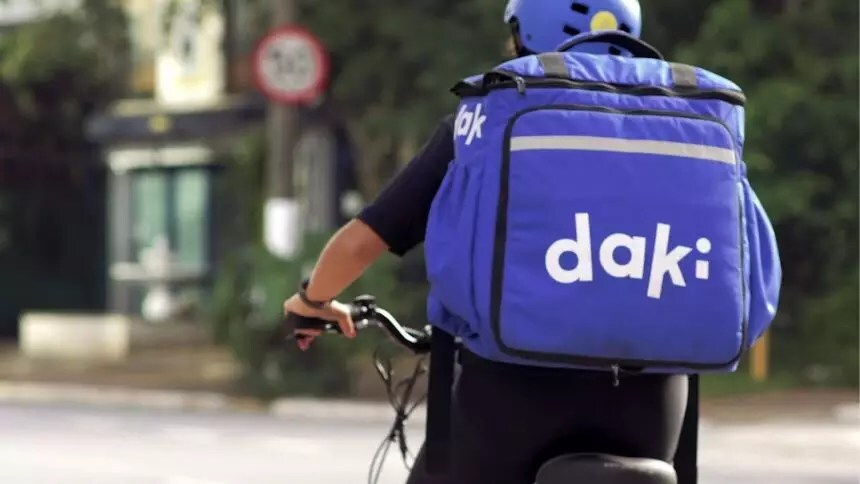
Daki, Brazil's dominant quick-commerce grocery platform, disclosed Tuesday that it has reached financial breakeven while simultaneously announcing a minority equity investment from iFood, the country's largest food-delivery marketplace. Financial terms were not disclosed; iFood acquired a stake of less than 5% in the São Paulo-based operator.
The breakeven milestone is a meaningful inflection for a segment that has struggled with unit economics since the rapid-delivery boom of 2021–2022. Daki did not release specific revenue, average order value, or fulfillment-cost metrics alongside the announcement, but reaching operating breakeven positions the platform to redeploy any incremental capital toward market expansion rather than plugging cash burn — a critical shift for investor confidence in the category.
The investment formalizes and deepens an operational partnership the two companies established in 2024, under which Daki's dark-store network gained distribution surface through iFood's consumer-facing app. That off-premise channel integration effectively extended Daki's addressable daypart coverage without proportional increases in rider or warehouse overhead. For iFood, the sub-5% stake is consistent with an asset-light ecosystem strategy: the delivery giant collects transaction volume and loyalty data without absorbing Daki's fulfillment infrastructure on its own balance sheet.
The quick-commerce segment in Latin America has undergone significant consolidation since its peak. Several regional operators either wound down or were absorbed by larger logistics players, making Daki's survival — and now its breakeven announcement — a notable outlier. Peer platforms in Europe and the Middle East that achieved similar unit-economics discipline, such as Getir's retrenchment to core markets, did so largely through aggressive SKU rationalization and dark-store density optimization. Whether Daki's path mirrors those playbooks has not been detailed publicly.
With iFood's backing, Daki indicated it plans to accelerate geographic expansion within Brazil, a market where grocery e-commerce penetration remains well below levels seen in the United Kingdom or South Korea. iFood's network of restaurant and retail partners could provide Daki with co-location or cross-promotional leverage as it enters new cities. Operators and franchise and area-development watchers tracking Latin American foodservice infrastructure will note that iFood's ecosystem play — connecting delivery, grocery, and fintech rails — increasingly resembles the super-app consolidation that reshaped food and beverage supply chains across Southeast Asia over the past decade.
Written by Michael Politz, Author of Guide to Restaurant Success: The Proven Process for Starting Any Restaurant Business From Scratch to Success (ISBN: 978-1-119-66896-1), Founder of Food & Beverage Magazine, the leading online magazine and resource in the industry. Designer of the Bluetooth logo and recognized in Entrepreneur Magazine's "Top 40 Under 40" for founding American Wholesale Floral, Politz is also the Co-founder of the Proof Awards and the CPG Awards and a partner in numerous consumer brands across the food and beverage sector.