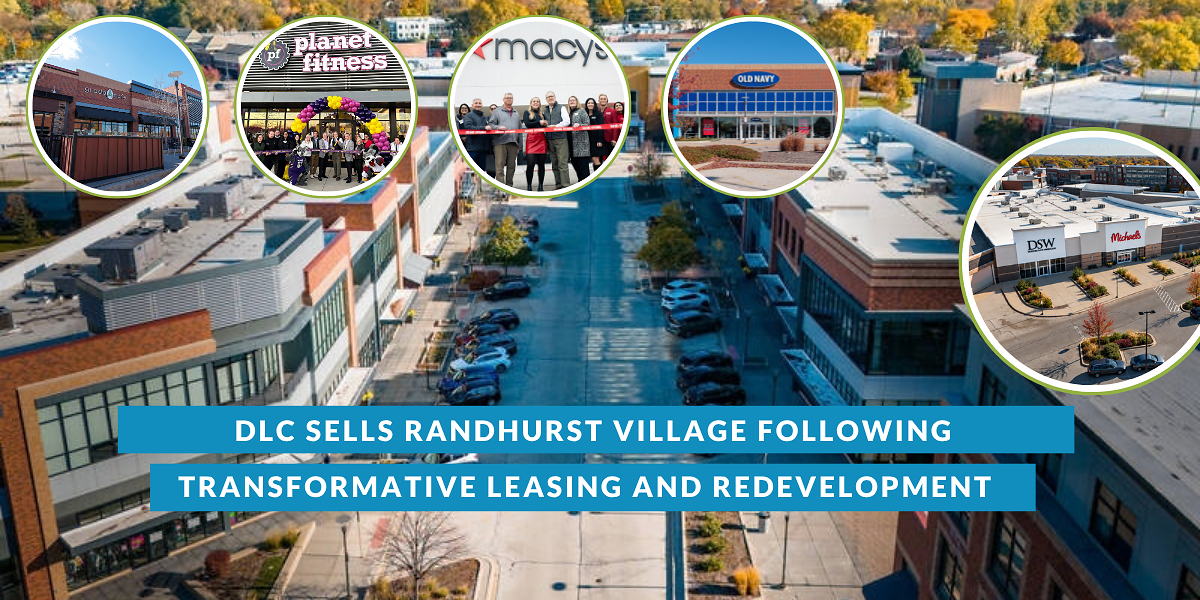
DLC Management Corp., one of the country's largest open-air shopping center operators with more than $4 billion in assets under management, has sold Randhurst Village in Mount Prospect, IL, capping a 10-year redevelopment that converted dead anchor boxes into productive retail and dining uses.
DLC acquired the property in 2016. The center now counts Costco, Jewel-Osco, The Home Depot, TJ Maxx, HomeGoods, AMC Theaters, Planet Fitness, Old Navy, Michaels, DSW, and PetSmart among its anchors and co-tenants — a roster assembled almost entirely through DLC's own leasing and redevelopment activity during its ownership period.
Dining as a Repositioning Tool
A deliberate push into foodservice was central to the business plan. DLC curated a collection of restaurants that recast Randhurst Village as a local dining destination, broadening its draw well beyond apparel and home goods. The strategy mirrors a widespread trend across open-air centers, where operators have leaned on restaurant and entertainment tenants to generate trip frequency that commodity retailers alone can no longer deliver. Food-and-beverage tenants now routinely command premium placement in suburban power centers precisely because they drive repeat visits and extend dwell time — metrics that support the rent underwriting for the entire tenant mix.
Anchor Conversions Drive Value
The headline development play was the 200,000-square-foot Carson Pirie Scott box, which DLC carved into HomeGoods and Macy's locations, replacing a failed department store with two nationally recognized draws. More recently, the former Bed Bath & Beyond space — a vacancy type that has plagued open-air landlords across the country since the chain's 2023 bankruptcy — was split between Skechers, already open, and Nike, slated to open soon.
"When we acquired Randhurst Village, we saw an opportunity to create significantly more value through active ownership," said Adam Ifshin, Founder and CEO of DLC. "Our team tackled major vacancies, redeveloped obsolete spaces, brought new retailers and restaurants to the property, and continued investing in its long-term success."
DLC executed the development work through its own affiliates, NWS Architects and Renovo Construction, an integrated model the company says compressed timelines and reduced cost compared to third-party procurement. That vertical structure — owner, architect, and general contractor operating in concert — has become a competitive differentiator for operators seeking to move quickly on anchor repositioning and adaptive reuse projects.
What the Sale Signals
The disposition reflects a broader pattern in institutional real estate: buy-fix-sell cycles on grocery- and necessity-anchored open-air centers have compressed as capital has returned to the format. Randhurst Village's stabilized, nationally tenanted profile — with foodservice and fitness providing traffic diversity — positioned it as a clean exit for DLC. DLC was represented in the transaction by Newmark Retail Capital Markets, led by Conor Lalor, President and Head of Retail Capital Markets, alongside Keely Polczynski, Senior Managing Director, and Brian Schneiderman, Associate Director. Deal terms were not disclosed.
Chris Ressa, Executive Vice President and Chief Operating Officer of DLC, credited the center's integrated leasing, construction, and design teams with keeping the redevelopment on schedule. The sale closes a chapter on one of the more complex suburban repositioning projects in the Midwest open-air market.
Written by Michael Politz, Author of Guide to Restaurant Success: The Proven Process for Starting Any Restaurant Business From Scratch to Success (ISBN: 978-1-119-66896-1), Founder of Food & Beverage Magazine, the leading online magazine and resource in the industry. Designer of the Bluetooth logo and recognized in Entrepreneur Magazine's "Top 40 Under 40" for founding American Wholesale Floral, Politz is also the Co-founder of the Proof Awards and the CPG Awards and a partner in numerous consumer brands across the food and beverage sector.