
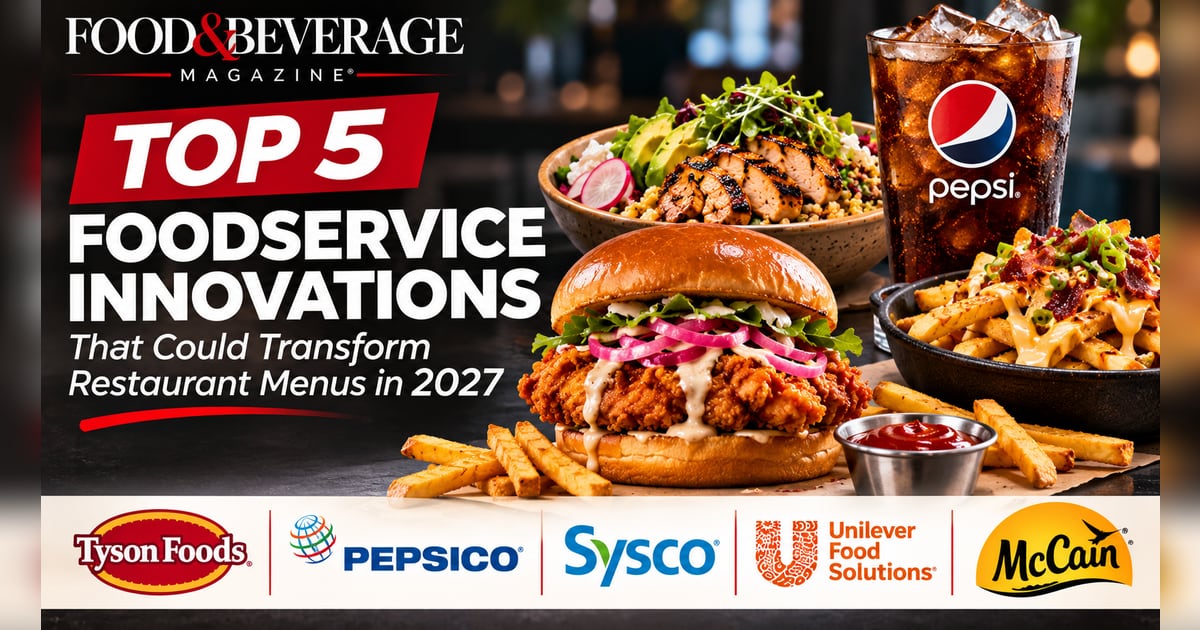
The Restaurant Innovation Challenge As restaurants head into 2027, they face a persistent tension: delivering memorable menu experiences while controlling costs and maintaining kitchen efficiency. With consumer preferences shifting and competition intensifying, foodservice suppliers are introducing products and platforms designed to help operators navigate these competing pressures. Five major foodservice companies are shaping how restaurants approach menu innovation across protein, beverage, distribution, global flavors, and familiar favorites.
Chicken as a Platform for Menu Variety Tyson Foods is emphasizing the versatility of its Red Label® chicken portfolio, positioning a single protein across multiple menu categories. The same crispy chicken tender, for example, could become a Korean-inspired spicy sandwich, a loaded chicken and waffle entrée, a premium Caesar wrap, an appetizer, or a protein-packed rice bowl. "Consumers want new experiences, but restaurant kitchens need consistency and efficiency. Versatile proteins can help operators balance both priorities," according to the analysis. This approach reduces inventory complexity while expanding perceived menu variety—a key efficiency gain for operators managing limited kitchen real estate and prep capacity.
Beverage Merchandising as a Revenue Lever PepsiCo's Partners platform is addressing beverage programs as a distinct profit center. In 2026, the company launched a menu optimization initiative focused on professional photography, compelling descriptions, and strategic presentation of drinks across digital and physical menus. The participating brand roster—Pepsi®, STARRY®, Gatorade®, Pure Leaf®, and CELSIUS®—reflects the breadth of beverage categories restaurants can merchandise. The strategy is straightforward: beverages become more compelling when customers can clearly see them and understand how they complement their meal.
Trend Evaluation Through Operational Lens Sysco's Foodie platform and Cutting Edge Solutions program acknowledge a critical gap between culinary inspiration and kitchen execution. While viral recipes may attract online attention, operators must evaluate sourcing consistency, peak-service feasibility, concept alignment, staff efficiency, and contribution margins before committing. "The next successful restaurant trend won't be determined by creativity alone. Execution, consistency, and profitability will be equally important," according to the analysis.
Global Flavors Meet Market Reality Unilever Food Solutions' Future Menus Volume 3 report identifies four culinary directions: Street Food Couture, Borderless Cuisine, Culinary Roots, and Diner Designed. These themes reflect consumer interest in culinary authenticity, regional specificity, and personalization. Menu concepts worth exploring include Korean-inspired street-food chicken, globally influenced handheld appetizers, regional sauces, modern interpretations of traditional comfort foods, and customizable bowls—all grounded in cultural respect and thoughtful adaptation.
Premium Positioning of Familiar Items McCain Foods is positioning fries and appetizers as platforms for limited-time offers and signature menu development. Rather than treating fries as commodity items, the company suggests elevated applications: Korean BBQ fries with spicy sauce and scallions, garlic-Parmesan fries with fresh herbs, buffalo chicken fries with blue cheese dressing, Mediterranean fries with feta and tzatziki, and truffle-inspired fries with Parmesan. Limited-time offers provide low-risk testing grounds for permanent menu additions.
Common Threads Across Innovation Categories Despite operating across different foodservice segments, these five companies reflect a unified industry priority: restaurants must create engaging menus while maintaining operational discipline and profitability. The opportunities extend beyond national chains to independent operators who can introduce carefully managed changes—a new specialty beverage, a globally inspired sauce, a premium appetizer, or a versatile protein application. "The restaurants that succeed in 2027 will be those that transform new ideas into great customer experiences—and sustainable business results," according to the analysis.
Why It Matters
For restaurant operators, the 2027 innovation landscape offers practical options across multiple menu categories. Success depends less on adopting every trend and more on selecting innovations aligned with customer expectations, existing capabilities, and financial objectives. Suppliers are increasingly packaging culinary inspiration with operational tools—sourcing networks, menu resources, and execution guidance—that help close the gap between concept and kitchen reality.
For more insights and trends in the food and beverage sector, check out more articles in The Food & Beverage Magazine family of publications.
Written by FBM Publications Editors
