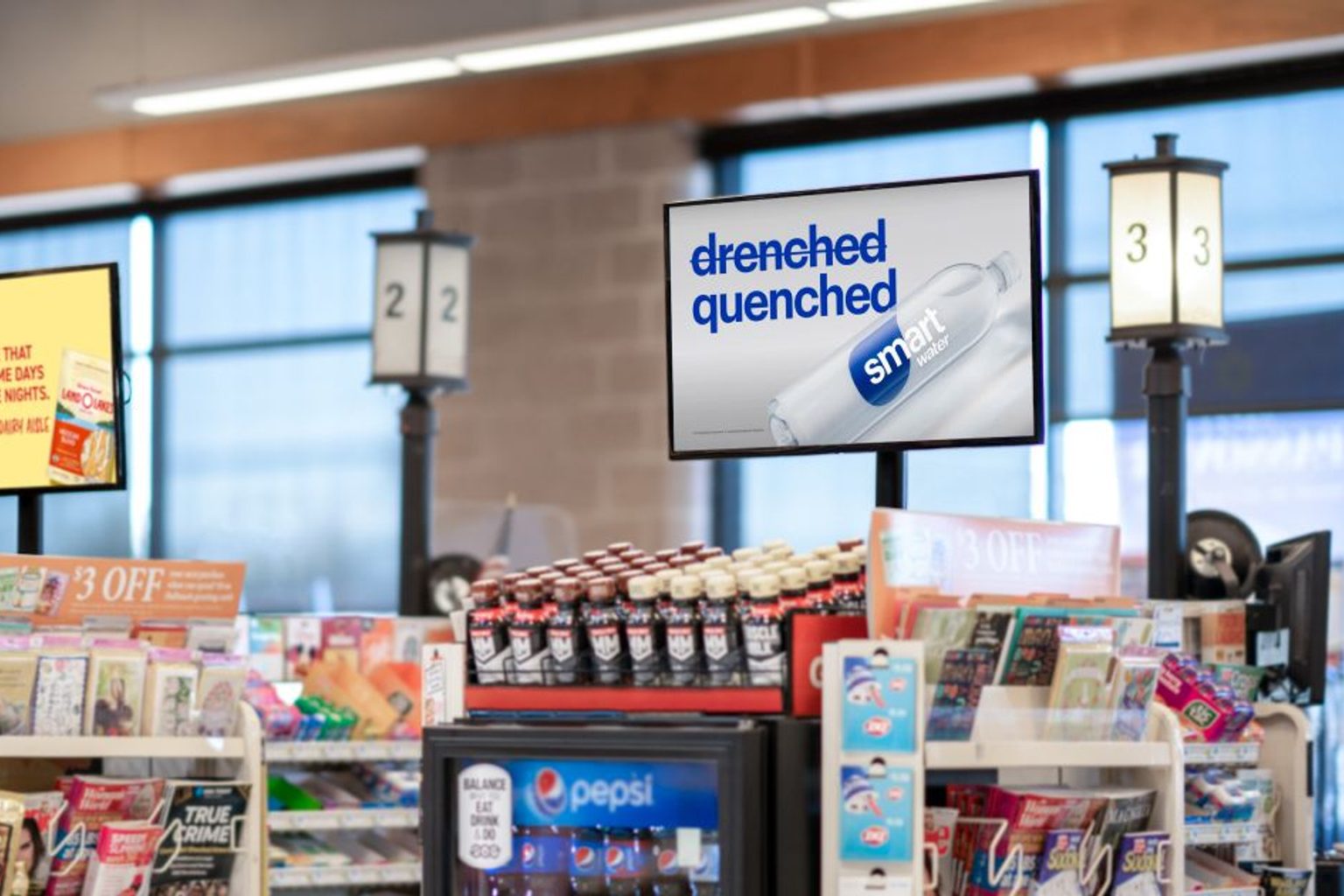
Grocery TV has integrated Esri's Market Potential dataset into its in-store retail media platform, unlocking more than 3,500 behavioral and psychographic audience attributes across its network of 6,700-plus grocery stores — a move that brings the channel's planning vocabulary closer to how national brands already buy television and digital.
The partnership, announced July 29, gives brands and agencies the ability to build custom store lists around shoppers who over-index on specific behaviors: intent to purchase a vehicle, preference for organic food, recent wireless-carrier switching, and hundreds of other signals spanning automotive, finance, health and wellness, telecom, and CPG categories. The network reaches 95 million unique shoppers monthly across more than 120 retail partners, covering independent and regional grocers nationwide.
The Targeting Gap
In-store media has long lagged digital in targeting sophistication. While programmatic campaigns are routinely assembled around behavioral segments, in-store buys have historically defaulted to broad geographic or demographic proxies — essentially treating a store as a DMA rather than an audience environment. Grocery TV's integration of Esri's location intelligence is a direct response to that gap, letting media buyers approach an in-store placement the way they would an addressable TV or connected-CTV unit.
Marlow Nickell, co-founder and CEO of Grocery TV, framed it as a structural shift in how the channel is categorized. "In-store media is increasingly being viewed as an extension of video and digital strategies, not just an out-of-home buy," Nickell said. "The partnership with Esri enhances our ability to let media buyers approach in-store by audience, not just by placement. Most purchases still happen in physical stores, and reaching the right shopper at the point of decision is one of the most valuable moments in the funnel."
Channel Momentum
The timing tracks with accelerating investment across the DOOH and retail media category. eMarketer raised its 2026 digital-out-of-home forecast by 18% to reflect in-store media growth, and major retailers have made public commitments to closed-loop attribution and audience segmentation — signals that the channel is graduating from experimental line items into performance-driven media plans with accountable KPIs.
For CPG manufacturers and foodservice-adjacent advertisers — beverage brands, snack companies, foodservice distributors marketing at retail — that maturation matters. In-store retail media networks are competing directly with shopper marketing budgets that previously funded FSIs, end-cap promotions, and trade spend. Audience-based targeting makes the ROI case easier to construct and compare against digital alternatives.
Chris Nickola, director of commercial at Esri, noted the fit between the company's location intelligence heritage and the grocery context. "Partnering with Grocery TV brings that intelligence directly into the in-store media planning process, connecting behavioral and psychographic insights to the physical environments where most shoppers visit every week," Nickola said.
Audience-based targeting powered by Esri is available immediately to brands and agencies running campaigns across Grocery TV's platform. For operators and suppliers tracking how retail media networks are reshaping trade spend allocation, the Grocery TV-Esri integration is a useful reference point — see also our coverage of evolving shopper marketing strategy and CPG investment trends in foodservice channels.
Written by Michael Politz, Author of Guide to Restaurant Success: The Proven Process for Starting Any Restaurant Business From Scratch to Success (ISBN: 978-1-119-66896-1), Founder of Food & Beverage Magazine, the leading online magazine and resource in the industry. Designer of the Bluetooth logo and recognized in Entrepreneur Magazine's "Top 40 Under 40" for founding American Wholesale Floral, Politz is also the Co-founder of the Proof Awards and the CPG Awards and a partner in numerous consumer brands across the food and beverage sector.