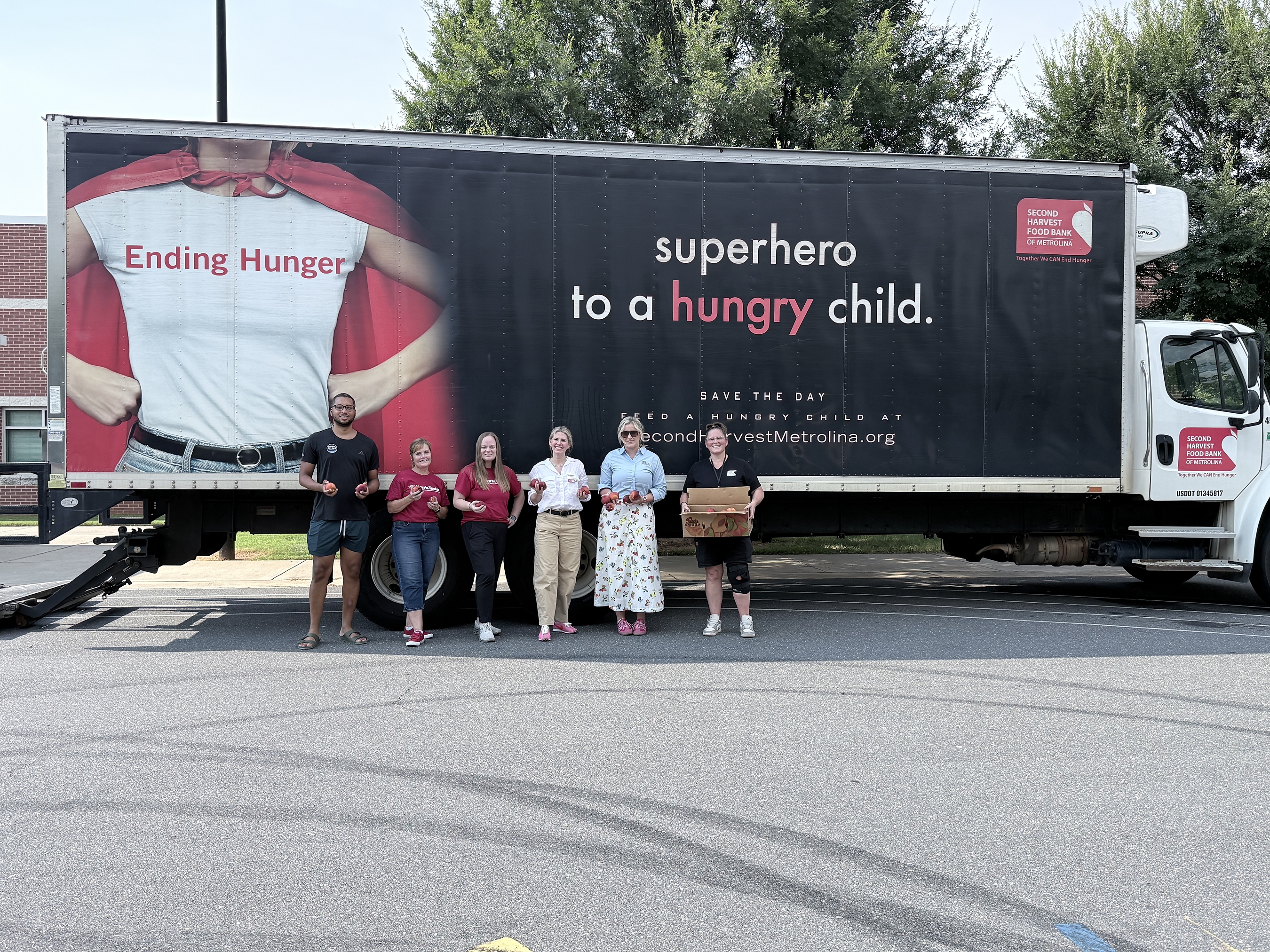
The Campaign
Harris Teeter and Titan Farms are marking 13 consecutive years of their Peaches with a Purpose initiative by donating 37,800 pounds of fresh South Carolina peaches to Second Harvest Food Bank of Metrolina this August — the largest single-year volume in the program's recorded history. Salem Transportation is providing logistics at no cost, hauling the fruit from Titan Farms' South Carolina growing operation to the food bank's Metrolina distribution network.
Since the campaign launched in 2013, Titan Farms has contributed an average of 35,000 pounds of peaches per campaign year, building a cumulative fresh-produce pipeline that illustrates how retailer-grower partnerships can move nutritionally significant volumes outside conventional commercial channels. Titan Farms, the largest peach grower on the East Coast with more than 6,200 acres of peaches, positions the donation as the same grade of fruit it ships to retail customers — a supply-chain decision that distinguishes the program from surplus or cosmetically imperfect produce donations common elsewhere in the industry.
Operator and Supply Chain Context
For a 250-plus-store regional banner operating under The Kroger Co. (NYSE: KR), the program represents a structured community-investment strategy rather than a one-off promotional event. Danna Robinson, director of corporate affairs and customer relations for Harris Teeter, noted that fresh-produce access remains a persistent gap for food-bank recipients, who more commonly receive shelf-stable goods. That framing aligns with a broader trend in grocery and foodservice supply chains toward directing high-quality, perishable product to hunger-relief networks before spoilage windows close.
Chalmers Carr, CEO of Titan Farms, characterized the 13-year run as evidence that retail partnerships can generate consistent community yield alongside commercial volume. Titan Farms also grows 250 acres of bell peppers and 350 acres of broccoli, giving it diversified fresh commodity exposure that supports year-round retailer relationships beyond the summer peach season.
What It Means for Operators
For foodservice and retail operators evaluating produce procurement partnerships, the Peaches with a Purpose model offers a replicable framework: a grower commits a defined annual poundage, a logistics partner absorbs transportation cost, and the retailer provides promotional visibility and distribution coordination through an established food bank relationship. The arrangement sidesteps the transactional complexity of ad hoc surplus donations while giving all three parties a consistent activation tied to a high-visibility seasonal commodity. As fresh-produce shrink and food waste remain persistent unit-economics pressures across both retail and foodservice, structured grower-retailer-nonprofit pipelines of this kind are drawing increased attention from regional grocery operators and their supplier bases.
Written by Michael Politz, Author of Guide to Restaurant Success: The Proven Process for Starting Any Restaurant Business From Scratch to Success (ISBN: 978-1-119-66896-1), Founder of Food & Beverage Magazine, the leading online magazine and resource in the industry. Designer of the Bluetooth logo and recognized in Entrepreneur Magazine's "Top 40 Under 40" for founding American Wholesale Floral, Politz is also the Co-founder of the Proof Awards and the CPG Awards and a partner in numerous consumer brands across the food and beverage sector.