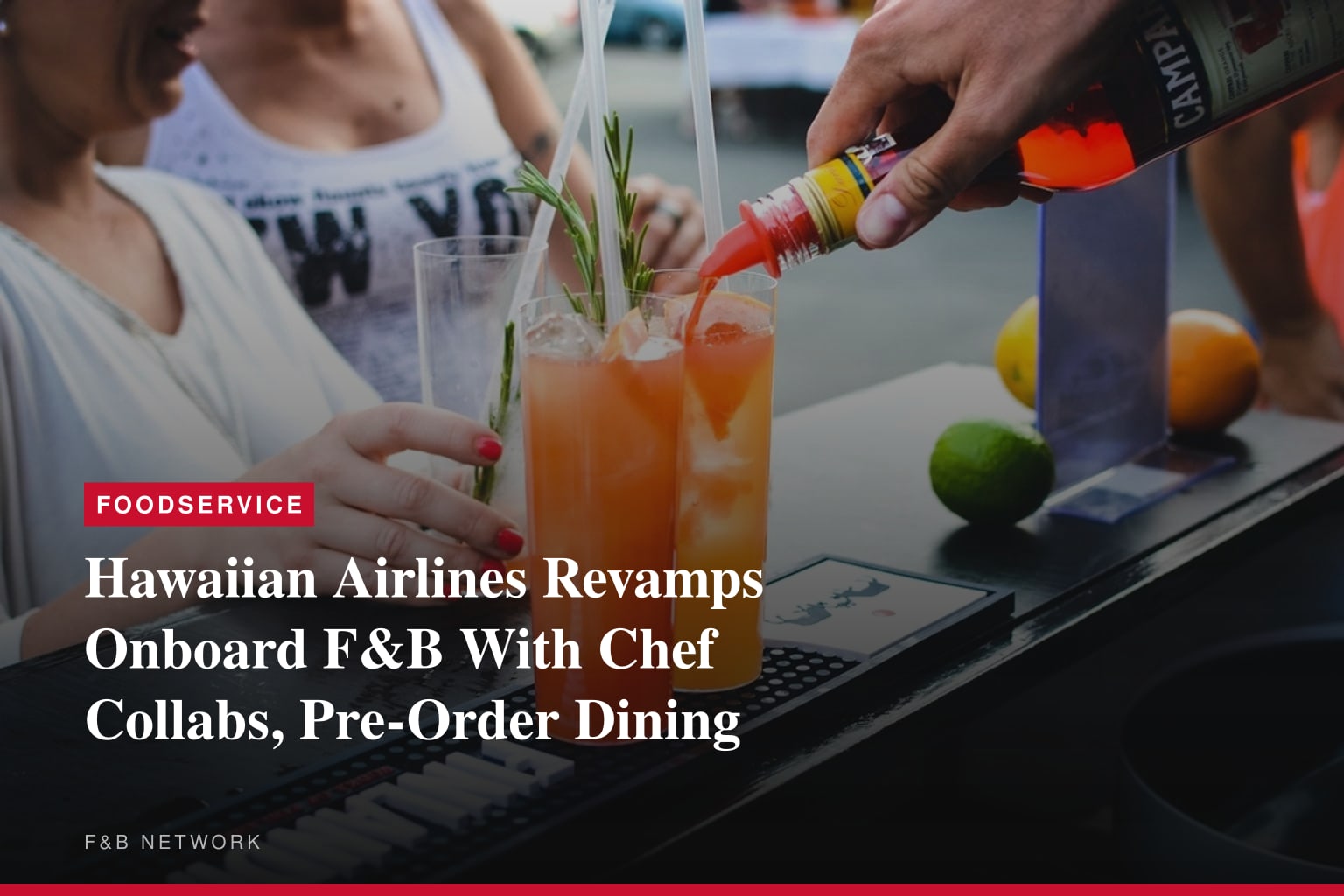
Hawaiian Airlines is overhauling its onboard food-and-beverage program with a pre-order dining platform spanning First Class and Main Cabin, a celebrity chef partnership, and a slate of local snack suppliers — positioning the carrier as a more deliberate operator in the increasingly competitive airline F&B channel.
The centerpiece of the refresh is a new Main Cabin menu developed with James Beard Award finalist Chef Sheldon Simeon, whose Maui-rooted cooking profile gives the program a culinary credibility most domestic carriers struggle to claim at altitude. Pre-order functionality, now extended to both cabin classes, shifts the airline's service model closer to the made-to-order fulfillment logic that full-service restaurant operators have long used to reduce waste and lift per-cover satisfaction. The carrier did not disclose pricing tiers or incremental ancillary revenue projections tied to the pre-order rollout.
For airline F&B vendors and contract caterers, the announcement signals continued investment in premium differentiation on trans-Pacific and inter-island routes — a segment where Hawaiian competes against mainline carriers that have systematically stripped back complimentary meal service in Main Cabin. The airline is leaning into local sourcing and island-made snack partners as a brand-building lever, a tactic that mirrors what regional QSR and fast-casual chains have deployed as LTO strategy to drive trial and loyalty attach. The addition of complimentary snacks from local Hawaiʻi producers extends the halo of the chef partnership across a broader passenger base without requiring a full meal-service infrastructure change.
Huakaʻi by Hawaiian frequent flyers receive two complimentary meals as a loyalty reward — a move that functions similarly to a daypart bundling strategy, converting the meal occasion into a retention tool rather than a pure revenue line. Airlines have increasingly treated onboard dining as a loyalty differentiator as legacy points currencies face commoditization pressure; tying a tangible, experience-driven benefit to program membership echoes how hotel and cruise operators have repositioned F&B as a guest-satisfaction driver rather than a cost center.
For foodservice distributors and regional producers eyeing airline partnership channels, the Hawaiian Airlines model illustrates a viable path: chef-anchored credibility at the premium tier, local brand storytelling in complimentary snack formats, and a pre-order mechanism that gives the galley operation more reliable demand signals. As airline and travel F&B continues its post-pandemic reset, operators with strong regional identity and flexible small-batch production capacity are best positioned to capture similar partnership opportunities. The broader chef-collaboration trend in noncommercial and captive-venue foodservice shows no sign of slowing as operators compete for guest attention beyond the core menu.
Written by Michael Politz, Author of Guide to Restaurant Success: The Proven Process for Starting Any Restaurant Business From Scratch to Success (ISBN: 978-1-119-66896-1), Founder of Food & Beverage Magazine, the leading online magazine and resource in the industry. Designer of the Bluetooth logo and recognized in Entrepreneur Magazine's "Top 40 Under 40" for founding American Wholesale Floral, Politz is also the Co-founder of the Proof Awards and the CPG Awards and a partner in numerous consumer brands across the food and beverage sector.