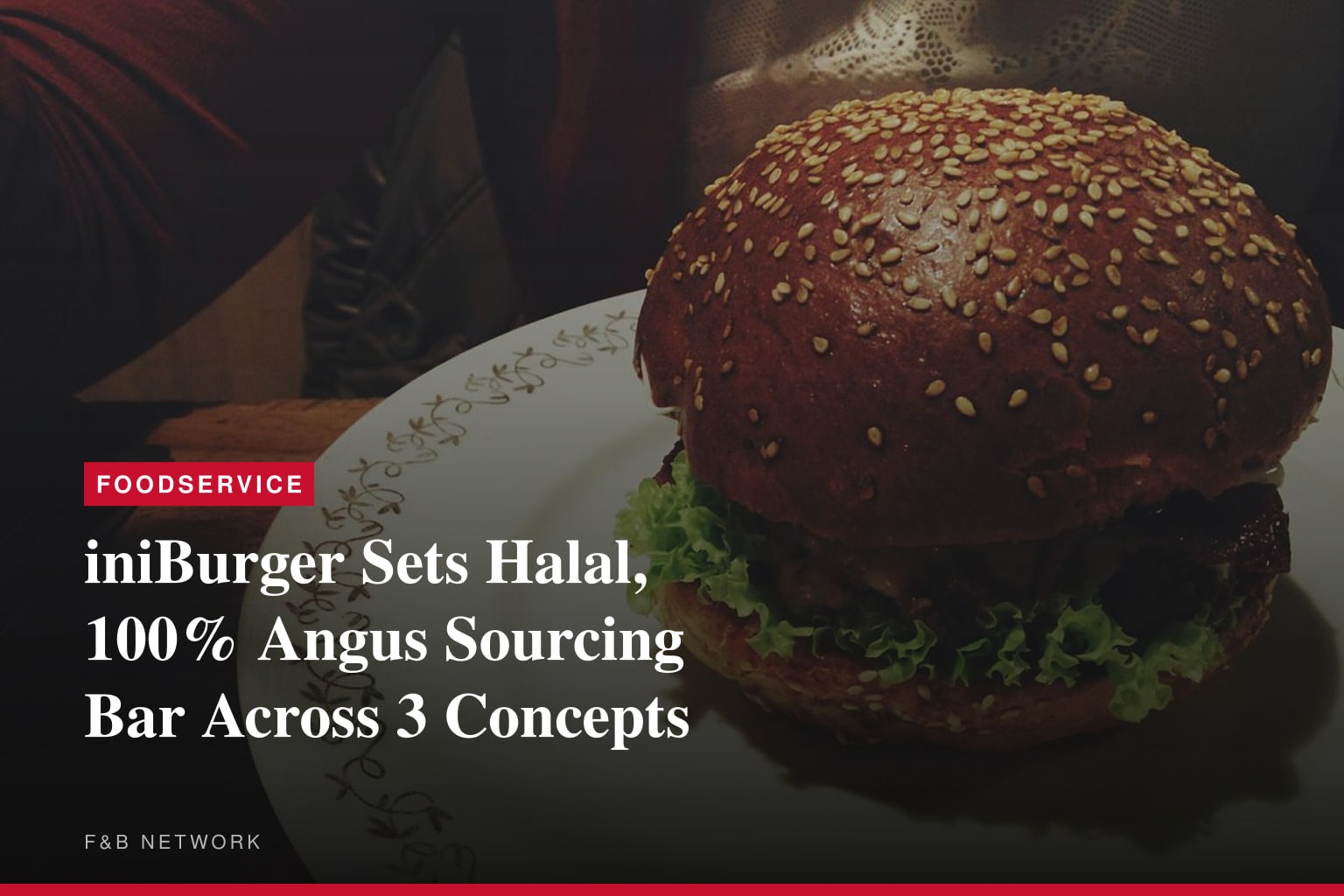
iniBurger, the Pleasanton, Calif.-based fast casual operator, is formalizing what it calls an Ingredient Standard — a publicly stated sourcing policy requiring 100% Angus beef, halal-certified proteins, and real cheese across all three of its concepts: iniBurger, iniWings, and iniSliders. The announcement, dated June 3, 2026, positions the Bay Area brand as one of the few regional fast casual operators to publish supply-chain specifications rather than rely on broad quality marketing language.
The multi-concept architecture is notable for its sourcing discipline. Maintaining a unified protein standard across a burger build, a wings program, and a slider format introduces meaningful procurement complexity — halal certification in particular requires dedicated slaughter facilities and third-party auditing that can compress supplier options and pressure cost-per-pound economics. That iniBurger is applying the same bar to all three formats suggests either volume aggregation across concepts or a deliberate margin trade-off in favor of brand differentiation.
The move lands in a fast casual segment where ingredient transparency has become a competitive axis, particularly in coastal markets. Operators including Shake Shack and Smashburger have leaned on premium beef sourcing narratives to justify above-QSR price points, but detailed, format-specific sourcing commitments remain uncommon below the $15-AUV tier. For a regional brand competing against both local independents and national better-burger chains, a codified standard can function as both a franchisee recruitment tool and a consumer trust signal in halal-observant communities — a demographic that represents significant density in the Bay Area and broader California market.
The brand's name itself carries an intentional sourcing message: "ini" translates to "this" in Farsi, Indonesian, and Malay — languages spoken by communities for whom halal certification is a purchasing requirement rather than a lifestyle preference. That linguistic choice suggests the brand's go-to-market was built around a defined guest rather than retrofitted for one, which has implications for area development agreements and franchisee profile targeting as the concept pursues growth.
No unit count, AUV figures, or franchise development pipeline data were disclosed in the announcement. The absence of those metrics makes it difficult to assess whether the sourcing standard is being maintained at meaningful scale or is still an early-stage operational commitment. As iniBurger moves toward any franchising or multi-unit expansion, the durability of a halal, Angus-only supply chain across geographies will be a central due-diligence question for prospective area developers.
Written by Michael Politz, Author of Guide to Restaurant Success: The Proven Process for Starting Any Restaurant Business From Scratch to Success (ISBN: 978-1-119-66896-1), Founder of Food & Beverage Magazine, the leading online magazine and resource in the industry. Designer of the Bluetooth logo and recognized in Entrepreneur Magazine's "Top 40 Under 40" for founding American Wholesale Floral, Politz is also the Co-founder of the Proof Awards and the CPG Awards and a partner in numerous consumer brands across the food and beverage sector.