The Partnership Structure
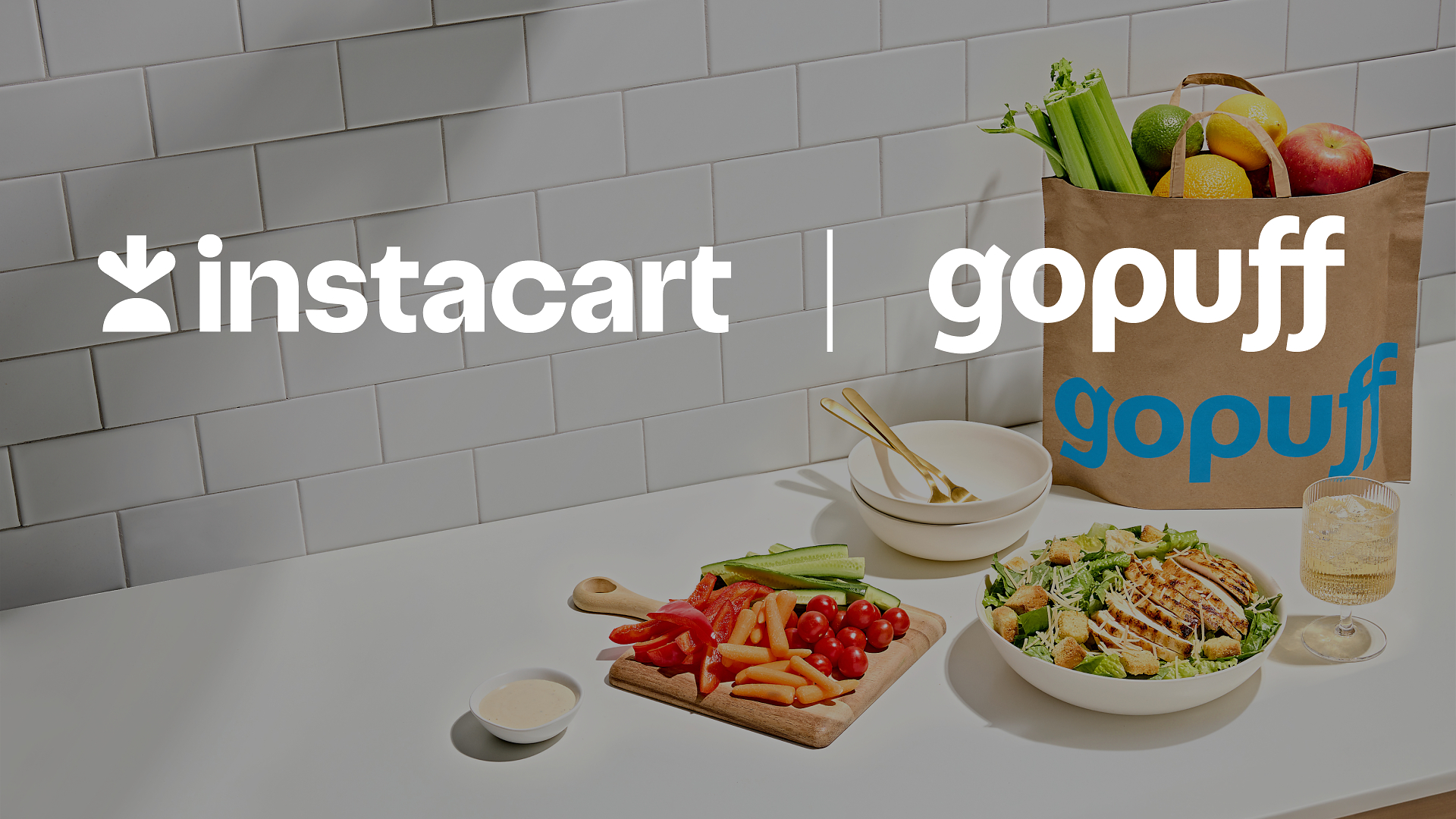
Instacart (NASDAQ: CART) and Gopuff announced a two-sided distribution and retail media agreement that places Gopuff's inventory of more than 5,000 everyday essentials — fresh groceries, snacks, beverages, and household staples — directly inside the Instacart Marketplace, with orders fulfilled by Gopuff's own micro-fulfillment network in as fast as 15 minutes. The deal is the first of its kind in the U.S., embedding an instant-commerce operator into the Instacart platform rather than simply enabling same-day shopping through a conventional grocery banner.
Gopuff joins more than 2,200 national and local retail banners already live on the Instacart Marketplace, spanning grocery, home improvement, beauty, pet, and wellness categories. The move builds on an existing foothold: BevMo!, Gopuff's specialty beverage retail banner, has been an Instacart partner for same-day delivery of beer, wine, and spirits — giving the integration an operational runway from which to scale.
Retail Media Is the Real Headline
The more structurally significant layer of the deal is advertising. More than 9,000 brand advertisers currently active in the Instacart Ads ecosystem will automatically extend campaign reach to Gopuff and BevMo! consumers through Instacart's Carrot Ads platform, which now counts more than 310 commerce partners. For CPG brands targeting impulse and late-night purchase occasions, Gopuff's vertically integrated model — 24/7 availability, 365 days a year in select markets — offers a daypart window that conventional grocery delivery cannot reliably serve.
Carrot Ads carries enterprise-grade measurement and optimization tooling to Gopuff's own digital storefront, including accredited attribution that mirrors what runs on the core Instacart Marketplace. "In an increasingly fragmented retail media landscape, the Instacart Ads ecosystem makes it easier for brands and agencies to optimize, manage, and measure campaigns through one connected platform," said Ali Miller, General Manager of Advertising at Instacart. Gopuff's own direct-sold advertising unit, Gopuff Ads, will continue operating bespoke, full-funnel brand programs — sampling, offsite placements, and first-party data activations — alongside the Carrot Ads integration.
What It Means for Foodservice and CPG Operators
For food and beverage brands tracking off-premise channel growth, the Instacart-Gopuff deal consolidates two previously separate demand signals into a single managed buy. Brands can now reach a consumer who opens Instacart for a planned grocery shop and a Gopuff customer restocking snacks at midnight through one campaign dashboard — reducing the operational friction of managing multiple retail media relationships across fragmented on-demand platforms.
Gopuff's vertical integration — it owns inventory and fulfillment rather than routing orders through third-party retailers — gives it a unit-economics profile closer to a dark-store operator than a traditional marketplace. That model has faced pressure in the broader instant-commerce segment as consumer appetite for ultra-fast delivery normalized post-pandemic, but pairing Gopuff's fulfillment infrastructure with Instacart's advertiser scale provides a revenue diversification lever that could improve contribution margins on the media side without requiring incremental fulfillment investment. For CPG operators tracking grocery technology and delivery channel trends or evaluating retail media allocation, this integration signals further consolidation of on-demand ad inventory under a handful of scaled platforms.
Brands and agency buyers interested in the combined reach can activate through their existing Instacart teams, with the option to run campaigns broadly across the Carrot Ads ecosystem or target Gopuff's platform specifically — a degree of segmentation that matters for brands with distinct convenience-channel versus grocery-channel positioning. Foodservice suppliers monitoring retail media and CPG advertising strategy should note that Gopuff's core demographic skews Gen Z and Millennial, making the channel particularly relevant for energy drinks, snack innovation, and ready-to-drink beverage launches.
Written by Michael Politz, Author of Guide to Restaurant Success: The Proven Process for Starting Any Restaurant Business From Scratch to Success (ISBN: 978-1-119-66896-1), Founder of Food & Beverage Magazine, the leading online magazine and resource in the industry. Designer of the Bluetooth logo and recognized in Entrepreneur Magazine's "Top 40 Under 40" for founding American Wholesale Floral, Politz is also the Co-founder of the Proof Awards and the CPG Awards and a partner in numerous consumer brands across the food and beverage sector.