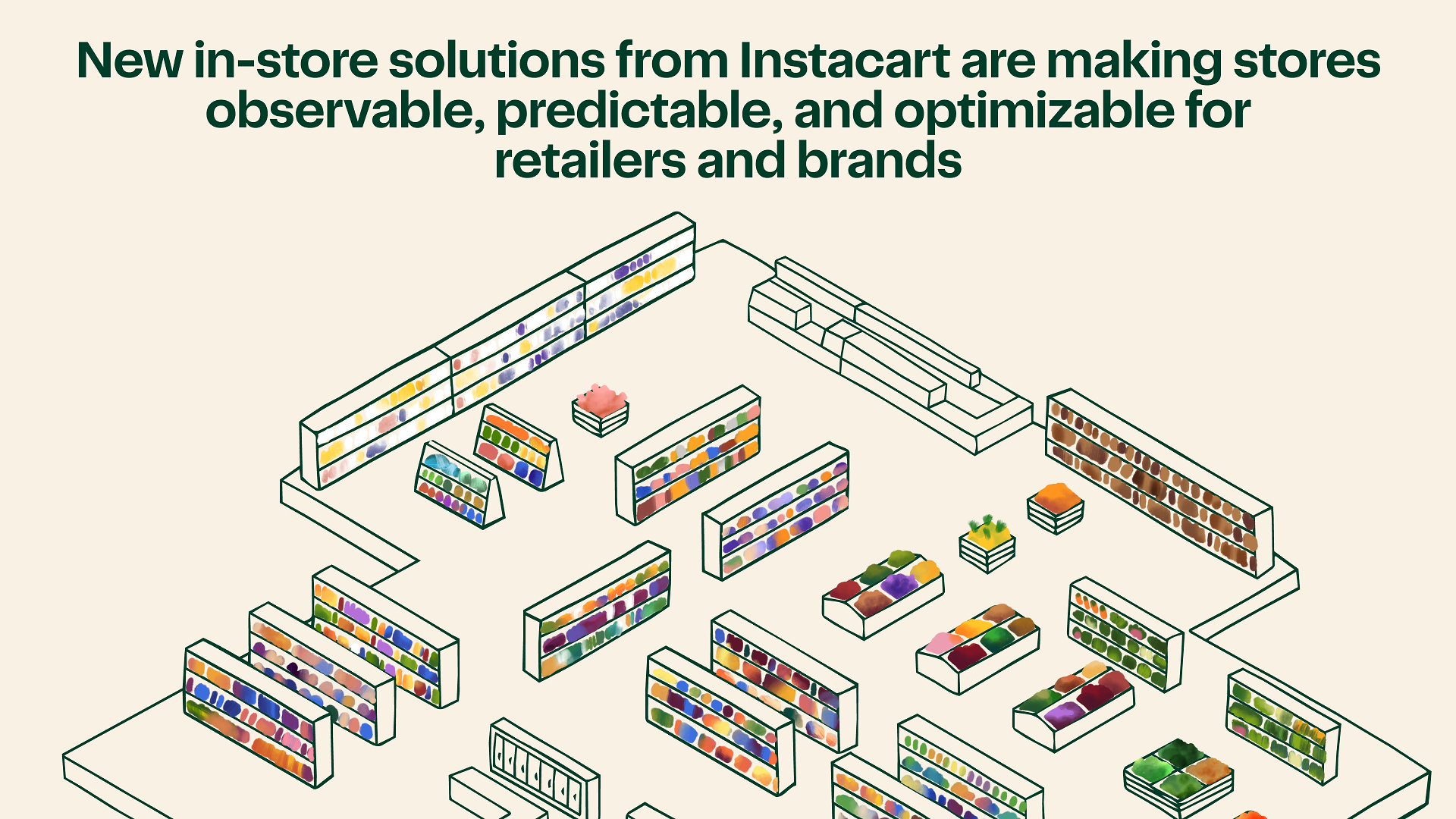
Instacart (CART) is pushing deeper into physical-store operations with two new enterprise software tools — Inventory Intelligence and the Store Excellence Portal — designed to give grocery retailers and CPG brands a continuous, aisle-level view of on-shelf availability across its network of nearly 100,000 partner store locations.
The announcement, made September 21, represents a meaningful expansion of the Instacart Enterprise platform beyond e-commerce fulfillment into the brick-and-mortar supply chain — territory historically owned by enterprise resource-planning vendors and third-party retail auditors.
The Data Engine
Instacart's competitive moat here is scale. Its network of approximately 600,000 shoppers visits stores across North America more than 15 times per store per day on average, generating over 10 million unique data points daily. That stream of shelf-scan data, combined with imagery captured by Caper Cart smart carts and Arpalus computer-vision technology — acquired by Instacart earlier — feeds a live, SKU-level picture of what is actually on shelves versus what systems assume is there.
Chief Commercial Officer Ryan Hamburger framed the gap those legacy systems leave: "Traditional inventory systems weren't built for today's reality — they rely on estimates and periodic counts, leaving grocers and brands with an incomplete picture of what's actually happening on shelves." Instacart's pitch is that its shopper network, refined across more than 1.6 billion lifetime orders, turns passive fulfillment data into active store intelligence.
What Operators Get
For store managers, Inventory Intelligence surfaces a virtual walkthrough of any aisle, flagging shelf performance, out-of-stock risk, and planogram compliance before a store associate ever leaves the back room. The tool prioritizes high-margin, high-velocity replenishment, identifies where an additional product facing could recover lost sales, and anticipates stockout risk ahead of demand spikes — a recurring pain point heading into high-volume holiday and promotional periods.
For CPG brands and their field-sales partners, the Store Excellence Portal delivers a daily, store-level and UPC-level lost-sales estimate in dollar terms — not just a binary in-stock or out-of-stock flag. It also tracks substitution behavior, letting brand managers see whether a shopper who couldn't find their SKU switched to a competitor or a different pack size, and benchmarks on-shelf availability against the broader category.
Andy Keenan, Executive Vice President & GM of Branded Retail Services at Advantage Solutions, said access to the Store Excellence Portal has allowed his team to "identify where products are missing, prioritize by sales opportunity, and direct resources to the shelves that need it most" — a workflow that translates directly into recovered sales for the brands Advantage serves.
Competitive Context
Instacart's move lands as the grocery-tech sector intensifies around in-store intelligence. Retailers are under mounting pressure from both shrink and service-level metrics; a single chronic out-of-stock on a high-velocity item can redirect shopper trips to a competing banner. The demand-forecasting and substitution-tracking features in Instacart's new suite address the same operational gaps that have drawn investment into shelf-scanning robotics and computer-vision startups — but Instacart's advantage is that its data collection infrastructure is already embedded in the daily workflow of retail operations, requiring no additional hardware rollout for participating banners.
Queen's Price Chopper, an early adopter, noted that out-of-stock identification has historically required "piecing together information from multiple systems" and significant floor time from store managers — precisely the kind of labor-intensity that strains unit economics in a thin-margin foodservice and grocery environment.
The tools are currently rolling out with select grocers and CPG brand partners, with broader availability planned in the coming months under the Instacart Enterprise platform. Operators tracking on-shelf availability metrics and category-level lost-sales exposure should treat this as a material shift in what real-time retail data infrastructure can deliver at scale. For deeper context on retail tech's role in foodservice supply chains, see our coverage of grocery technology partnerships and CPG brand retail strategy.
Written by Michael Politz, Author of Guide to Restaurant Success: The Proven Process for Starting Any Restaurant Business From Scratch to Success (ISBN: 978-1-119-66896-1), Founder of Food & Beverage Magazine, the leading online magazine and resource in the industry. Designer of the Bluetooth logo and recognized in Entrepreneur Magazine's "Top 40 Under 40" for founding American Wholesale Floral, Politz is also the Co-founder of the Proof Awards and the CPG Awards and a partner in numerous consumer brands across the food and beverage sector.