Northern Wind, a leading direct off-loader and processor of premium sea scallops, logged a 3x return on investment in the first year after deploying Kargo's AI-powered camera-tower system at its New Bedford, Massachusetts facility — a result that underscores growing operator appetite for automated visibility tools in seafood cold-chain logistics.
The Numbers
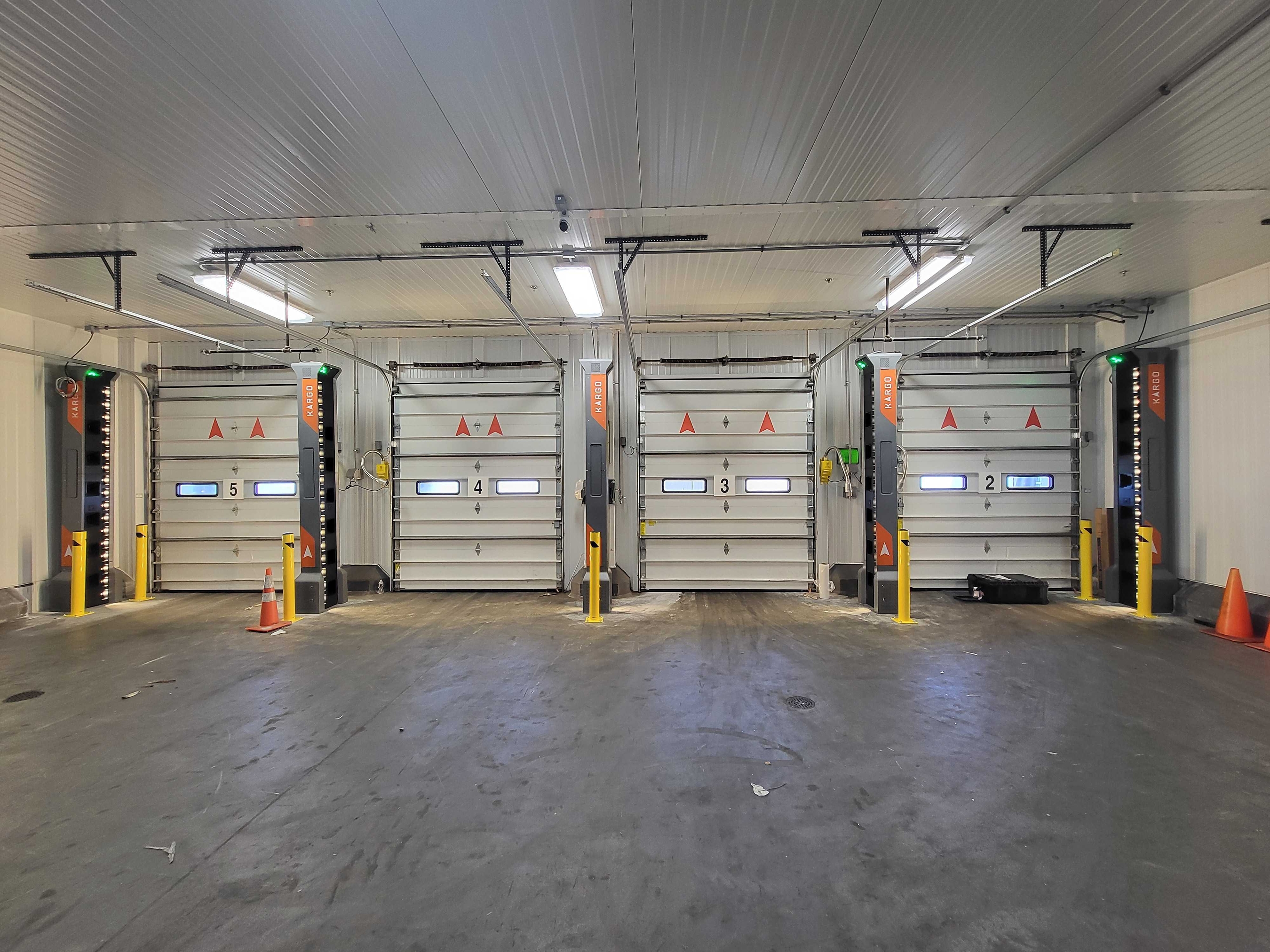
Four Kargo camera towers installed at the facility's dock doors captured visual records of every outbound pallet across 6,970 shipments, surfacing 917 damage exceptions in year one. The documentation trail generated $160,000 in verified savings by enabling Northern Wind to contest erroneous claims from third-party logistics partners and retail customers. Joel Cancel, Vice President of Operations at Northern Wind, credited the system with delivering "definitive proof that pallets leave our custody in great condition," adding that claims resolution alone saves the company "six figures in revenue."
Cold-Chain Context
Outbound dock visibility remains one of the most persistent blind spots in perishable food distribution. For seafood processors, the stakes are especially high: a single pallet can hold more than 100 cases, and errors in size, dimension, or date-code information — historically captured through manual documentation — can trigger costly chargebacks from retail and wholesale grocery buyers. Northern Wind's customer base spans major retailers and wholesale grocers across the U.S., U.K., and South Korea, with product sourced from packers in Asia, amplifying the number of custody handoffs where condition disputes can arise.
Date-code accuracy is a particular pressure point in lobster distribution, where FIFO rotation is tightly regulated and oldest-product-first shipping is a customer requirement. Kargo's computer-vision capture automates that date-code read at the dock door, removing a manual verification step that has historically introduced error at high-volume facilities.
What's Next
The New Bedford installation is a beachhead deployment. Northern Wind is planning to extend Kargo across additional inbound and outbound workflows, with automated Advance Shipping Notice (ASN) generation — both for internal plant-to-plant transfers and for external customer-facing documentation — targeted as the next integration milestone. That capability would connect Kargo's physical-world image capture directly into the electronic data interchange (EDI) layer that retail and foodservice distributors require for receiving.
Sam Lurye, CEO at Kargo, framed the seafood segment as an early proving ground for the company's broader cold-chain thesis. "Every handoff is an opportunity for something to go wrong," Lurye said. "By capturing a visual record of every pallet that leaves the dock, Kargo is helping Northern Wind bring a new level of accountability to the cold chain."
For foodservice distributors and broadline operators managing high-velocity seafood SKUs, the Northern Wind case offers a unit-economics argument for dock-door automation: at $160,000 in first-year savings against a multi-camera installation, payback timelines can compress well inside 12 months — a threshold that supply chain technology adoption in foodservice has historically struggled to clear. Cold-chain accountability tools are increasingly central to seafood procurement and distribution strategy as retail and foodservice buyers tighten claim adjudication processes.
Written by Michael Politz, Author of Guide to Restaurant Success: The Proven Process for Starting Any Restaurant Business From Scratch to Success (ISBN: 978-1-119-66896-1), Founder of Food & Beverage Magazine, the leading online magazine and resource in the industry. Designer of the Bluetooth logo and recognized in Entrepreneur Magazine's "Top 40 Under 40" for founding American Wholesale Floral, Politz is also the Co-founder of the Proof Awards and the CPG Awards and a partner in numerous consumer brands across the food and beverage sector.
Frequently Asked Questions
What ROI did Northern Wind achieve with Kargo's AI vision system?
Northern Wind logged a 3x return on investment in year one, generating $160,000 in verified savings through documented damage exceptions that enabled successful claims contests. Four camera towers captured visual records across 6,970 shipments, surfacing 917 damage exceptions that would have otherwise resulted in chargebacks.
How many damage exceptions did the Kargo system identify at Northern Wind?
Kargo's four camera towers detected 917 damage exceptions across 6,970 outbound shipments in the first year. This documentation trail gave Northern Wind definitive proof of product condition at dock departure, enabling them to contest erroneous claims from logistics partners and retail customers.
Why is dock visibility especially critical for seafood processors?
A single pallet in seafood distribution can hold over 100 cases, and manual documentation of size, dimension, and date-code information historically created disputes that triggered costly chargebacks. For lobster specifically, FIFO rotation is tightly regulated—oldest-product-first shipping is non-negotiable—making visual proof of condition and dating essential.
What was Northern Wind's operational footprint and customer base?
Northern Wind operates a New Bedford, Massachusetts facility and serves major retailers and wholesale grocers across the U.S., U.K., and South Korea, with sourced product from Asian packers that multiply custody handoff points where disputes arise.
How does Kargo's camera-tower system document outbound shipments?
Kargo's AI-powered camera towers capture visual records of every outbound pallet at dock doors, creating an irrefutable documentation trail that supports claims contests. This system eliminates reliance on manual documentation and gives operators definitive proof of product condition at the moment of custody transfer.