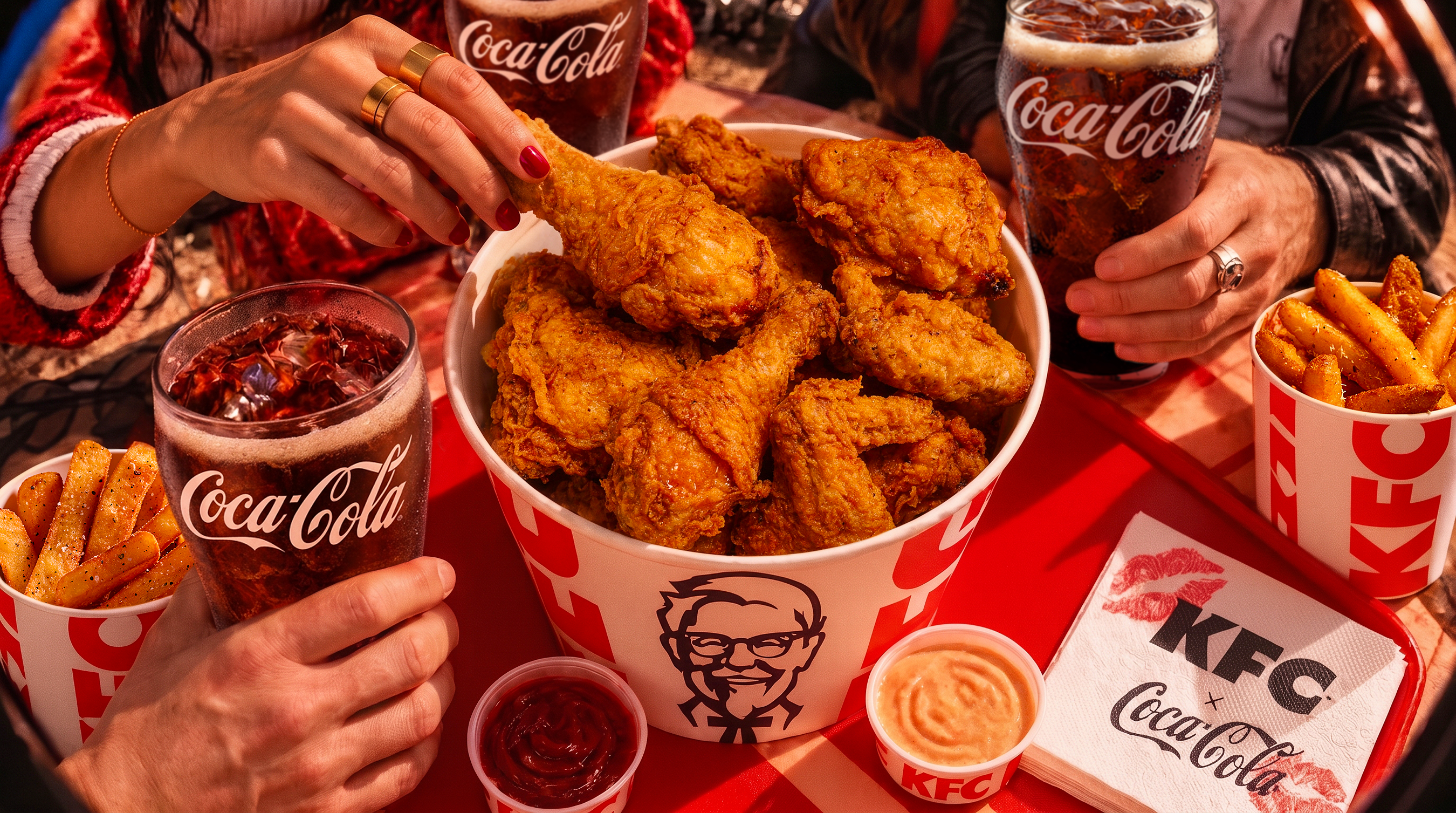
KFC U.S. will shift its domestic beverage partnership to The Coca-Cola Company beginning January 2027, with Coca-Cola products expected to reach all U.S. restaurants by spring 2027. The deal marks the first time the two brands have been linked nationally across the U.S. market and lands as KFC works to rebuild traffic and daypart relevance under what the chain calls its 'Kentucky Fried Comeback' platform.
The Partnership Terms
Under the agreement, KFC will replace its current beverage supplier with Coca-Cola's full portfolio across the domestic system. No financial terms were disclosed, and the companies did not specify a contract duration. Coca-Cola's distribution infrastructure and fountain system capabilities will support KFC operators in the transition, a detail that matters for a franchise-heavy system with more than 3,900 U.S. locations operating under Yum! Brands (NYSE: YUM).
Catherine Tan-Gillespie, President of KFC U.S., framed the move as structural rather than cosmetic. "This partnership is about more than what's in the cup," she said. "It is another step in our work to evolve KFC, strengthen our restaurants, menu offerings and create a more relevant experience for today's customers." Dagmar Boggs, President of Foodservice & On-Premise, North America at The Coca-Cola Company, called it "an incredible opportunity to make every visit more refreshing" through food-and-drink pairings and joint innovation.
Beverage as a Traffic Driver
The Coca-Cola tie-up is part of a broader push by KFC to expand its beverage daypart and capture incremental visits beyond its core chicken occasion. The chain has been testing an expanded drink lineup — including iced coffees, boba, shakes and other specialty beverages — at its Open House innovation restaurant in McKinney, Texas. That concept serves as a live test kitchen for menu and experience ideas before potential wider rollout, a format increasingly common among large QSR chains seeking low-risk concept validation.
Beverage attachment has become a critical unit-economics lever across the quick-service segment. High-margin drinks lift check averages and, when tied to snack or value occasions, can extend morning and afternoon daypart volume without major kitchen investment. KFC's move mirrors the strategy employed by competitors who have prioritized proprietary or co-branded beverage programs — from Taco Bell's Live Más Café tests to McDonald's CosMc's spinoff — as a way to drive frequency and improve per-transaction profitability.
What Operators Should Watch
For KFC franchisees, the transition will require equipment changeovers and staff retraining ahead of the January 2027 start date — an operational lift that typically carries upfront capital costs. Coca-Cola's established foodservice logistics network should ease the logistics burden, but the spring 2027 full-system completion window suggests the brand is building in adequate lead time rather than compressing the rollout. Franchisee reception will be a key indicator of whether the deal accelerates or complicates KFC's broader comeback momentum.
Globally, KFC operates more than 30,000 restaurants across 150 countries and territories, giving Coca-Cola a meaningful volume opportunity if the partnership framework expands beyond the U.S. system over time.
Written by Michael Politz, Author of Guide to Restaurant Success: The Proven Process for Starting Any Restaurant Business From Scratch to Success (ISBN: 978-1-119-66896-1), Founder of Food & Beverage Magazine, the leading online magazine and resource in the industry. Designer of the Bluetooth logo and recognized in Entrepreneur Magazine's "Top 40 Under 40" for founding American Wholesale Floral, Politz is also the Co-founder of the Proof Awards and the CPG Awards and a partner in numerous consumer brands across the food and beverage sector.