The Capacity Play
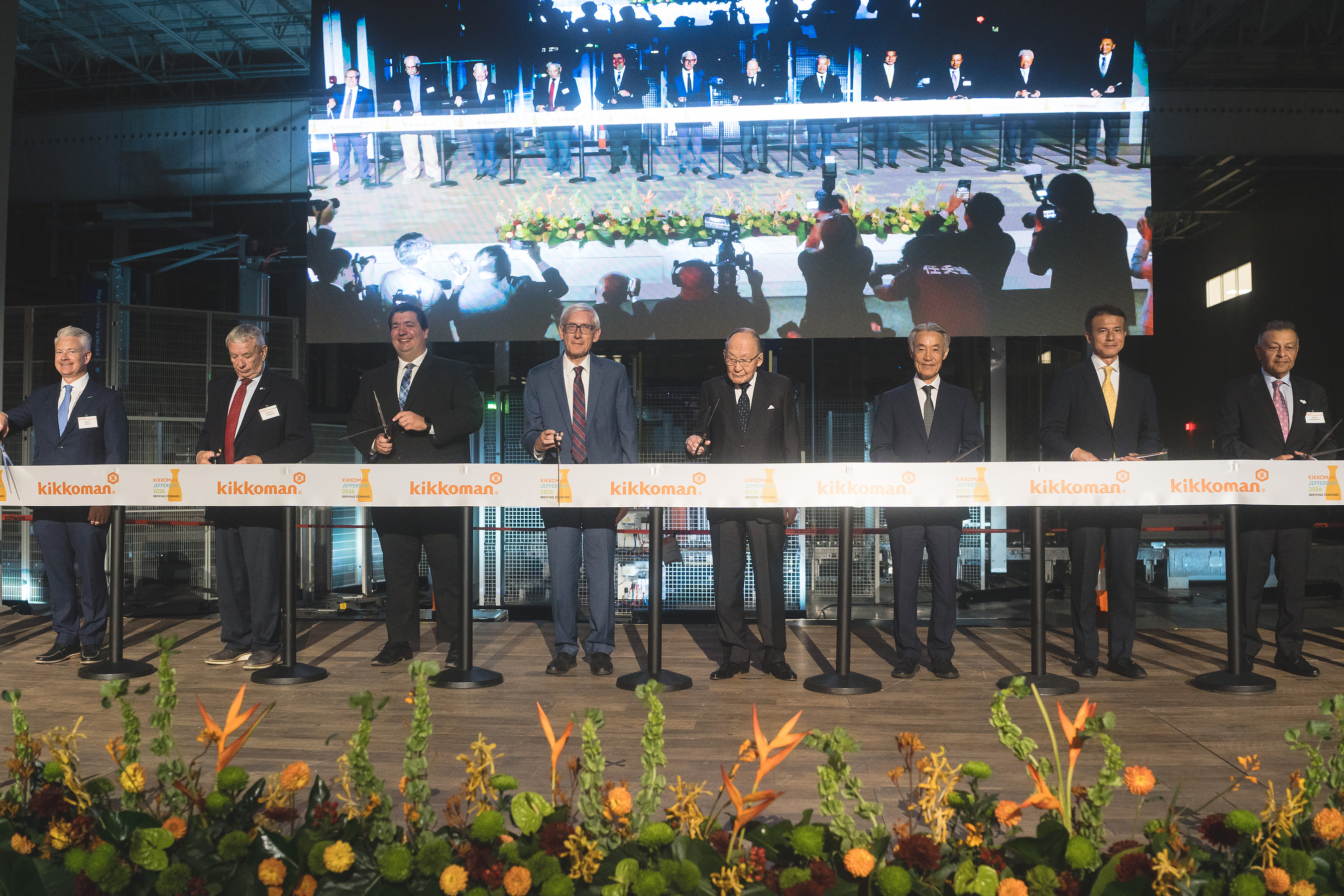
Kikkoman Foods, Inc. cut the ribbon on its third U.S. production facility in Jefferson, Wisconsin, on September 18, with the 240,000-square-foot brewing plant set to begin shipping product in fall 2026. The expansion is backed by approximately $560 million in capital investment spread over 10 years — a signal of sustained demand momentum in a soy sauce category that KFI says has compounded at more than 6.0% annually in North America over the past decade.
The Jefferson plant joins existing KFI facilities in Walworth, Wisconsin, and Folsom, California, giving the company three U.S. manufacturing nodes to supply retail, foodservice, and food manufacturing channels. KFI holds the leading share of the U.S. soy sauce market and has done so for more than a decade. The new plant's flexible layout is engineered to handle multiple product types — soy sauce, teriyaki sauce, and non-soy seasonings — across viscosities and packaging formats including glass, BPA-free plastic, and industrial and bulk sizing, which are critical specs for broadline distributors and contract food manufacturers.
Numbers and Investment Context
The Jefferson build-out brings more than 80 new high-paying jobs to southeastern Wisconsin, layered on top of the existing Walworth workforce. The Wisconsin Economic Development Corporation committed up to $15.5 million in performance-based tax credits tied to job-creation and capital-investment benchmarks, underscoring the site's economic footprint. KFI is also partnering with regional workforce development and technical education programs to pipeline talent for advanced food manufacturing roles — a meaningful hedge against the skilled-labor shortages that have pressured food production operators across the Upper Midwest.
Located within Jefferson's planned Food & Beverage Innovation Campus, the facility incorporates advanced digital manufacturing tools supporting paperless operations, real-time data visualization, and enhanced traceability. These are increasingly standard asks from large foodservice chain customers and grocery buyers with ESG procurement requirements. KFI has paired those technology investments with hard sustainability targets: a greater than 50.0% reduction in CO₂ emissions, a greater than 30.0% cut in water consumption per unit, and a 100% recycling rate — all by 2030.
Foodservice Channel Implications
For foodservice operators and distributors, the Jefferson facility primarily addresses supply reliability at scale. KFI's soy sauce and teriyaki platforms are staple inputs across Asian-American casual dining, fast-casual concepts, and back-of-house flavoring in everything from marinades to dipping sauces. A third domestic production node reduces logistics lead times for Midwest and Eastern market customers and provides redundancy against the kind of supply disruptions that rattled condiment and sauce categories during recent freight and raw-material cycles.
Yuzaburo Mogi, Director Chairman of the Board and Honorary CEO of KFI, framed the Jefferson build in terms of ingredient proximity and water quality — two foundational variables in fermentation-based production. Access to agricultural suppliers in the region and high-quality local water were cited as primary site-selection drivers alongside workforce alignment, factors that parallel the criteria large brewers and specialty ingredient manufacturers apply when evaluating greenfield investments.
KFI has also contributed more than $17 million in charitable donations to regional organizations over its Wisconsin tenure, adding a $250,000 grant to Jefferson County for native prairie restoration to mark the grand opening. That community investment posture is increasingly part of the operator-supplier conversation as chain procurement teams weigh vendor partners on social-impact criteria alongside price and fill rates.
For deeper context on ingredient supply investment and foodservice procurement trends, see our coverage of supply chain and sourcing developments and food manufacturing capacity expansion.
Written by Michael Politz, Author of Guide to Restaurant Success: The Proven Process for Starting Any Restaurant Business From Scratch to Success (ISBN: 978-1-119-66896-1), Founder of Food & Beverage Magazine, the leading online magazine and resource in the industry. Designer of the Bluetooth logo and recognized in Entrepreneur Magazine's "Top 40 Under 40" for founding American Wholesale Floral, Politz is also the Co-founder of the Proof Awards and the CPG Awards and a partner in numerous consumer brands across the food and beverage sector.