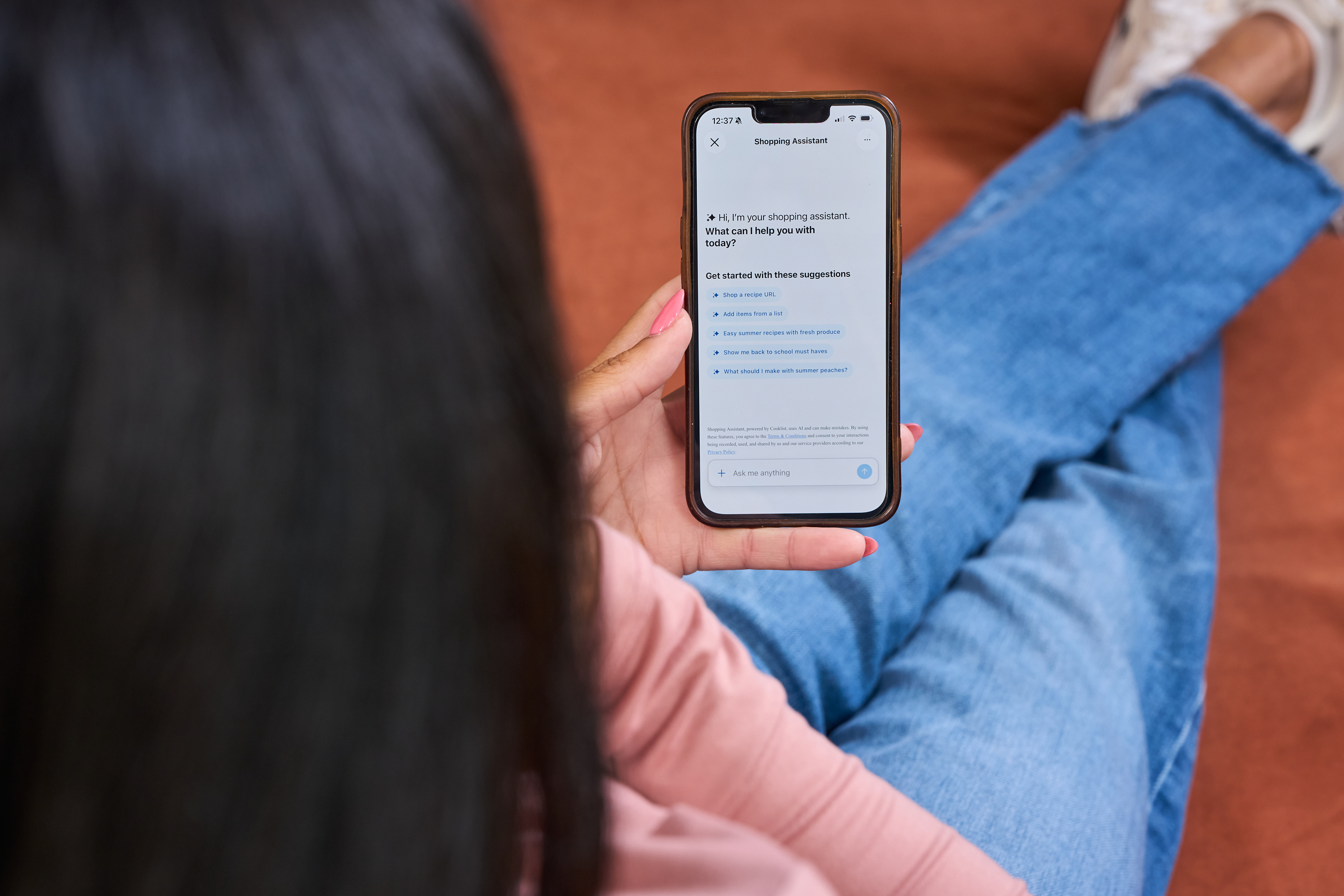
Kroger (NYSE: KR) has deployed an AI-powered Shopping Assistant across its full family of company websites and apps, positioning the tool as a digital counterpart to in-store associate expertise for meal planning, product discovery, and value optimization.
What the Tool Does
The assistant allows customers to plan weekly menus, build carts filtered by budget and dietary need, and import shopping lists by photographing a handwritten card, scanning a recipe card, or pasting a URL — with the system populating a cart in seconds. Yael Cosset, executive vice president and chief digital officer at Kroger, framed the launch as part of an ongoing digital investment strategy. "The AI Shopping Assistant is another example of how we're using technology and AI to help families plan, discover and shop more easily," Cosset said.
The timing targets the late-July to mid-September back-to-school window, historically one of grocery's highest-volume meal-planning periods. Kroger serves more than 11 million customers daily and employs over 400,000 associates across its banner network — scale that gives the AI tool an unusually large product catalog to draw from across private-label tiers including Kroger, Simple Truth, Simple Truth Organic, and Private Selection.
Private Label as the Upsell
The assistant is explicitly built to surface Kroger's Own Brands portfolio, a strategic lever the retailer has leaned on to defend basket value as consumers remain price-sensitive. The company's private-label lineup spans every daypart: frozen breakfast sandwiches and protein yogurt for morning occasions, crustless PB&J sandwiches and lunchkits for midday, and globally inspired frozen meals and salad kits for weeknight dinner.
For grocery operators and foodservice-adjacent retail buyers, the AI tool represents a meaningful shift in how store-brand products get recommended — moving from shelf placement and circular promotions to algorithmic, intent-driven cart injection. If the assistant learns to prioritize owned-brand SKUs when margins favor them, Kroger's already-strong private-label mix could see incremental lift.
Omnichannel and Third-Party Distribution
Kroger continues to emphasize fulfillment optionality: in-store, pickup, and delivery via Kroger.com and its app, with same-day delivery through DoorDash, Instacart, and Uber Eats for on-demand occasions. The AI assistant surfaces consistently across all these channels, which matters for retail foodservice and convenience operators watching how large grocery chains are compressing the distance between meal inspiration and completed transaction.
The broader competitive context is notable. Walmart, Instacart, and Amazon Fresh have each invested in AI-driven shopping guidance tools over the past 18 months, and Kroger's move signals that AI-assisted grocery shopping is transitioning from pilot feature to table stakes for major chains. For food manufacturers and co-packers supplying Kroger's private-label program, the assistant's emphasis on owned brands adds a new algorithmic distribution variable to an already complex shelf-space dynamic.
Written by Michael Politz, Author of Guide to Restaurant Success: The Proven Process for Starting Any Restaurant Business From Scratch to Success (ISBN: 978-1-119-66896-1), Founder of Food & Beverage Magazine, the leading online magazine and resource in the industry. Designer of the Bluetooth logo and recognized in Entrepreneur Magazine's "Top 40 Under 40" for founding American Wholesale Floral, Politz is also the Co-founder of the Proof Awards and the CPG Awards and a partner in numerous consumer brands across the food and beverage sector.