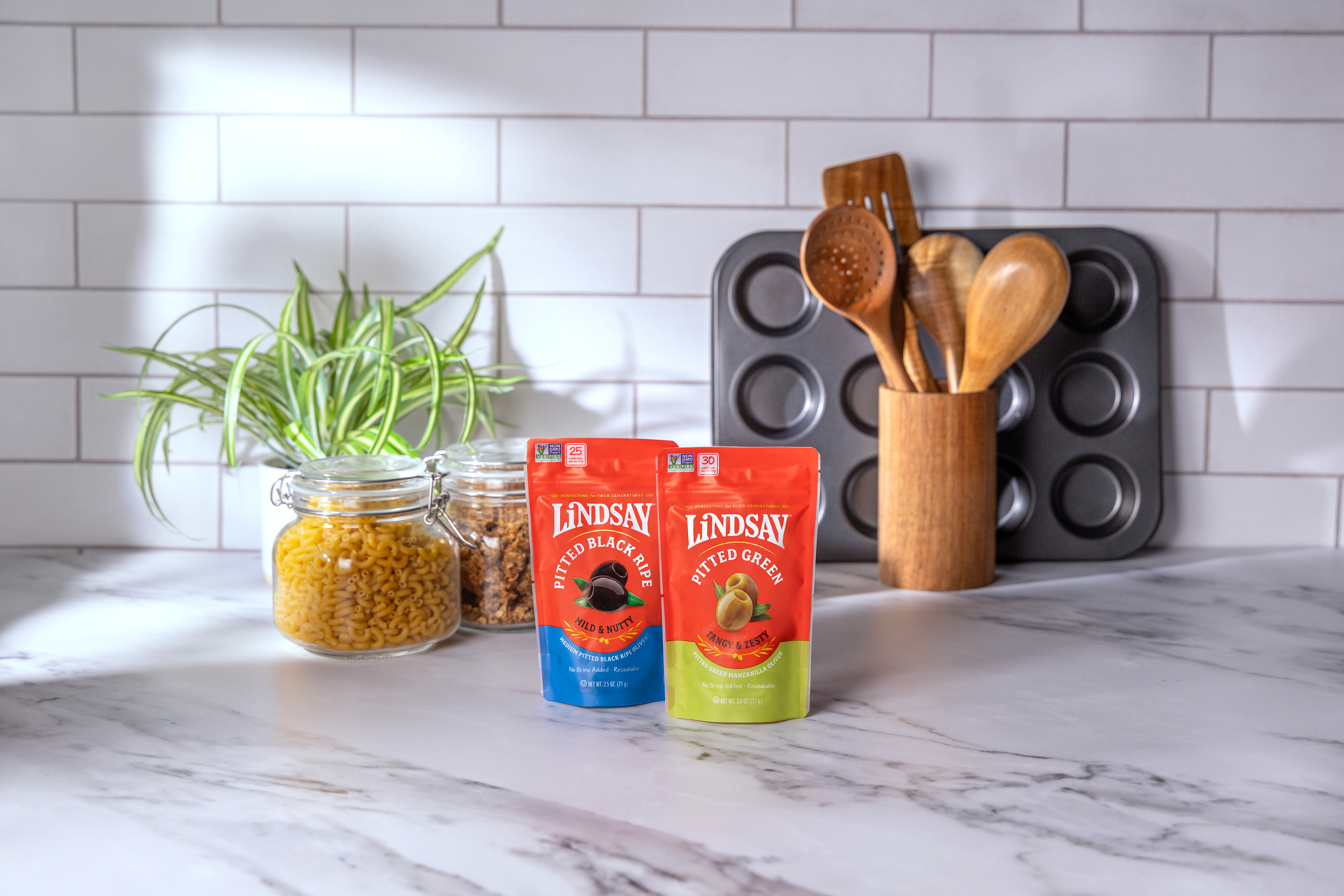
Bell-Carter Foods is pushing Lindsay Olives into the single-serve snack aisle with the rollout of Lindsay Olive Pouches — 2.5 oz resealable packs landing at Albertsons/Safeway, ShopRite and Food Lion locations nationwide at a suggested retail price of $2.99–$3.49.
The launch marks the brand's clearest play yet for snack-occasion trial outside the canned olive set, where the 114-year-old California producer has historically dominated. Two SKUs lead the range: a Black Ripe Pitted Olive pouch, positioned for desk snacking and salad use, and a Spanish Pitted Green Olive pouch aimed at lunchbox and charcuterie occasions. Both are shelf-stable, brine-free and resealable — format attributes that squarely address the friction points operators and retail buyers cite most often when merchandising olives outside the center-store condiment aisle.
The Retail Case
For foodservice-adjacent retail buyers and c-store category managers, the format signals a broader shift in how ambient olive brands are chasing the portable-snack dollar. The $2.99–$3.49 price point positions Lindsay Olive Pouches at a modest premium to grab-and-go olive cups already circulating in natural and specialty channels, while the three-chain rollout gives Bell-Carter meaningful conventional grocery reach from day one. Albertsons/Safeway alone operates more than 2,200 banner locations, giving the SKU immediate national scale in mainstream grocery — a distribution footprint that most emerging snack brands spend years building.
Scott McCoy, Vice President at Bell-Carter Foods, framed the launch as a daypart expansion play: "Lindsay Olive Pouches build on the flavors people already know and love while creating more opportunities to enjoy olives throughout the day." The comment reflects a wider category ambition — moving olives from a dinner-prep ingredient into morning, midday and afternoon snack occasions.
What It Means for Operators
For foodservice operators and commissary buyers, the pouch format has practical crossover appeal. Single-serve ambient pouches require no refrigeration, generate no brine waste and carry a resealable closure — logistics that make them viable for catering drop-offs, grab-and-go cooler adjacencies and portion-controlled charcuterie boards without the knife-work typically associated with jarred olive programs. Fast-casual and café operators who already source Lindsay canned product will recognize the brand equity; the new format simply extends it into a lower-labor, lower-waste SKU.
The ambient snack segment broadly has seen accelerating velocity in portable protein and savory formats over the past two years, as consumers shifted meal occasions toward fragmented, throughout-the-day eating. Olive category growth has lagged behind nuts and jerky in the portable-snack set, in part because legacy packaging — cans and brine-packed jars — creates handling friction. The resealable pouch addresses that gap directly, borrowing a format playbook already proven in the cheese, meat snack and dried-fruit segments. For more on how ambient snack formats are reshaping retail foodservice adjacencies, see our coverage of emerging snack categories and center-store innovation.
Written by Michael Politz, Author of Guide to Restaurant Success: The Proven Process for Starting Any Restaurant Business From Scratch to Success (ISBN: 978-1-119-66896-1), Founder of Food & Beverage Magazine, the leading online magazine and resource in the industry. Designer of the Bluetooth logo and recognized in Entrepreneur Magazine's "Top 40 Under 40" for founding American Wholesale Floral, Politz is also the Co-founder of the Proof Awards and the CPG Awards and a partner in numerous consumer brands across the food and beverage sector.