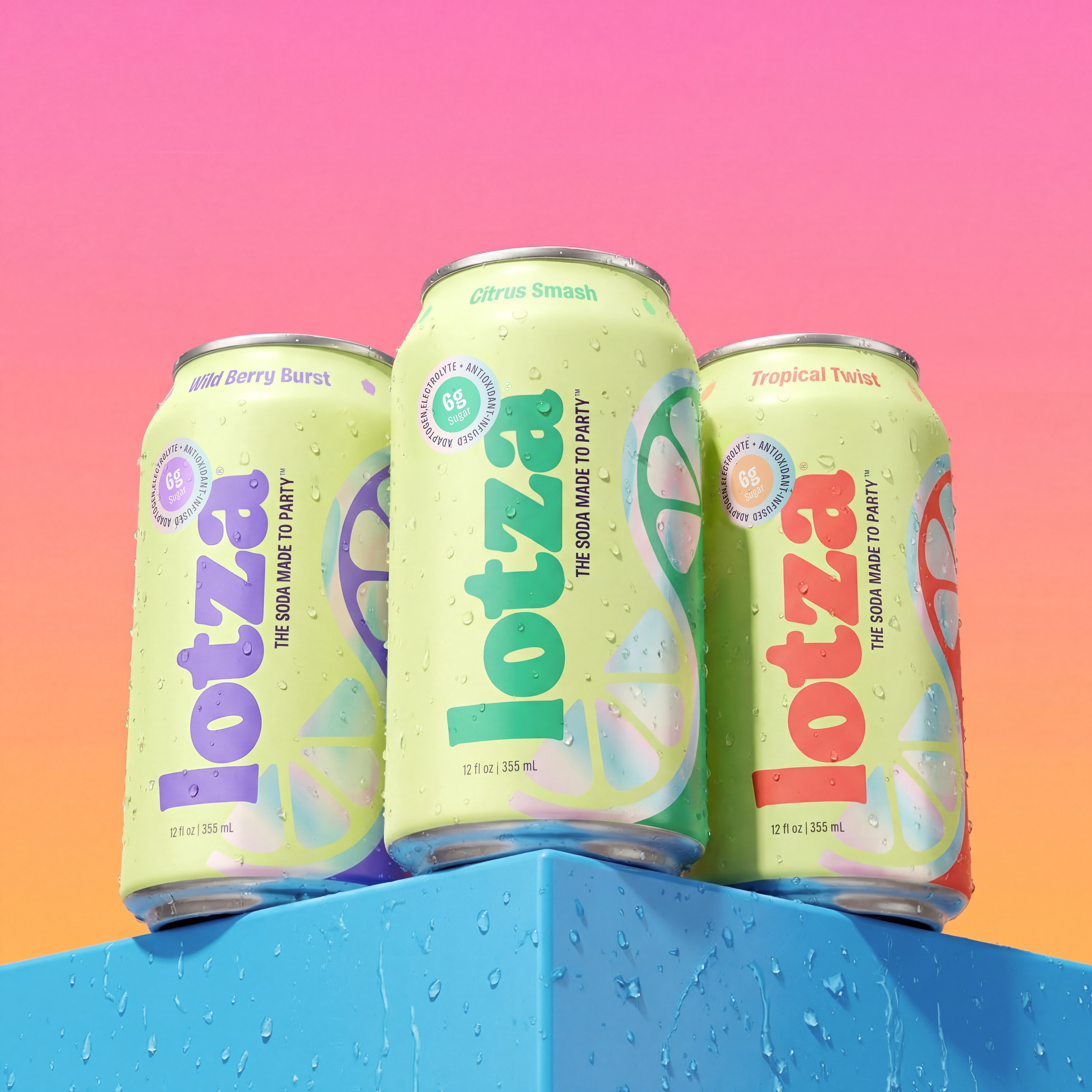
Lotza, a Menomonee Falls, Wis.-based beverage startup, entered the functional sparkling-soda segment this month with three SKUs under the brand positioning "The Soda Made to Party™" — marking a direct play for the social-occasion and celebration daypart that mainstream carbonated soft-drink brands have largely ceded to hard seltzer and RTD cocktail formats.
The launch lineup — Citrus Smash, Wild Berry Burst, and Tropical Twist — is currently available through Amazon and the brand's direct-to-consumer site, getlotza.com, with select retail doors also live at launch. No AUV, distribution door count, or velocity figures were disclosed in the initial release, leaving the unit-economics picture thin for prospective on-premise buyers evaluating pour cost and back-bar real estate.
The functional-soda segment has become a crowded but high-velocity shelf set, with brands such as Olipop and Poppi having demonstrated that better-for-you positioning can command premium price points — often $2.49 to $3.99 at retail — while simultaneously building foodservice and hospitality channel volume as a mixer or standalone non-alc option. Lotza's "puckery, fruit-forward" flavor profile and social-moment messaging suggest the brand is angling for a similar dual-channel strategy, though no formal foodservice distribution agreements or area development commitments have been announced. Operators sourcing non-alc options for bar programs and fast-casual beverage stations will want to monitor velocity data once broader retail distribution data is available. The brand's positioning adjacent to alcohol-occasion moments — without carrying an ABV — fits a growing operator interest in inclusive beverage menus that serve both drinking and non-drinking guests at the same table. For coverage of how emerging non-alc brands are reshaping bar-program economics, see our non-alcoholic beverage segment roundup and the broader emerging brands channel.
With no disclosed franchise structure, royalty rate, or foodservice-specific pricing tier, Lotza's near-term commercial-foodservice relevance hinges on whether the brand can secure a broadline or specialty distributor relationship — a standard threshold for operators running centralized procurement. The social-occasion positioning, if supported by sufficient marketing spend, could resonate with entertainment venues, event-catering operators, and fast-casual concepts building out non-alc daypart revenue.
Written by Michael Politz, Author of Guide to Restaurant Success: The Proven Process for Starting Any Restaurant Business From Scratch to Success (ISBN: 978-1-119-66896-1), Founder of Food & Beverage Magazine, the leading online magazine and resource in the industry. Designer of the Bluetooth logo and recognized in Entrepreneur Magazine's "Top 40 Under 40" for founding American Wholesale Floral, Politz is also the Co-founder of the Proof Awards and the CPG Awards and a partner in numerous consumer brands across the food and beverage sector.