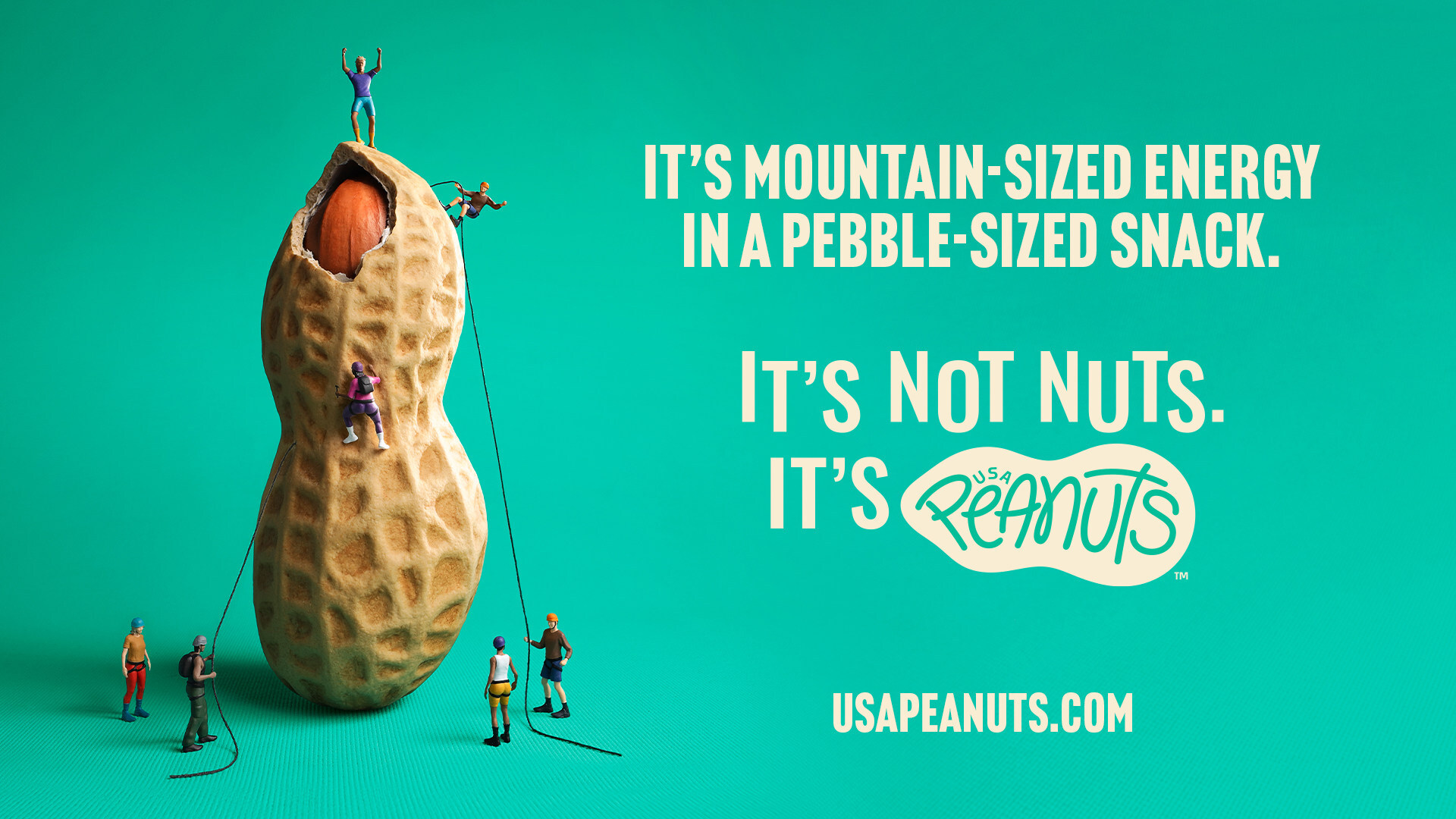
The National Peanut Board unveiled its first industry-wide brand platform on May 18, anchoring the initiative around the tagline 'It's Not Nuts. It's Peanuts.' — a creative push designed to reframe peanuts as a distinct, premium-adjacent ingredient category rather than a commodity staple. The campaign, developed with stop-motion director Anthony Farquhar-Smith, marks the first time U.S. peanut farmers, manufacturers, and consumer brands have aligned behind a single cohesive identity.
The board did not disclose campaign spend or attach specific sales targets, but the strategic pivot carries clear implications for foodservice operators. Peanuts already index heavily across snack and appetizer dayparts — from fast-casual Asian-inspired sauces to QSR limited-time-offer peanut-butter platforms — and a unified marketing narrative could lift category pull-through at the menu level. The board's core positioning leans on two data-backed claims: peanuts deliver more protein per serving than tree nuts, and carry the smallest carbon footprint of any nut-adjacent product, a metric increasingly relevant as chain sustainability disclosures tighten.
The commodity context matters for procurement desks. Peanuts are shelf-stable, non-refrigerated, and carry a cost-per-gram-of-protein advantage over animal proteins and most plant-based alternatives — a structural benefit at a moment when food-cost pressures continue to challenge operator margins. That affordability argument resonates especially in the full-service and fast-casual segments, where protein-forward menu builds remain a traffic driver and value perception is under pressure.
On the supply side, peanuts are a domestic U.S. crop concentrated in Georgia, Texas, and the Southeast, insulating the ingredient from the import-tariff volatility affecting tree nuts, cocoa, and certain spices. For multi-unit operators running commodity-hedged menus, that supply-chain stability is a quiet but material advantage in the current trade environment.
The 'It's Not Nuts. It's Peanuts.' platform is less a direct operator promotion than an upstream category-marketing effort — analogous to beef checkoff or dairy board campaigns — intended to build consumer demand that flows down to foodservice menus over a multi-year horizon. Whether chain culinary teams accelerate LTO development in response will depend on how effectively the board extends the campaign into operator-facing channels, trade show activations, and co-marketing agreements with ingredient suppliers and distributor partners.
Written by Michael Politz, Author of Guide to Restaurant Success: The Proven Process for Starting Any Restaurant Business From Scratch to Success (ISBN: 978-1-119-66896-1), Founder of Food & Beverage Magazine, the leading online magazine and resource in the industry. Designer of the Bluetooth logo and recognized in Entrepreneur Magazine's "Top 40 Under 40" for founding American Wholesale Floral, Politz is also the Co-founder of the Proof Awards and the CPG Awards and a partner in numerous consumer brands across the food and beverage sector.