The Non-GMO Project reported that its Non-UPF Verified program has surpassed 304 verified products spanning 23 brands, roughly eight months after opening for enrollment in January 2026 — a pace that underscores accelerating retailer and brand pressure to address ultraprocessed food (UPF) scrutiny with credentialed third-party certification.
The Numbers
Verified products now cover 15 food and beverage categories, with participants including Amy's Kitchen, Simple Mills, Spindrift, and Chomps. Another 41 brands are actively pursuing verification, signaling a near-term pipeline that could push the certified portfolio well past 500 SKUs by mid-2027 at current velocity. The Non-GMO Project's existing network of more than 5,000 food brands across North America gives the program a substantial commercial runway, distinct from category-specific certification schemes.
To earn the seal, at least 70% of a product's ingredients must meet the Standard's thresholds for permissible minimal or moderate processing. Certain ingredients and processing methods associated with ultraprocessed formulation are restricted or prohibited outright — criteria the organization says cannot be evaluated from a nutrition facts panel or ingredient list alone. That supply-chain-level review is the program's core differentiator, drawing on methodology the nonprofit refined over nearly two decades operating the Non-GMO Project Verified Butterfly, which now appears on more than 63,000 products.
Regulatory Backdrop
The program's growth coincides with a sharpening policy environment. California lawmakers recently passed AB 2244, which would establish a state-administered Non-Ultraprocessed Certified program if signed into law. The state's proposed framework would evaluate eligibility using ingredient and nutritional data available on the label; Non-UPF Verified goes further by assessing the actual processing methods used in production — information that typically requires direct engagement with a brand's manufacturing and supply chain operations.
For foodservice operators and retail buyers sourcing better-for-you center-store and branded items, the divergence between label-based government classification and process-audited third-party certification matters practically: a product could theoretically clear a regulatory threshold while still failing an independent processing audit. That gap creates commercial value for brands willing to submit to the more rigorous standard, particularly as chain accounts and natural-channel retailers tighten supplier expectations around processing transparency.
App and Demand Signal
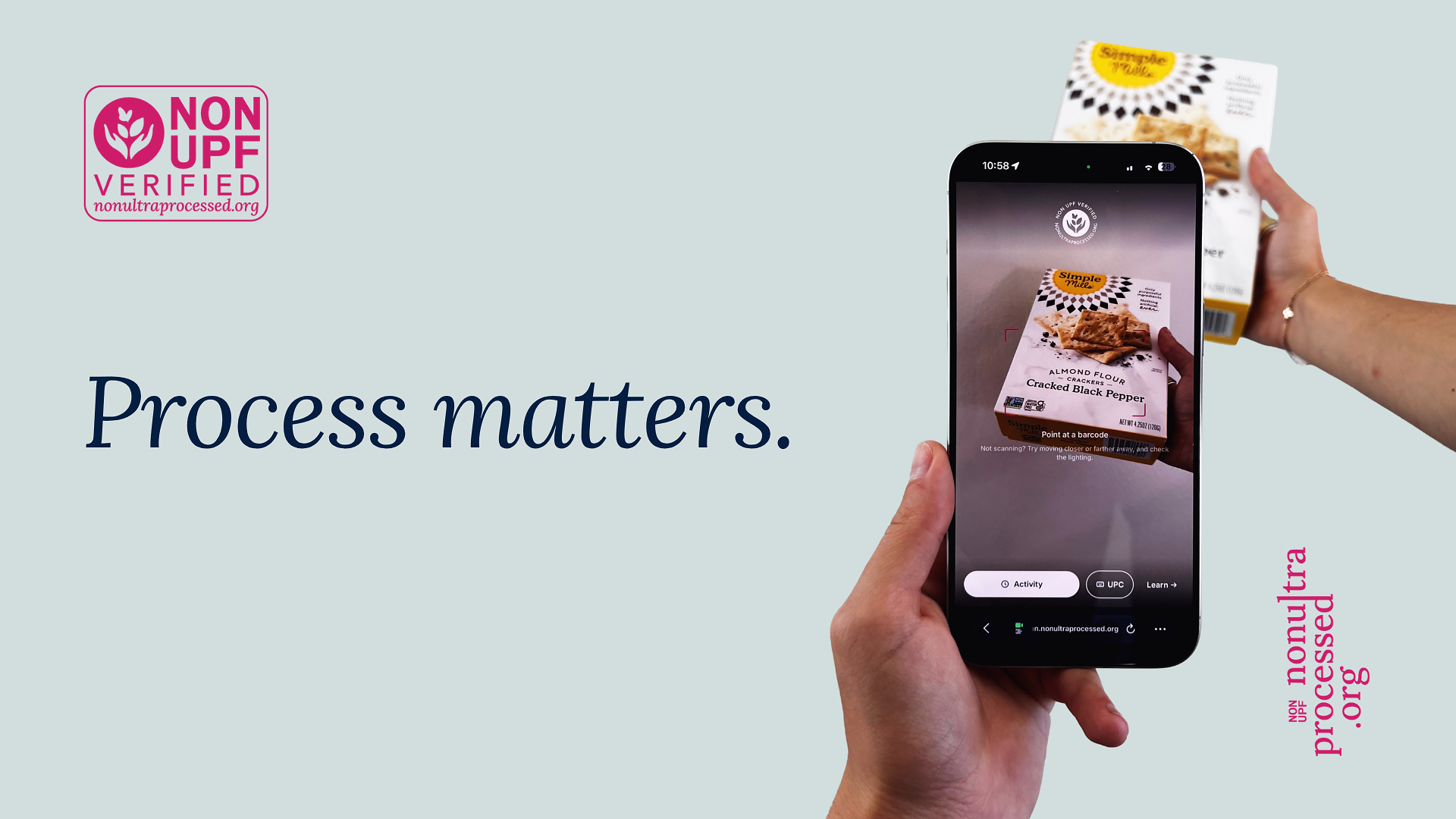
Alongside the product milestone, the Non-GMO Project launched a consumer-facing Non-UPF Verified app for iOS and Android that lets shoppers scan barcodes to check verification status. A built-in request feature allows users to flag unverified products they want certified — effectively crowdsourcing demand signals back to brand partners. Non-GMO Project CEO Megan Westgate described the mechanic as a mechanism for "informed participation" rather than passive label reading, positioning the app as a feedback loop between shopper behavior and manufacturer decision-making.
For brands weighing certification investment, the demand-signal data from the app could provide a business case for pursuing verification — a dynamic familiar from early-stage clean-label programs that eventually reached mainstream distribution. Operators and procurement teams tracking the UPF conversation should expect verification status to appear on retailer line-review criteria and menu development briefs in coming seasons as the regulatory and consumer landscape continues to shift.
Written by Michael Politz, Author of Guide to Restaurant Success: The Proven Process for Starting Any Restaurant Business From Scratch to Success (ISBN: 978-1-119-66896-1), Founder of Food & Beverage Magazine, the leading online magazine and resource in the industry. Designer of the Bluetooth logo and recognized in Entrepreneur Magazine's "Top 40 Under 40" for founding American Wholesale Floral, Politz is also the Co-founder of the Proof Awards and the CPG Awards and a partner in numerous consumer brands across the food and beverage sector.