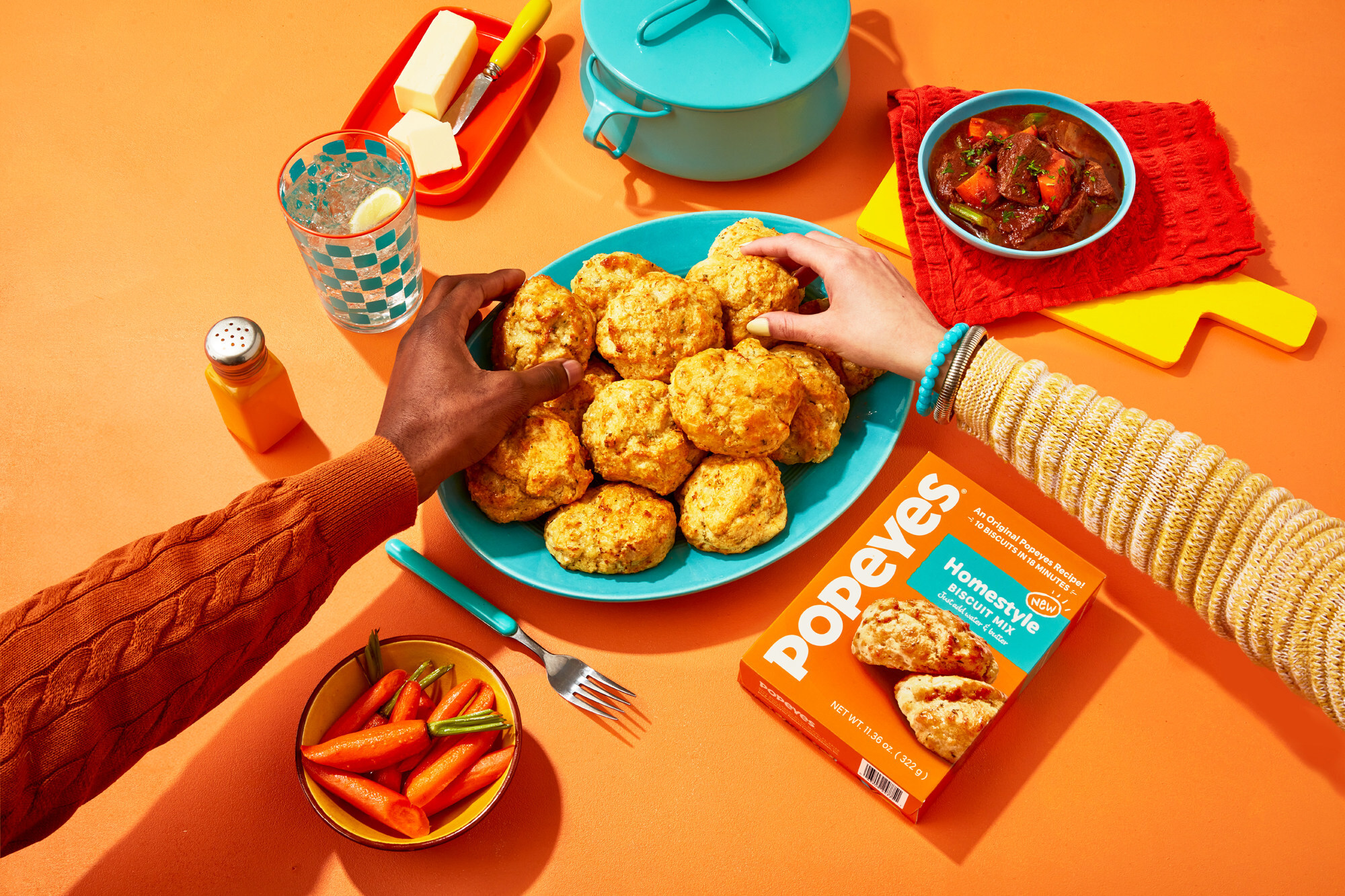
Popeyes is pushing further into the consumer-packaged goods aisle, launching two at-home biscuit mix varieties — Homestyle and Cajun Cheddar — timed to National Biscuit Day. The move marks the latest extension of the Miami-based chain's retail grocery strategy, giving operators and brand-watchers another data point on how legacy QSR players are licensing their culinary identity beyond the four walls.
The chain has not disclosed retail pricing, distribution partners, or projected first-year SKU volume for the biscuit mixes. What is clear is that the launch builds on an existing and expanding grocery lineup, suggesting Popeyes parent Restaurant Brands International is treating CPG as a meaningful secondary revenue channel rather than a one-off promotional play. Royalty-bearing licensing agreements tied to retail SKUs have become an increasingly reliable margin enhancer for franchised systems, where incremental brand revenue flows to the franchisor without burdening franchisee-level unit economics.
The biscuit is one of Popeyes' most recognizable LTO and core-menu assets, routinely cited in brand equity research alongside the chain's fried chicken sandwich — itself the centerpiece of a viral 2019 moment that permanently reset the brand's AUV trajectory. Translating that biscuit equity into a retail product fits a broader segment pattern: chains from Chick-fil-A to Cracker Barrel have used grocery-channel extensions to maintain brand relevance during daypart softness or between major LTO cycles. For Popeyes, which competes directly with Raising Cane's, Zaxby's, and Wingstop in the chicken QSR segment, the CPG shelf position functions as low-cost, high-frequency brand advertising.
The off-premise and at-home consumption trends that accelerated through 2020–2022 have moderated at the restaurant level, but retail food manufacturers continue to report sustained consumer appetite for restaurant-branded grocery products. That dynamic gives QSR chains incremental pricing power in the grocery aisle while reinforcing trial and loyalty among consumers who may visit units less frequently amid ongoing check-size sensitivity. Franchisees, for their part, generally benefit from halo awareness without bearing any direct cost of the retail launch.
Popeyes has not provided guidance on how the CPG expansion factors into system-wide comp sales targets or development commitments for its franchisee base. Investors in Restaurant Brands International will likely watch whether the grocery lineup generates measurable royalty upside when RBI next reports quarterly results. For now, the biscuit mix launch positions Popeyes as one of the more active QSR brands in converting core menu iconography into scalable retail revenue — a playbook that sister brand Tim Hortons has run for years in the packaged coffee category.
For broader context on how chicken-segment chains are navigating brand extension and unit growth, see Foodservice News coverage of QSR chicken segment trends and restaurant CPG licensing strategies.
Written by Michael Politz, Author of Guide to Restaurant Success: The Proven Process for Starting Any Restaurant Business From Scratch to Success (ISBN: 978-1-119-66896-1), Founder of Food & Beverage Magazine, the leading online magazine and resource in the industry. Designer of the Bluetooth logo and recognized in Entrepreneur Magazine's "Top 40 Under 40" for founding American Wholesale Floral, Politz is also the Co-founder of the Proof Awards and the CPG Awards and a partner in numerous consumer brands across the food and beverage sector.