The Quarter in Numbers
Post Holdings (NYSE: POST) reported third-quarter net sales of $1,948.0 million for the period ended June 30, 2026, a decline of 1.8%, or $36.3 million, versus the prior year. Gross profit came in at $566.3 million, or 29.1% of net sales, down from 30.0% a year ago. Operating profit fell 19.3% to $189.3 million, while net earnings dropped 41.7% to $63.4 million. Adjusted EBITDA, the holding company's primary performance metric, reached $377.3 million — a 5.0% decrease year-over-year but still at a 19.4% margin on net sales.
Diluted earnings per share came in at $1.29, compared with $1.79 in the prior-year period. On an adjusted basis, diluted EPS was $1.78 versus $2.03 a year ago. For the nine months ended June 30, 2026, net sales grew to $6,165.5 million from $5,911.1 million, while nine-month Adjusted EBITDA increased 6.9% to $1,190.5 million — a bright spot that largely reflects the July 2025 consolidation of 8th Avenue Food & Provisions.
Segment Breakdown
Post's Foodservice division — principally egg and potato products supplied to commercial foodservice operators — felt the sharpest year-over-year pressure. Segment net sales fell 6.5% to $652.9 million as the business lapped avian influenza-driven pricing embedded in the prior-year comparable. Segment Adjusted EBITDA declined 11.4% to $140.8 million. Volumes, however, rose 4.3%, driven by improved customer service levels and stronger production in protein-based shakes, signaling that underlying demand trends in the foodservice channel remain constructive once pricing distortions are stripped away. Management pegs the segment's normalized annual run rate at $500 million in Adjusted EBITDA, and the current fiscal year carries approximately $60 million above that level due to the avian influenza pricing tailwind that will not repeat.
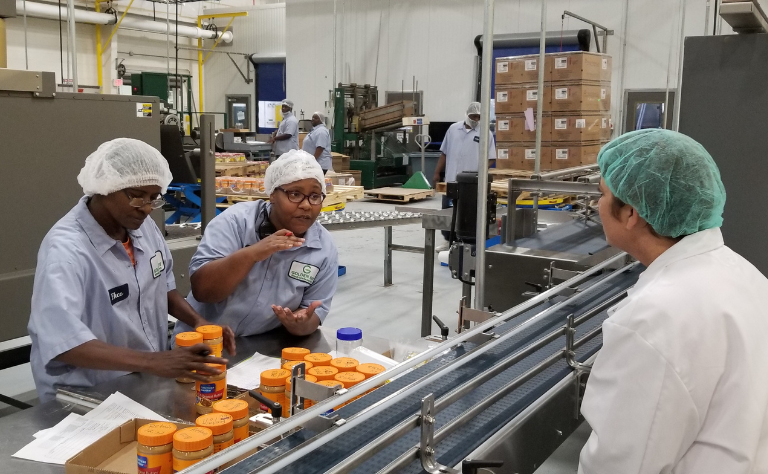
Post Consumer Brands — the company's largest segment by revenue, encompassing ready-to-eat cereal, granola, pet food, and nut butters — posted net sales of $974.2 million, up 6.6%, with $141.8 million attributable to the 8th Avenue acquisition. Excluding that contribution, organic volumes fell 7.1%, with pet food volumes off 7.8% on distribution losses and category declines, and cereal and granola volumes down 5.5%. Despite the volume headwinds, segment Adjusted EBITDA rose 11.2% to $197.3 million as the 8th Avenue add more than offset organic softness. Refrigerated Retail net sales dropped 21.1% to $184.5 million, primarily reflecting the May 2026 divestiture of the Crystal Farms Dairy business and the normalization of egg demand after last year's avian influenza-driven spike. The Weetabix segment, Post's U.K. RTE cereal business, held net sales essentially flat at $137.1 million while segment Adjusted EBITDA jumped 13.7% to $37.3 million, benefiting from improved profitability despite a 3.8% volume decline tied to private-label softness.
Portfolio Actions and Capital Allocation
Post's portfolio reshaping continued through the quarter. The company completed the sale of substantially all Crystal Farms Dairy assets on May 1, 2026, following the December 2025 divestiture of 8th Avenue's pasta business. Together, these moves sharpen Post's exposure toward value-added egg and potato foodservice products — a category where operator demand for processed proteins has remained durable despite broader restaurant traffic uncertainty. Capital expenditures for the nine months totaled $289.8 million, and management guided full-year capex to $370–$390 million, including $80–$90 million for cage-free egg facility expansion and the completion of a precooked egg facility in Norwalk, Iowa. Post also repurchased 9.1 million shares for $908.8 million through June 30, at an average of $100.34 per share, with $490.7 million remaining under its buyback authorization as of August 5.
FY2026 Guidance and FY2027 Setup
Management narrowed its fiscal year 2026 Adjusted EBITDA outlook to $1,560–$1,570 million from a prior range of $1,550–$1,580 million. Crucially, guidance includes approximately $60 million in Foodservice earnings above the segment's $500 million normalized run rate and roughly $20 million in contributions from divested businesses — items that frame the FY2027 comparable. Stripping those out implies an entry point of approximately $1.48 billion for fiscal 2027. Management's preliminary FY2027 view is roughly flat to that comparable level, with growth in Foodservice off its run rate, pricing actions, and productivity initiatives expected to largely offset inflationary pressure and continued volume softness in select categories. Net leverage stood at 4.6x as of June 30, calculated under Post's credit agreement.
Written by Michael Politz, Author of Guide to Restaurant Success: The Proven Process for Starting Any Restaurant Business From Scratch to Success (ISBN: 978-1-119-66896-1), Founder of Food & Beverage Magazine, the leading online magazine and resource in the industry. Designer of the Bluetooth logo and recognized in Entrepreneur Magazine's "Top 40 Under 40" for founding American Wholesale Floral, Politz is also the Co-founder of the Proof Awards and the CPG Awards and a partner in numerous consumer brands across the food and beverage sector.