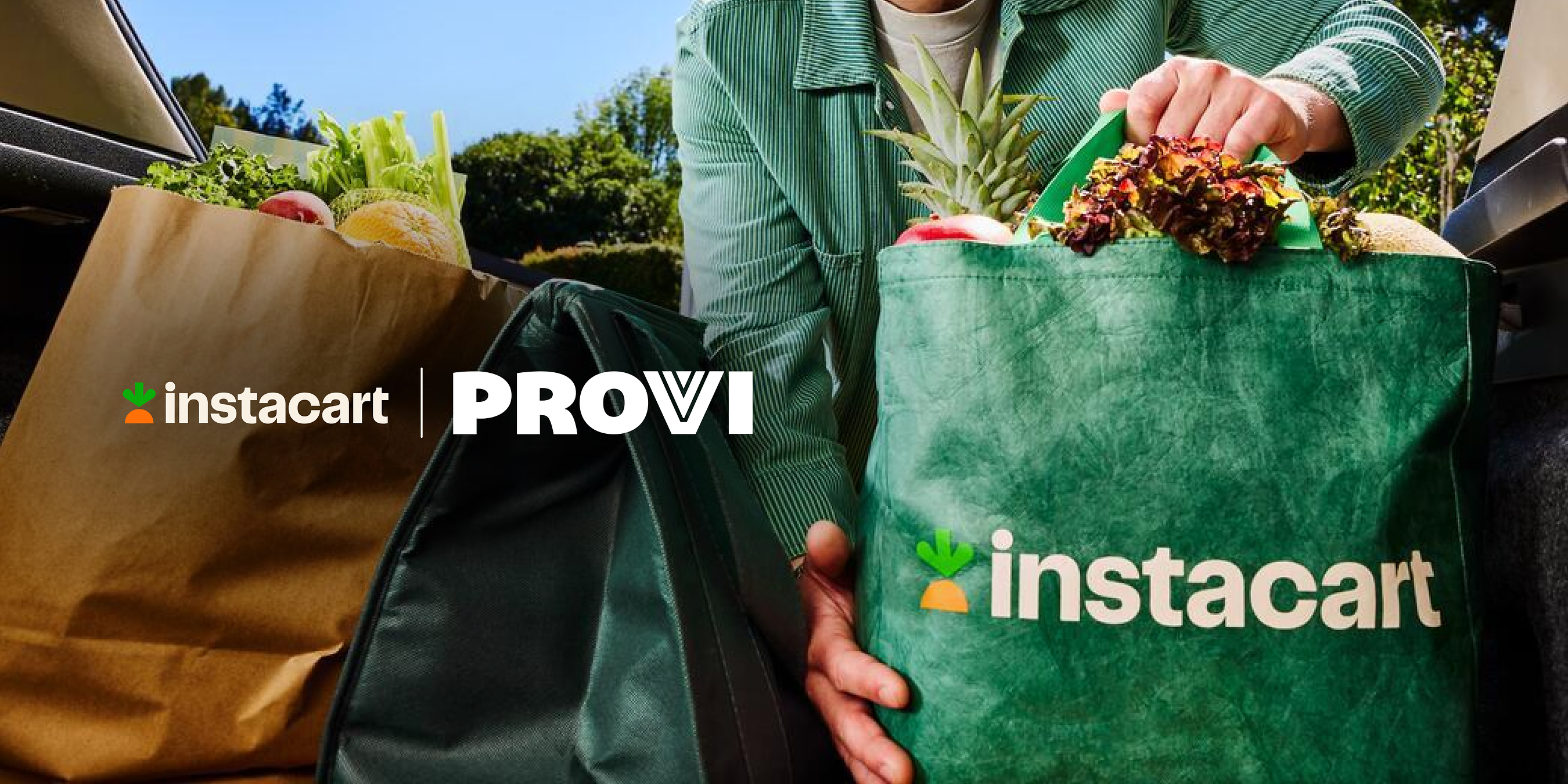
Provi, the B2B digital marketplace connecting the beverage alcohol three-tier system, has embedded Instacart (Nasdaq: CART) directly into its platform, giving bars and restaurants same-day access to non-alcoholic essentials — garnishes, juices, mixers, cleaning supplies, paper goods — without switching tools or waiting on a scheduled distribution run.
The integration is live nationwide as of November 12, available to all operators on Provi's marketplace, which counts more than 1,400 distributor partners, nearly 50,000 active retail and on-premise accounts, and over 1.4 million listed products. Through the embedded experience, Provi customers can browse participating national, regional, and local grocery retailers sourced from Instacart's network of more than 2,200 retail banners — representing nearly 100,000 stores — place orders, and track deliveries in real time, all within the Provi website.
The Operational Problem
The pitch is squarely unit-economics: on-premise operators running tight inventory cycles routinely face mid-shift shortages that fall outside their standard broadline or specialty distributor windows. Matthew Tucker, Chief Executive Officer of Provi, framed it plainly — a bar can deplete its lime supply on a Saturday night or a restaurant can run short on napkins before a dinner rush, and in those moments a next-day solution is not viable. By layering Instacart's same-day fulfillment capability onto its existing alcohol-ordering infrastructure, Provi is positioning itself as a broader operational hub rather than a single-category purchasing tool.
Andrew Nodes, Vice President and General Manager of Instacart Business & Supply Chain, noted the fit: Instacart Business was designed for commercial buyers who need speed and reliability, and the Provi integration channels that infrastructure to an operator audience already comfortable with the platform. The arrangement is confined to non-alcoholic items, keeping Provi's regulated beverage alcohol transactions within the three-tier compliance framework.
Why It Matters for Operators
For chain and independent operators alike, procurement fragmentation is a persistent cost driver. Logging into multiple portals, managing separate delivery windows, and absorbing emergency markups from convenience channels all erode unit-level margins. A solution that consolidates urgent non-alcohol restocking alongside routine beverage alcohol ordering reduces that friction — and potentially the labor hours tied to it.
The move also signals a broader trend in B2B foodservice technology: vertical platforms are expanding their addressable use cases rather than ceding adjacent spending to generalist procurement tools. Provi already operates SevenFifty, the wine and spirits trade catalog, and SevenFifty Daily, a trade publication — assets that give it unusual reach across suppliers, distributors, and buyers in the on-premise channel. Adding on-demand grocery fulfillment extends the platform's stickiness with operators who might otherwise default to consumer delivery apps for emergency restocking, typically at a higher per-unit cost.
For Instacart, the Provi integration adds a commercial-foodservice distribution channel to its enterprise and supply chain business line — a segment the company has been building out as a complement to its consumer marketplace. Access to Provi's nearly 50,000 active operator accounts represents meaningful commercial volume in a daypart-sensitive, high-frequency category.
Written by Michael Politz, Author of Guide to Restaurant Success: The Proven Process for Starting Any Restaurant Business From Scratch to Success (ISBN: 978-1-119-66896-1), Founder of Food & Beverage Magazine, the leading online magazine and resource in the industry. Designer of the Bluetooth logo and recognized in Entrepreneur Magazine's "Top 40 Under 40" for founding American Wholesale Floral, Politz is also the Co-founder of the Proof Awards and the CPG Awards and a partner in numerous consumer brands across the food and beverage sector.