The Product
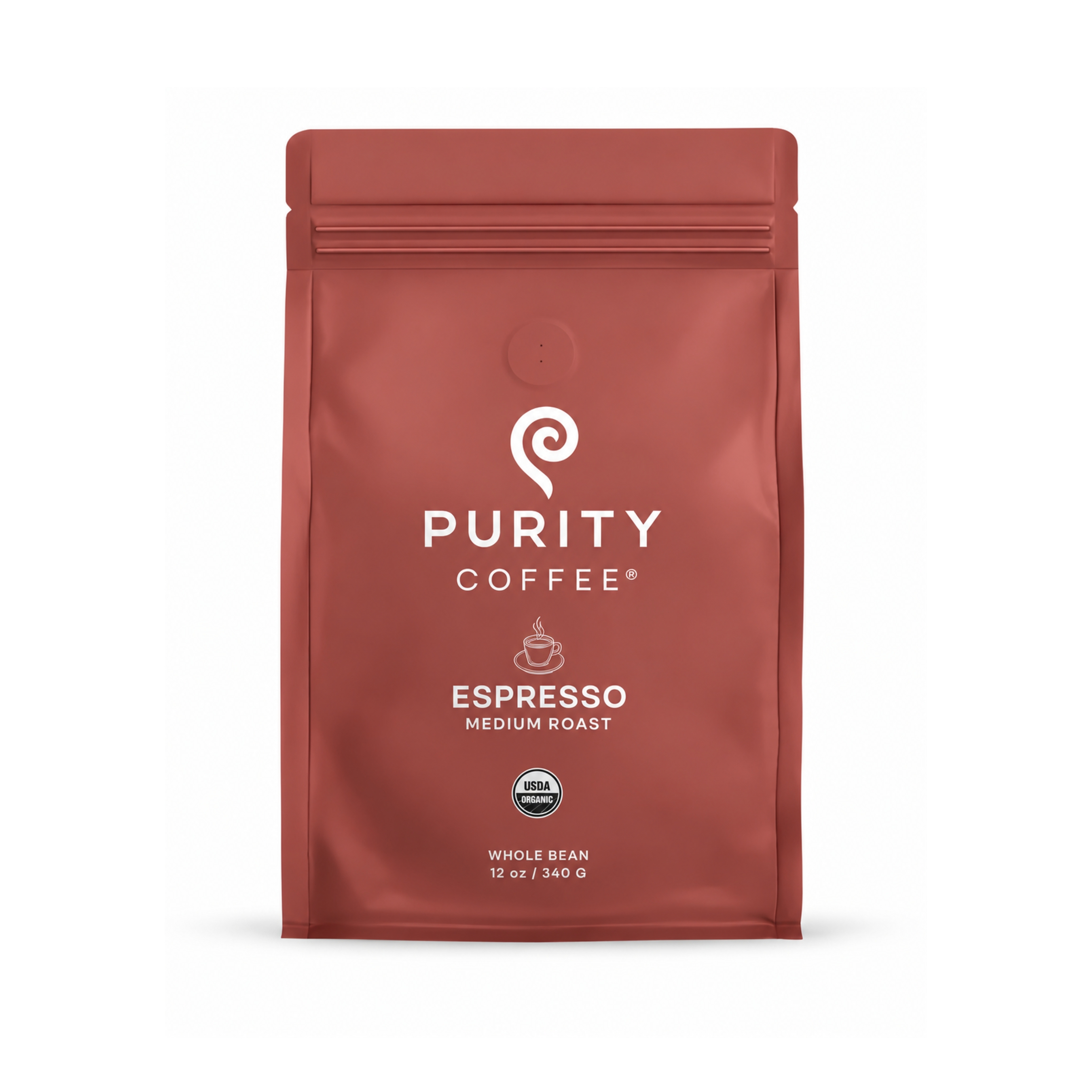
Purity Coffee, the Greenville, S.C.-based specialty roaster that markets its beans around third-party contaminant testing and regenerative sourcing, launched ESPRESSO on Oct. 2 — its first SKU engineered specifically for espresso extraction. Priced at $30 for whole beans, the medium roast is available direct-to-consumer via PurityCoffee.com and represents the brand's first deliberate daypart expansion into the espresso occasion.
Roast Positioning
Rather than simply darkening an existing blend, Purity calibrated the ESPRESSO roast profile to land between FLOW, its flagship medium roast, and EASE, its dark roast. The positioning is strategically deliberate: the intermediate roast level softens natural acidity and builds body suited to concentrated extraction, while preserving the antioxidant and beneficial-compound profile central to Purity's marketing narrative. Tasting notes include cocoa, dried-fruit acidity, and a silky body, with compatibility across traditional and automatic espresso machines, moka pots, lattes, and cappuccinos.
CEO and co-founder Andrew Salisbury called the launch a direct response to sustained customer demand. "We created ESPRESSO to deliver the rich, balanced experience people want from espresso while setting a higher standard for healthy coffee," Salisbury said. "Every decision — from the soil to the final roast — can influence the quality and health potential of the coffee in your cup."
Market Context
The launch lands in a specialty-coffee segment where the espresso daypart has outpaced drip in premium direct-to-consumer channels, driven by the proliferation of home espresso equipment and single-serve milk-frothing devices. For a brand whose differentiation rests on USDA-certified organic sourcing, mycotoxin and mold testing, and what it calls its "Circular Health Coffee" system — connecting soil health, regenerative growing, intentional sourcing, rigorous testing, and precision roasting — a dedicated espresso SKU closes a meaningful product gap. Competing health-forward roasters have similarly moved to capture the at-home barista consumer, making espresso-specific offerings a growing line-extension priority across the specialty segment.
The $30 price point holds Purity at a premium relative to mass-market espresso blends, consistent with the brand's existing catalog positioning. All beans undergo third-party laboratory testing for mold, mycotoxins, and other contaminants before reaching consumers — a quality-control protocol the brand emphasizes as a trade differentiator in a category where such claims are increasingly common but seldom third-party verified. For operators and specialty retailers evaluating the brand for wholesale and foodservice distribution, that testing documentation represents a tangible procurement consideration.
The espresso SKU also speaks to a broader channel opportunity. As coffee programs inside better-casual and café-adjacent concepts push toward specialty-grade sourcing to justify premium beverage pricing, ingredient transparency and contaminant certification are becoming baseline expectations rather than marketing extras. Whether Purity pursues foodservice wholesale alongside its DTC core remains to be seen, but the product's compatibility with commercial equipment broadens its potential operator appeal.
Written by Michael Politz, Author of Guide to Restaurant Success: The Proven Process for Starting Any Restaurant Business From Scratch to Success (ISBN: 978-1-119-66896-1), Founder of Food & Beverage Magazine, the leading online magazine and resource in the industry. Designer of the Bluetooth logo and recognized in Entrepreneur Magazine's "Top 40 Under 40" for founding American Wholesale Floral, Politz is also the Co-founder of the Proof Awards and the CPG Awards and a partner in numerous consumer brands across the food and beverage sector.