Two SKUs, Two Segments
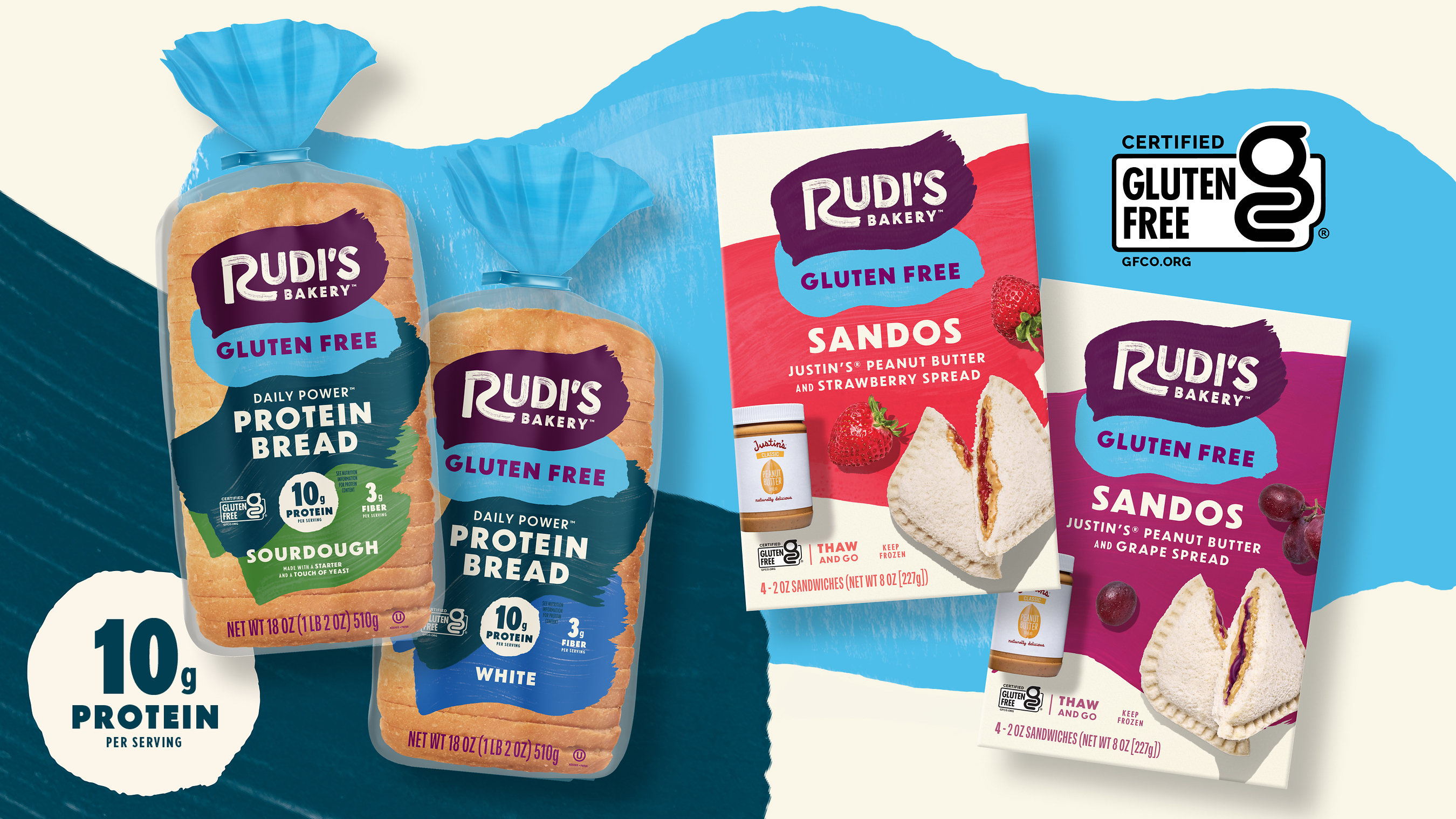
Rudi's Bakery is doubling its certified gluten-free portfolio in a single launch cycle, rolling out Gluten Free Sandos — crustless peanut butter and fruit spread pocket sandwiches made with Justin's Classic Peanut Butter — alongside Gluten Free Daily Power Protein Bread in White and Sourdough. The simultaneous push into the frozen handheld and functional-bread segments signals an accelerating SKU strategy for the Boulder, Colo.-based brand, which has operated in organic and gluten-free baked goods since 1976.
Sandos, positioned as the first nationally available pre-made gluten-free crustless PB&J, arrive in freezer aisles in 4-count cartons in Peanut Butter & Grape and Peanut Butter & Strawberry varieties. The product is currently stocked at Whole Foods Market, Kroger, and Thrive Market. The Justin's co-brand provides ingredient-quality signaling that has become a standard lever in the better-for-you snack segment, particularly at natural and specialty retail.
The Protein-Bread Play
Daily Power Protein Bread delivers 10 grams of protein and 3 grams of fiber per serving in an 18-ounce loaf — a direct response to a persistent gap in the gluten-free bread category, where most products sacrifice macronutrient density for texture. The line is available now at Sprouts Farmers Market, with Kroger distribution set for November. "Gluten-free consumers have always had to compromise on taste and nutrition with bread," said Jane Miller, Rudi's CEO. "We're delivering products that help consumers enjoy more possibilities without compromise."
The protein-enriched bread segment has drawn growing attention across the grocery and foodservice supply chain, with ingredient suppliers reformulating to hit protein targets without degrading crumb structure — a technical challenge that has historically constrained the gluten-free category more than conventional bread. Rudi's entry at 10 grams of protein per serving positions it competitively against mainstream high-protein loaves that have migrated into the natural channel.
Retail Footprint and Category Context
The dual launch targets a consumer base that market-tracking data puts at roughly 3.1 million Americans following a gluten-free diet, a figure that excludes the broader cohort of flexitarian shoppers reducing gluten intake for wellness reasons. Distribution through Kroger — the largest traditional supermarket chain in the U.S. by unit count — alongside Whole Foods and Sprouts gives Rudi's both mainstream scale and natural-channel credibility from day one, a distribution architecture increasingly favored by branded better-for-you manufacturers seeking to avoid over-reliance on any single retail banner.
For grocery buyers and foodservice distributors tracking emerging product trends in the better-for-you segment, the Sandos launch is notable as a frozen handheld play that bridges the lunchbox occasion and the convenience-snack daypart — a format more commonly associated with conventional brands like Smucker's Uncrustables. Rudi's gluten-free positioning carves out a distinct shelf address with no direct nationally distributed competitor at present.
The brand's expanded lineup — which also includes Texas Toast, English muffins, and sourdough loaves — reinforces a broader gluten-free bakery shelf consolidation trend in which established brands with certified manufacturing infrastructure are capturing share from smaller regional players.
Written by Michael Politz, Author of Guide to Restaurant Success: The Proven Process for Starting Any Restaurant Business From Scratch to Success (ISBN: 978-1-119-66896-1), Founder of Food & Beverage Magazine, the leading online magazine and resource in the industry. Designer of the Bluetooth logo and recognized in Entrepreneur Magazine's "Top 40 Under 40" for founding American Wholesale Floral, Politz is also the Co-founder of the Proof Awards and the CPG Awards and a partner in numerous consumer brands across the food and beverage sector.