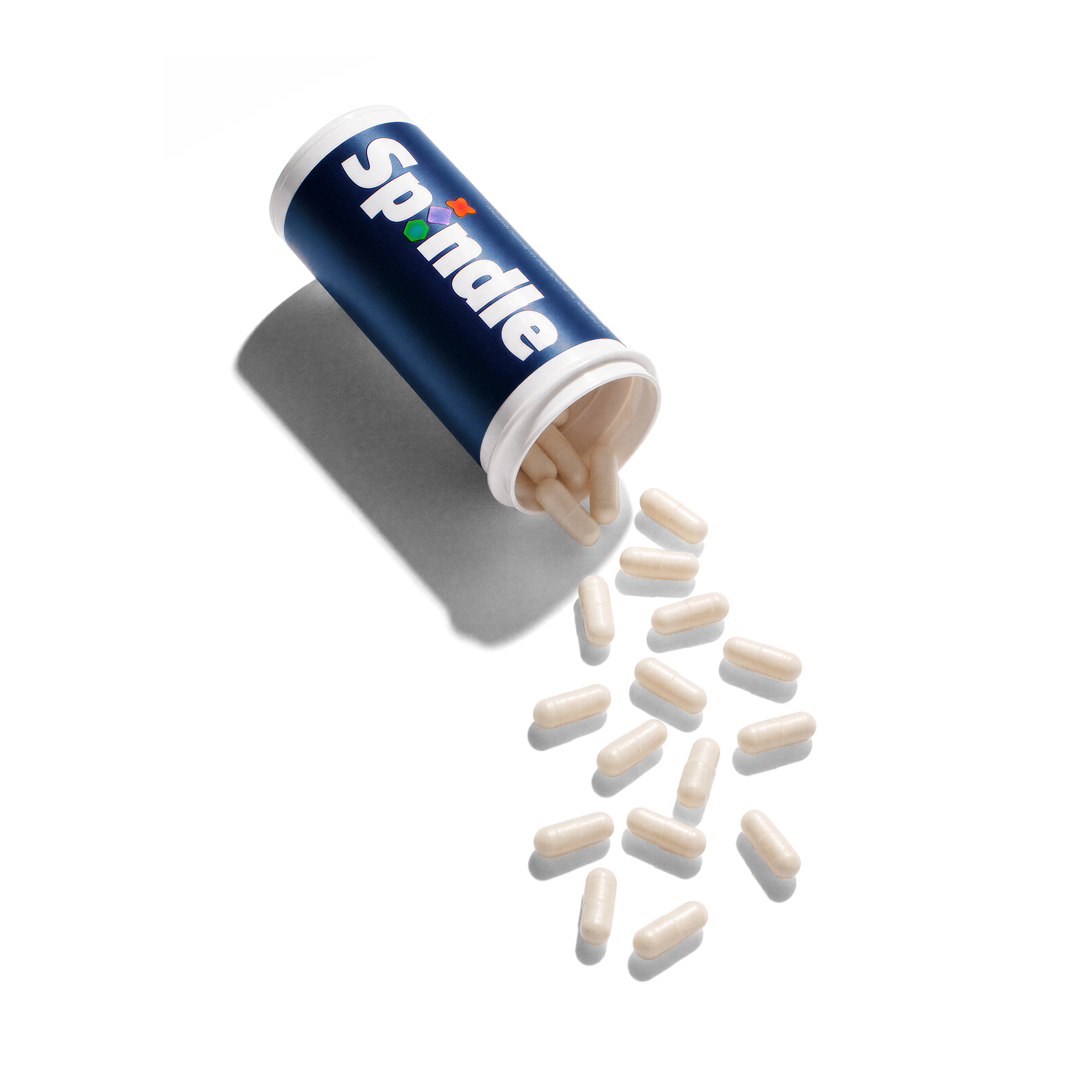
Samyang Roundsquare, the Korea-headquartered food and healthcare parent behind the Samyang noodle portfolio, is moving deeper into functional nutrition with the U.S. launch of Spindle, a metabolic health brand whose debut SKU targets age-related muscle loss through a gut-health mechanism rather than the conventional protein-and-amino-acid stack.
The flagship product, Spindle Muscle+, is built around Akkermansia MYO™ — a pasteurized, heat-stabilized postbiotic derived from Akkermansia muciniphila, a gut microbe studied for its role in intestinal barrier integrity. The format is shelf-stable for up to two years without refrigeration, a formulation advantage the company argues separates it from live-culture probiotics that require cold-chain management.
The Clinical Numbers
The brand's efficacy case rests on a 12-week, randomized, double-blind, placebo-controlled study in adults aged 60 to 80. Participants taking Akkermansia MYO™ recorded a 10.4% increase in hamstring strength versus control, a 14.1% gain in muscle power, a 5.0-percentage-point improvement in grip strength, and a 5.6-percentage-point rise in prealbumin — a biomarker associated with muscle maintenance. Myostatin, a protein that inhibits muscle growth when elevated, fell 37.8 percentage points versus control. The study data are on file as third-party clinical research; the ingredient also carries an FDA-reviewed New Dietary Ingredient notification.
Faissal Tahiri, Head of Healthcare at Samyang America, framed the launch around the limits of existing supplement formats. "With Spindle, we are bringing forward a science-led approach that looks at the biological systems influencing muscle function, including the growing scientific understanding of the gut–muscle connection," Tahiri said. Ahjin Kim, Head of R&D at Samyang Healthcare, added that clinical evidence was the prerequisite for moving to market: "Spindle Muscle+ reflects our commitment to formulating from data, not assumptions."
Market Positioning
Spindle's primary consumer target is health-invested adults in their 40s and 50s focused on longevity maintenance rather than reactive treatment. The brand is also explicitly positioning Muscle+ for adults on GLP-1 medications — a fast-growing cohort facing elevated lean-muscle-loss risk during medically supervised weight reduction. That GLP-1 adjacency is increasingly crowded: several sports-nutrition and functional-food brands have pivoted messaging toward the category in the past 18 months as GLP-1 prescription volumes have surged across the U.S.
For foodservice and specialty retail operators tracking functional nutrition trends, Spindle's postbiotic format is notable. Unlike conventional probiotics, postbiotics deliver bioactive compounds without viability requirements, removing cold-chain complexity from the supply equation — a meaningful consideration for operators and distributors weighing ambient-stable wellness SKUs. The product is gluten-free, non-GMO, and free from the major allergen groups, broadening its menu and retail compatibility.
Samyang Roundsquare's decision to build a standalone brand — rather than extend the Samyang masterbrand — signals an intent to compete in the premium wellness channel on scientific credibility rather than heritage recognition. The move mirrors a broader pattern in functional beverage and supplement commercialization where ingredient-level clinical claims are increasingly the primary purchase driver among informed consumers and the buyers who stock them.
Spindle Muscle+ is available direct-to-consumer at us.spindle.bio.
Written by Michael Politz, Author of Guide to Restaurant Success: The Proven Process for Starting Any Restaurant Business From Scratch to Success (ISBN: 978-1-119-66896-1), Founder of Food & Beverage Magazine, the leading online magazine and resource in the industry. Designer of the Bluetooth logo and recognized in Entrepreneur Magazine's "Top 40 Under 40" for founding American Wholesale Floral, Politz is also the Co-founder of the Proof Awards and the CPG Awards and a partner in numerous consumer brands across the food and beverage sector.