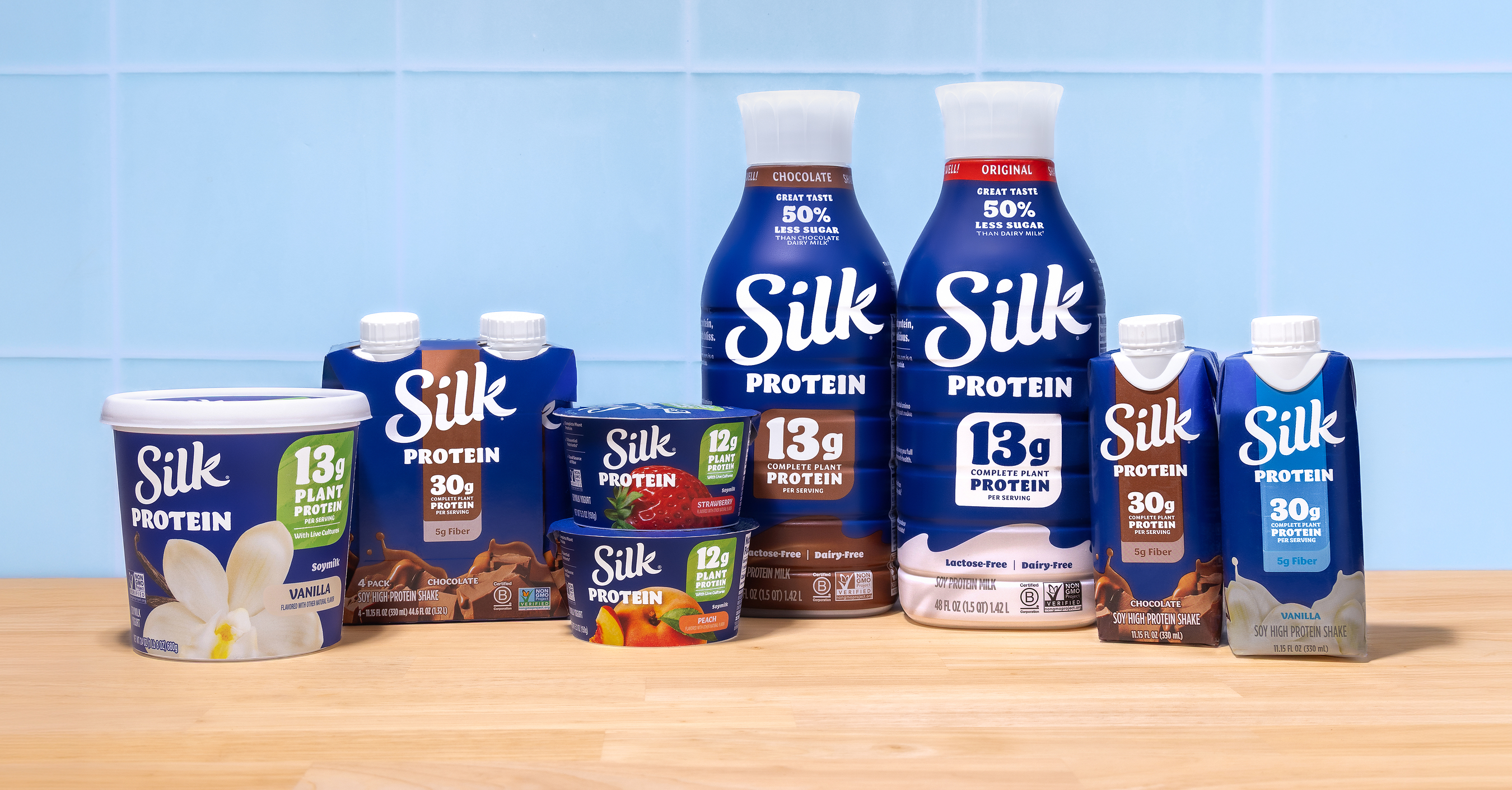
Danone USA is broadening the Silk Protein platform with two new product formats — plant-based yogurts delivering at least 12 grams of protein per serving and ready-to-drink protein shakes supplying 30 grams — as the brand moves to capture accelerating consumer demand at the intersection of plant-based eating and functional nutrition. Both formats began rolling out at major grocery chains nationwide this month.
The Portfolio Play
The additions extend a lineup that Danone has positioned as a bridge between indulgence and performance nutrition. The yogurts and shakes are formulated with complete plant protein, meaning the amino acid profile mirrors that of animal-derived sources — a distinction that has become a key purchase driver in the refrigerated dairy-alternative set. Both products also carry a good-source-of-fiber claim and contain no artificial colors, flavors, or sweeteners, aligning with clean-label expectations that now effectively serve as a category baseline.
The 30-gram protein count in the RTD shakes places Silk in direct competition with established sports-nutrition brands that have migrated from specialty retail into mainstream grocery, a channel shift that has compressed margins for incumbents and forced conventional dairy brands to respond in kind. For Danone, the move is consistent with a broader asset strategy of extracting incremental velocity from the Silk masterbrand across multiple refrigerated occasions — breakfast, snack, and post-exercise — rather than launching standalone sub-brands.
Operator and Retail Relevance
While the initial distribution footprint is retail-grocery, the format has clear implications for foodservice and noncommercial operators who have been expanding plant-based offerings on café and grab-and-go menus. High-protein RTD beverages have outperformed the broader refrigerated beverage segment in convenience and college-and-university channels over the past two years, and a nationally recognized brand with 30 grams of plant protein per bottle represents a credible addition to self-operated foodservice coolers and vending programs.
The broader plant-based yogurt segment has faced volume pressure as novelty-driven trial subsides and price-sensitive shoppers trade back toward conventional dairy. Silk's protein-forward repositioning is a direct response: rather than competing on taste parity alone, the brand is stacking functional claims — protein density, fiber content, complete amino acid profile — to justify a premium price point and sustain household penetration beyond early adopters. That same rationale applies on the foodservice side, where operators sourcing plant-based proteins for grab-and-go sets increasingly prioritize macro credentials over simply having a dairy-free option on the menu.
Danone's North American business, which houses Silk alongside Oikos, Two Good, and the International Delight creamer franchise, has leaned into functional positioning across its portfolio as a hedge against private-label encroachment in the yogurt case. The Silk Protein expansion is consistent with that platform discipline.
Written by Michael Politz, Author of Guide to Restaurant Success: The Proven Process for Starting Any Restaurant Business From Scratch to Success (ISBN: 978-1-119-66896-1), Founder of Food & Beverage Magazine, the leading online magazine and resource in the industry. Designer of the Bluetooth logo and recognized in Entrepreneur Magazine's "Top 40 Under 40" for founding American Wholesale Floral, Politz is also the Co-founder of the Proof Awards and the CPG Awards and a partner in numerous consumer brands across the food and beverage sector.