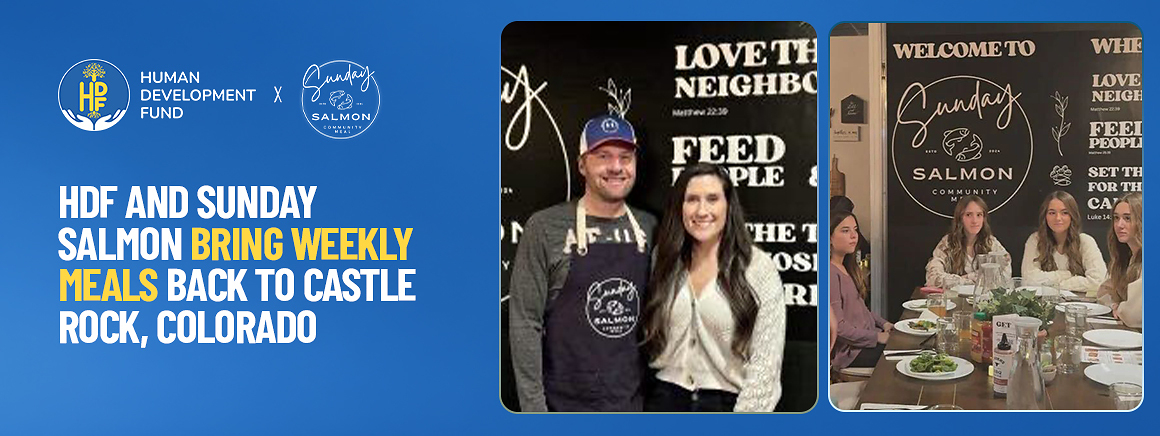
A two-month funding commitment from the Human Development Fund has restored and expanded Sunday Salmon's Wednesday Wheels meal delivery program in Castle Rock, Colorado, lifting weekly output to 210 meals and clearing 30 people from a waiting list that had grown to 80.
The partnership underscores a supply-side pressure point familiar across nonprofit foodservice operations: rising ingredient and logistics costs that force hard capacity decisions even when demand is growing. Sunday Salmon had been compelled to cut Wednesday Wheels from weekly to biweekly service before HDF stepped in with full program funding.
The Numbers
With the grant in place, Wednesday Wheels now delivers 210 meals per week — up from roughly 180 — to seniors on fixed incomes, adults with intellectual and developmental disabilities, and families facing food insecurity. The waiting list has dropped from 80 to 50. Across all its programs, Sunday Salmon operates at approximately 1,000 meals weekly, a volume that includes community dinners, school meal partnerships, and home delivery. Founded in January 2025 by Mary Grothe, the nonprofit cleared nearly 20,000 free meals in its first year of operation, a pace that signals genuine community demand but also compresses the margin for any funding disruption.
Nonprofit Foodservice Pressures
The Castle Rock situation reflects a broader stress pattern in community-facing foodservice. Organic and allergy-friendly menus — the hallmark of Sunday Salmon's offer — carry meaningfully higher food costs than conventional meal programs, narrowing the operational buffer when grant income lags or volume spikes. For nonprofit restaurants and meal-delivery operators, the inability to pass cost increases to guests means that external funding cycles directly govern service levels in ways that commercial operators manage through menu pricing or daypart mix shifts.
HDF, which reported serving more than 3.5 million people and delivering more than 1 million hot meals through its international programs in 2025, is extending that infrastructure domestically with this partnership. "When we learned that seniors, individuals with disabilities, and families in Castle Rock were at risk of losing consistent, nutritious meals, we acted," said Abdirahman Kariye, Founder and Chief Executive Officer of the Human Development Fund.
What Operators Should Watch
For commercial and contract foodservice operators tracking the community nutrition segment, the Wednesday Wheels model illustrates how last-mile meal delivery economics remain fragile without recurring, dedicated funding — an operational reality that has pushed several regional meal programs toward hybrid models blending government contracts with private philanthropy. The nonprofit restaurant format, still a niche category, continues to attract attention as a proving ground for subsidized delivery logistics that commercial operators in senior dining and healthcare foodservice may eventually adapt.
Written by Michael Politz, Author of Guide to Restaurant Success: The Proven Process for Starting Any Restaurant Business From Scratch to Success (ISBN: 978-1-119-66896-1), Founder of Food & Beverage Magazine, the leading online magazine and resource in the industry. Designer of the Bluetooth logo and recognized in Entrepreneur Magazine's "Top 40 Under 40" for founding American Wholesale Floral, Politz is also the Co-founder of the Proof Awards and the CPG Awards and a partner in numerous consumer brands across the food and beverage sector.