
For food and beverage manufacturers, sustainability initiatives often focus on sourcing, production, packaging, and transportation. Companies invest heavily in reducing emissions, minimizing waste, conserving resources, and building more environmentally responsible supply chains. Yet one critical sustainability challenge receives far less attention: what happens when products can no longer be sold?
Whether caused by expired shelf life, inventory overstock, quality concerns, regulatory changes, or product recalls, unsaleable inventory is an unavoidable reality across the food and beverage industry. The question is no longer simply how to remove these products from the marketplace. It is how to do so in a way that supports sustainability objectives while protecting consumers, brands, and business performance.
As environmental, social, and governance (ESG) commitments become increasingly important, manufacturers are rethinking how unsaleable products are managed. What was once viewed as a disposal issue is now being recognized as an opportunity to recover resources, reduce environmental impact, and support circular economy initiatives.
This is where EcoBev, powered by DHL Supply Chain, is helping organizations turn an operational challenge into a sustainability advantage.
For decades, EcoBev has provided a turnkey solution for the recovery, destruction, recycling, and environmentally responsible disposition of unsaleable food and beverage products. While often utilized during recalls and other time-sensitive events, the service delivers broader sustainability benefits by diverting products and packaging from traditional waste streams and maximizing resource recovery.
Measurable Impact and Resource Recovery
The results are measurable. Over the past five years, EcoBev has responsibly disposed of more than 15.5 million gallons of product from partially filled kegs, bottles, and cans. During that same period, the program recycled nearly 46.5 tons of paper, plastic, glass, and aluminum while contributing to the generation of more than 2.2 million kilowatts of renewable energy.
These figures highlight an important shift occurring across the industry. Products that can no longer be sold still contain value. Packaging materials can be recycled, liquids can be reclaimed, and organic materials can be repurposed through beneficial-use programs rather than sent directly to landfill.
EcoBev's approach centers on responsible resource recovery. Packaging materials including paper, cardboard, aluminum, glass, and plastic are separated and recycled whenever possible. Product contents are managed through environmentally responsible processes that can support composting, agricultural applications, water reclamation, renewable energy generation, and other beneficial reuse opportunities.
For manufacturers pursuing landfill diversion goals and broader ESG initiatives, these outcomes represent more than environmental wins. They demonstrate how sustainability and operational performance can work together.
Operational and Compliance Benefits
Unsaleable inventory occupies warehouse space, creates administrative burden, and ties up resources that could be directed toward growth-focused activities. Managing recovery, compliance, reporting, and destruction internally often requires significant coordination across multiple stakeholders and service providers.
A comprehensive recovery program streamlines the process by providing a single solution from product collection through final reporting and documentation. This becomes particularly valuable during recalls, quality events, or large-scale inventory withdrawals where speed, accuracy, and transparency are essential.
Protecting Brand Reputation
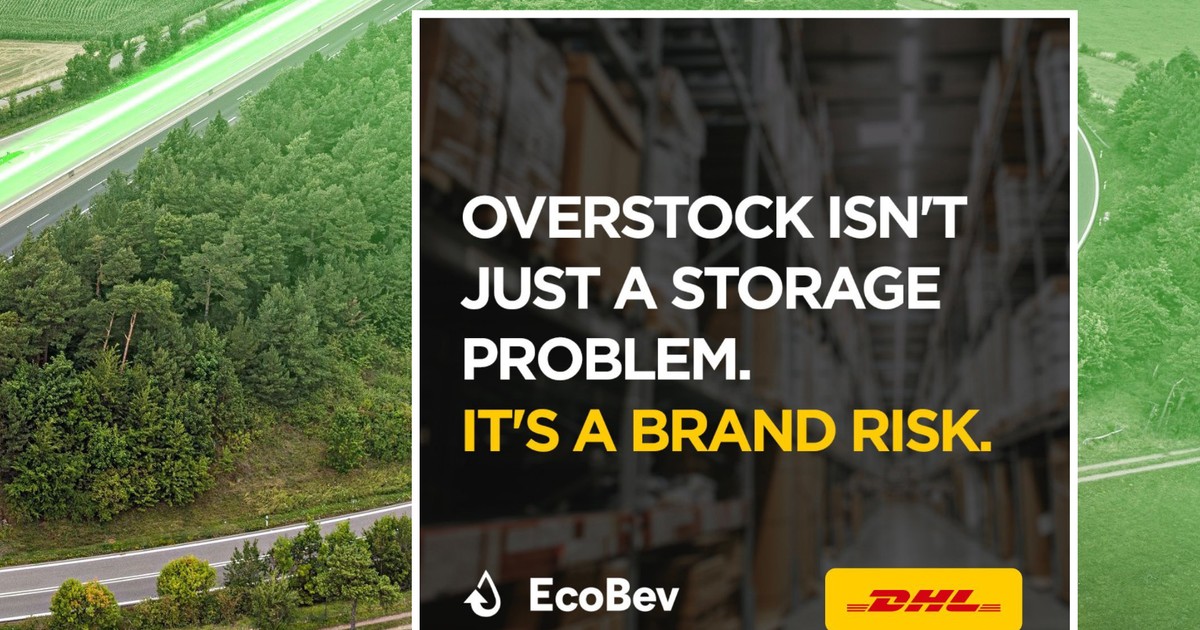
Responsible product recovery also plays a critical role in protecting brand reputation. Consumers increasingly expect both high product quality and strong environmental stewardship from the companies they support. Allowing outdated, damaged, or non-compliant products to remain in circulation can undermine consumer trust and expose organizations to unnecessary risk.
Through a secure and documented chain of custody, EcoBev helps companies quickly remove affected products from distribution channels while ensuring they are managed responsibly and compliantly. This provides confidence that products are handled properly while protecting both consumers and brand equity.
Financial and Tax Advantages
There are financial advantages as well. Properly documented recovery and destruction projects may support tax write-offs, prepaid tax recovery opportunities, duty refunds, and other forms of financial reconciliation. By providing the documentation and reporting required for these processes, EcoBev helps organizations recover value while maintaining audit readiness and compliance.
Sustainability Throughout the Full Lifecycle
Ultimately, sustainability is about maximizing resources and minimizing waste throughout the entire product lifecycle. For food and beverage manufacturers, that responsibility does not end once a product leaves the production line, and it does not end when a product can no longer be sold.
As companies continue pursuing ambitious sustainability goals, the management of unsaleable products represents a significant opportunity to create measurable environmental impact while improving operational efficiency and protecting brand integrity. Unsaleable products may be inevitable. Waste is not.
By transforming end-of-life inventory into an opportunity for resource recovery, recycling, and renewable energy generation, EcoBev is helping food and beverage companies prove that sustainability extends far beyond the shelf and throughout the entire supply chain.