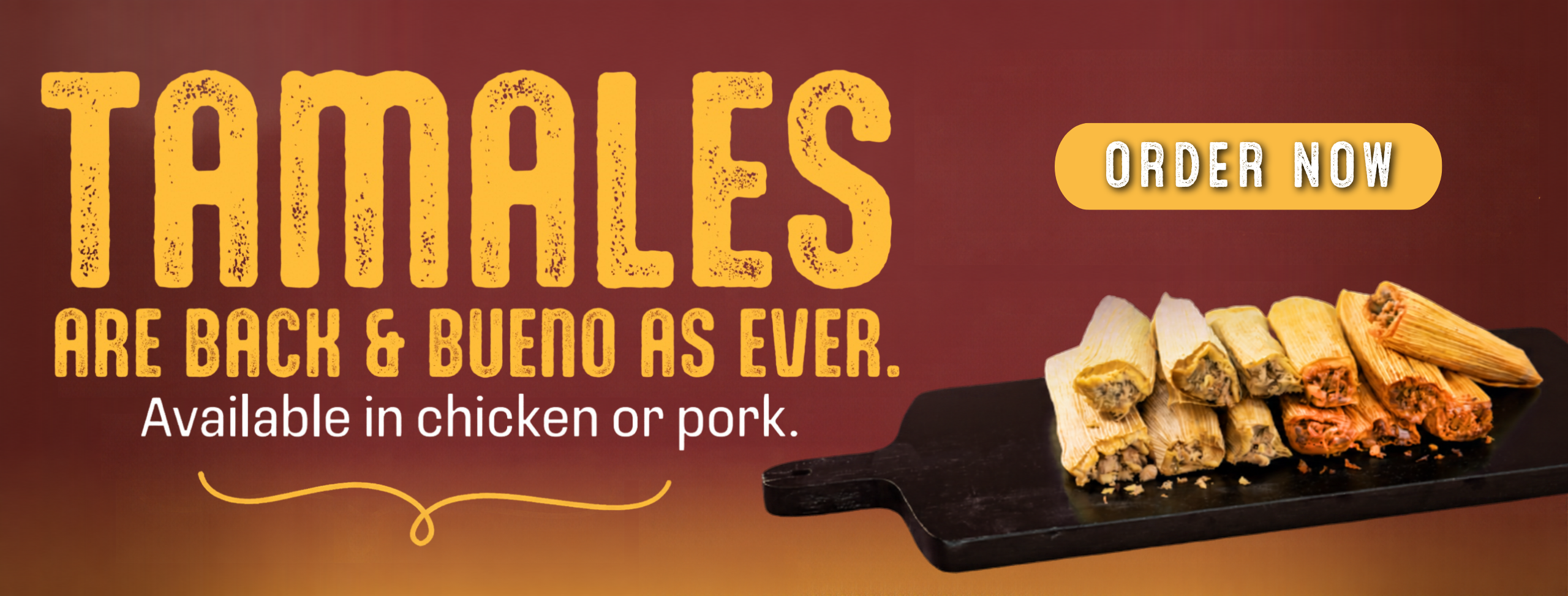
Taco Bueno is reactivating its annual holiday tamale program, returning Chicken and Pork Tamales to its 127-unit footprint across the southern United States for a limited time. The Dallas-based quick-service chain has run the seasonal offering for more than 30 years, positioning tamales as a QSR alternative to labor-intensive home preparation during the holiday catering window.
The LTO Format
The tamales — built on soft masa with savory chicken or pork fillings — are structured for multiple check sizes: individual units, three-packs, dozens, and platter configurations covering both single-protein and combo formats. That tiered packaging targets solo guests at lunch dayparts as well as group and family catering occasions, a dual-channel play increasingly common among regional Tex-Mex QSR operators competing with fast-casual and grocery prepared-foods departments during November and December.
Competitive Context
Holiday tamale LTOs occupy a distinct lane in the broader seasonal limited-time offer landscape. Unlike dessert-driven or beverage-centric holiday items common in coffee and burger segments, tamales carry strong cultural relevance for the Southern and Southwestern consumer base Taco Bueno serves — translating into demonstrable repeat purchase behavior, according to operators in the category. Dani Perales, Director of Marketing and Innovation at Taco Bueno, noted that for many families, tamales function as a holiday staple rather than a novelty, making them a relatively low-risk annual reactivation compared with truly new menu development.
For a 127-unit regional chain, a proven holiday LTO also offers supply-chain advantages: existing supplier relationships, predictable ingredient specs, and trained prep routines reduce the operational lift that burdens smaller franchised systems introducing seasonal specials cold. Taco Bueno was founded in 1967 and is headquartered in Farmers Branch, Texas.
Availability
The tamales are available while supplies last through Taco Bueno's in-restaurant and online ordering channels. The "while supplies last" framing is consistent with QSR scarcity mechanics designed to accelerate trial and purchase frequency early in the promotional window rather than sustaining a prolonged run.
Written by Michael Politz, Author of Guide to Restaurant Success: The Proven Process for Starting Any Restaurant Business From Scratch to Success (ISBN: 978-1-119-66896-1), Founder of Food & Beverage Magazine, the leading online magazine and resource in the industry. Designer of the Bluetooth logo and recognized in Entrepreneur Magazine's "Top 40 Under 40" for founding American Wholesale Floral, Politz is also the Co-founder of the Proof Awards and the CPG Awards and a partner in numerous consumer brands across the food and beverage sector.