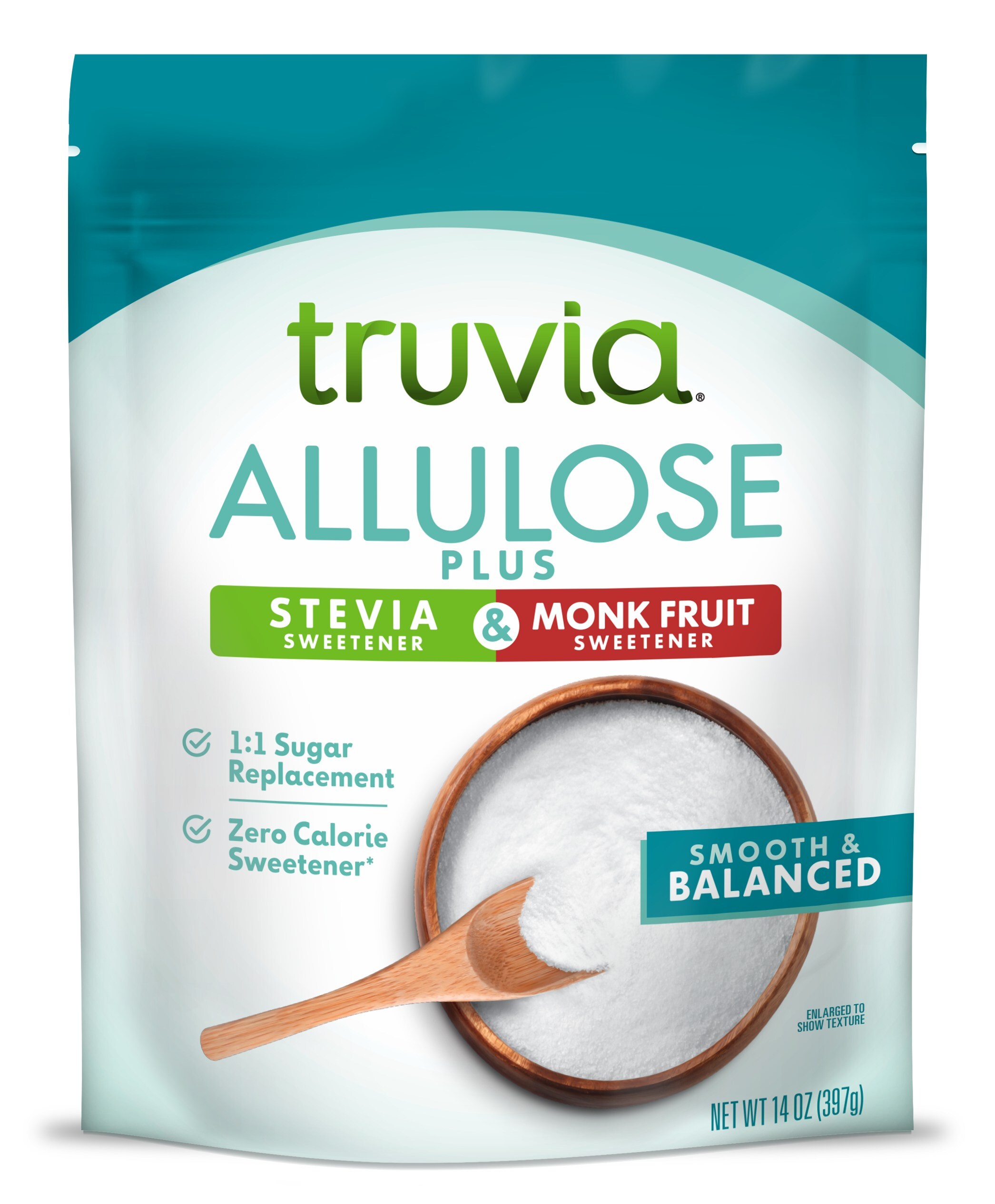
Truvia has added a tri-blend sweetener to its commercial portfolio, combining allulose, stevia, and monk fruit in a single zero-calorie-per-serving SKU. The Truvia® Allulose Plus Stevia Sweetener & Monk Fruit Sweetener, announced June 3, is positioned as a drop-in sugar analog for operators looking to reformulate beverages, baked goods, and sauces without sacrificing palatability — a persistent pain point when single-ingredient alternatives are deployed at scale.
The product leans on functional differentiation: allulose contributes browning and mouthfeel properties that stevia and monk fruit alone cannot replicate, while the latter two carry the zero-calorie claim that matters most on menu boards and nutrition panels. No AUV or foodservice-specific volume figures were disclosed at launch, but the multi-ingredient architecture directly addresses operator feedback that single-extract sweeteners produce off-notes — particularly in heated applications and carbonated beverages.
The launch arrives as calorie-reduction claims accelerate across QSR and fast-casual dayparts. Chain beverage programs from coffee specialists to juice concepts have broadened their sweetener menus in response to GLP-1 drug adoption trends and a wider consumer shift toward reduced-sugar options. For commissary and broadline-distributed operators, a preblended tri-blend format reduces the complexity of sourcing and blending multiple ingredients in-house, a modest but meaningful unit-economics consideration.
Truvia, whose parent Cargill competes in the high-intensity sweetener market alongside Ingredion and Tate & Lyle, has built its foodservice book on stevia-based offerings for table-top, back-of-house, and beverage-dispenser programs. The new SKU extends that footprint into reformulation-driven ingredient sales, a channel with longer contract cycles and higher volume per placement than retail. Distribution details and foodservice pack sizes were not announced, though the brand confirmed a 14-ounce bag format at retail as a reference point for the blend ratio.
Operators evaluating the SKU for LTO or permanent menu integration should note that allulose carries a distinct regulatory profile — the FDA classifies it separately from other sugars for nutrition labeling purposes, allowing brands to exclude it from total and added sugar counts under certain conditions. That labeling flexibility could prove valuable for chains managing sugar thresholds on kids' menus or health-forward daypart platforms. Further foodservice rollout timelines were not disclosed at the time of the announcement.
Written by Michael Politz, Author of Guide to Restaurant Success: The Proven Process for Starting Any Restaurant Business From Scratch to Success (ISBN: 978-1-119-66896-1), Founder of Food & Beverage Magazine, the leading online magazine and resource in the industry. Designer of the Bluetooth logo and recognized in Entrepreneur Magazine's "Top 40 Under 40" for founding American Wholesale Floral, Politz is also the Co-founder of the Proof Awards and the CPG Awards and a partner in numerous consumer brands across the food and beverage sector.