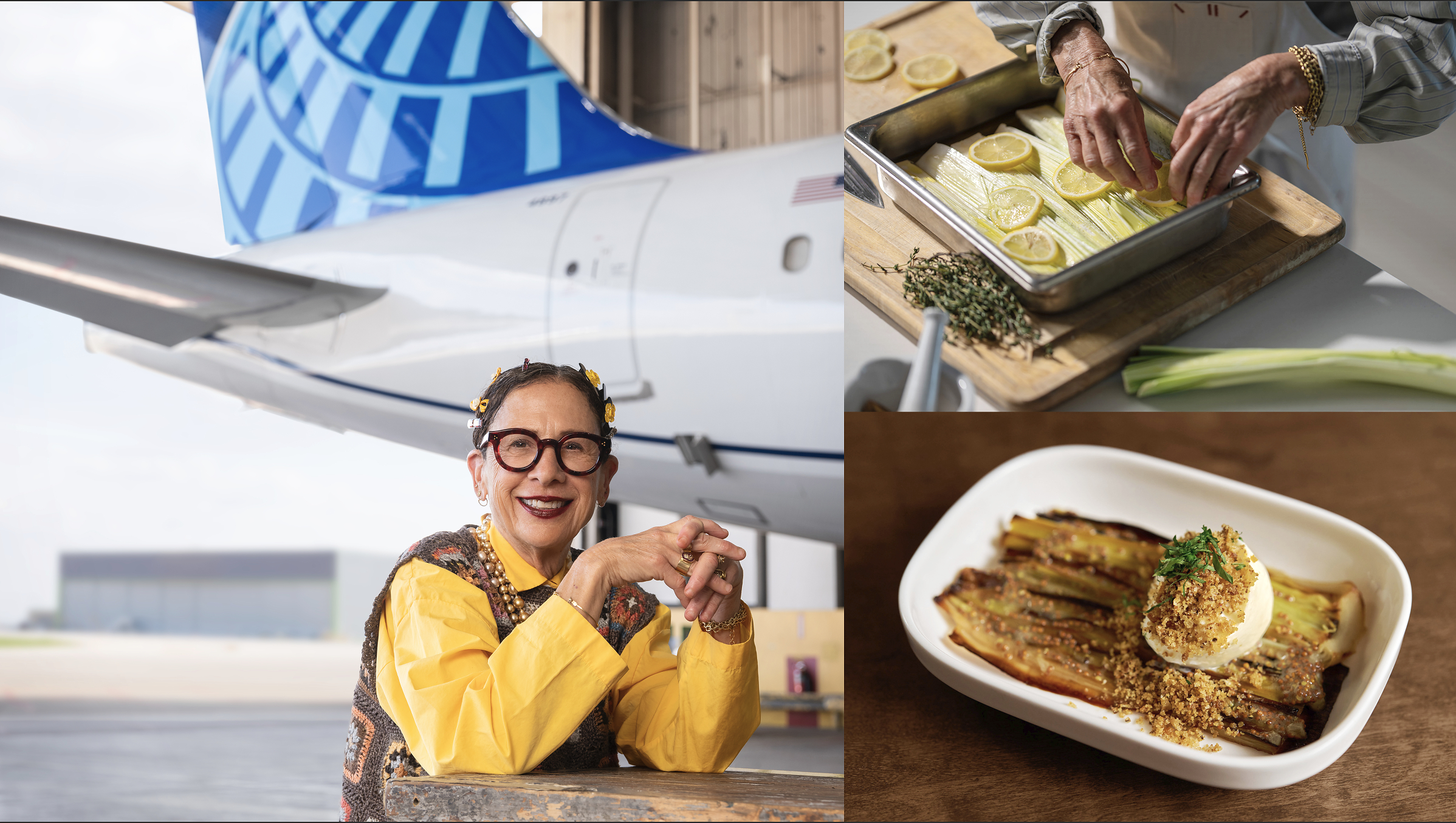
United Airlines is overhauling its Polaris international business-class food program with 30 new dishes — appetizers, salads, and entrées — developed in partnership with Chef's Table, the brand behind the Emmy Award-winning Netflix documentary series. The rollout begins August 1 and represents one of the more ambitious culinary refreshes in premium cabin foodservice in recent memory.
The menu additions span multiple dayparts and origin cities, with each participating chef drawing on the United hub they call home. Chef Nancy Silverton, based in Los Angeles, contributed a burrata with braised leeks; Chef Manu Buffara, rooted in the São Paulo–adjacent culinary scene, developed a Brazilian shrimp stew; and Chef Tashi Gyamtso offers a poached scallop preparation. The city-as-inspiration framework gives United a localization hook that differentiates the program from standard contracted catering menus.
Airline foodservice has long operated as a pressure-tested segment of the broader noncommercial channel — high-volume, cost-constrained, and subject to the same supply-chain and labor headwinds affecting contract feeders and FSR operators alike. Carriers competing in the premium transoceanic market, including Delta and American, have each leaned into chef partnerships and elevated plating to justify business-class fare premiums and support loyalty-driven load factors. United's Chef's Table deal layers a media brand onto the culinary strategy, giving the program a content marketing dimension that extends beyond the tray table.
Beyond the menu itself, United and Chef's Table will co-produce a collection of exclusive original branded content distributed through United's inflight entertainment system, offering passengers a behind-the-scenes look at how the dishes were developed. For foodservice operators watching the airline segment, the move underscores a broader trend: premium noncommercial venues — stadiums, airlines, corporate dining — are increasingly deploying named-chef credibility to drive perceived value rather than competing on price or portion size alone. That approach mirrors LTO strategy in the full-service restaurant segment, where limited-run chef collaborations generate trial and press coverage at a fraction of a full menu re-engineering cost.
United has not disclosed the financial terms of the Chef's Table arrangement, catering contract scope, or per-unit meal cost targets. What the program does signal is that the carrier is treating Polaris as a distinct food-and-beverage brand within its broader product architecture — a positioning move with implications for how catering partners and commissary operators approach the airline's procurement cycle going forward.
Written by Michael Politz, Author of Guide to Restaurant Success: The Proven Process for Starting Any Restaurant Business From Scratch to Success (ISBN: 978-1-119-66896-1), Founder of Food & Beverage Magazine, the leading online magazine and resource in the industry. Designer of the Bluetooth logo and recognized in Entrepreneur Magazine's "Top 40 Under 40" for founding American Wholesale Floral, Politz is also the Co-founder of the Proof Awards and the CPG Awards and a partner in numerous consumer brands across the food and beverage sector.