The Commercial Pivot
UPSIDE Foods has moved cultivated meat out of the pilot phase and into multi-operator distribution, announcing a commercial rollout of UPSIDE Chicken across California restaurants, university dining halls, and corporate campuses. The Emeryville-based company says its manufacturing facility can now produce more than 1 million pounds of cultivated chicken annually from 20,000-liter bioreactor tanks — a 10,000-fold scale-up from earlier production runs — on less than half an acre of footprint.
The product is currently live at seven restaurant accounts including Chimmelier (all Los Angeles locations), Waterbar and EPIC Steak in San Francisco, Mersea on Treasure Island, Hurrica in Redwood City, and both Jilli locations in Los Angeles and San Francisco. On the noncommercial side, Stanford Dining has onboarded the product, signaling early traction in the contract-and-campus segment — a channel where alternative proteins have historically gained institutional footholds before broader chain adoption. A full operator list is available at upsidefoods.com/locations.
Regulatory and Certification Stack
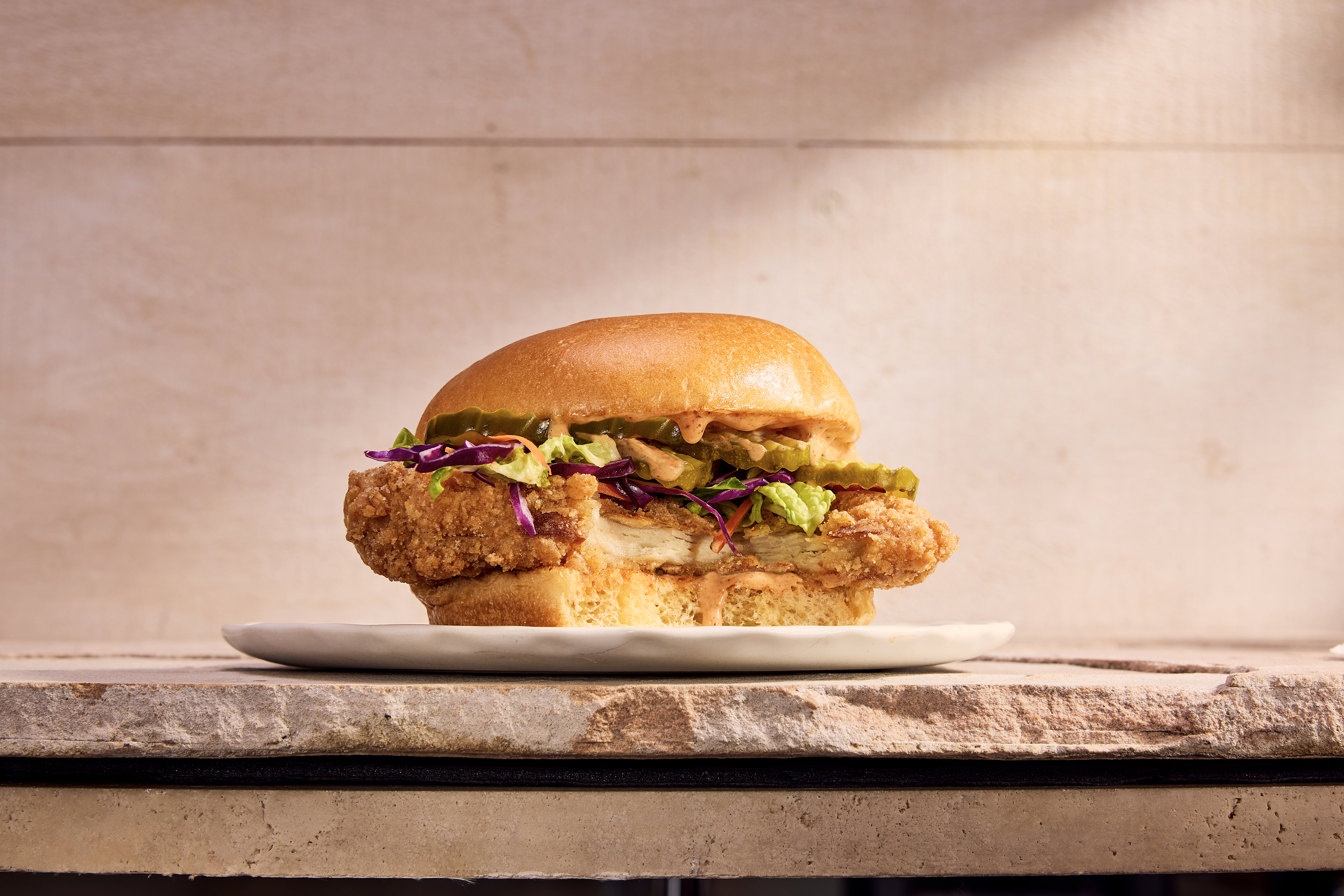
The launch carries meaningful regulatory weight for the cultivated-meat category. UPSIDE has now secured two FDA No Questions Letters and two USDA label approvals — making it the only company globally with U.S. regulatory clearance for two distinct cultivated-meat products. The second clearance covers UPSIDE Chicken, which blends cultivated chicken cells with soy protein isolate, pea fiber, and olive oil.
Equally significant for foodservice operators targeting broader consumer segments: UPSIDE Chicken received halal certification from Circle H following a year-long evaluation under its globally recognized H® halo co-brand. It is the first cultivated-meat product to achieve halal status anywhere in the world. Elsayed Zayan, Chairman and CEO of Circle H, called the milestone "truly historic" for the future of food globally. The certification opens the product to the estimated 2 billion halal-observant consumers worldwide, a demographic largely underserved by existing alternative-protein formats.
Culinary and Channel Context
UPSIDE has built culinary credibility ahead of the commercial push through partnerships with Thomas Keller — the only American-born chef to hold multiple three-Michelin-star ratings — and Nancy Silverton, a James Beard Lifetime Achievement Honoree. Keller, proprietor of the Thomas Keller Restaurant Group, is developing a dish featuring UPSIDE Chicken at his Burgers & Half Bottles concept, framing the partnership around responsible sourcing and supply-chain resilience rather than novelty. Silverton, co-owner of the Mozza Restaurant Group, has served as a chef adviser for the past year and endorsed the product on taste and quality grounds — the kind of operator validation that matters when introducing an unfamiliar protein to menu development teams.
The cultivated-meat category has faced sustained skepticism over production economics: early products carried price points well above conventional chicken, limiting viability for most foodservice operators. UPSIDE's commercial launch positions the product at "everyday pricing," though the company has not disclosed specific per-pound or per-portion costs. For chain procurement teams and independent operators navigating protein cost pressures, the AUV math on cultivated chicken will ultimately depend on whether scale continues to compress input costs at the pace UPSIDE projects.
The broader alternative-protein segment — which includes plant-based brands that saw significant menu penetration declines over the past three years — may find a second-act narrative in cultivated meat's halal certification and dual regulatory clearance. Those credentials address two persistent barriers: religious dietary compliance and consumer trust in federal oversight. Whether the noncommercial and limited-service restaurant channels can convert trial into sustained menu placement remains the central operator question heading into 2027.
Written by Michael Politz, Author of Guide to Restaurant Success: The Proven Process for Starting Any Restaurant Business From Scratch to Success (ISBN: 978-1-119-66896-1), Founder of Food & Beverage Magazine, the leading online magazine and resource in the industry. Designer of the Bluetooth logo and recognized in Entrepreneur Magazine's "Top 40 Under 40" for founding American Wholesale Floral, Politz is also the Co-founder of the Proof Awards and the CPG Awards and a partner in numerous consumer brands across the food and beverage sector.