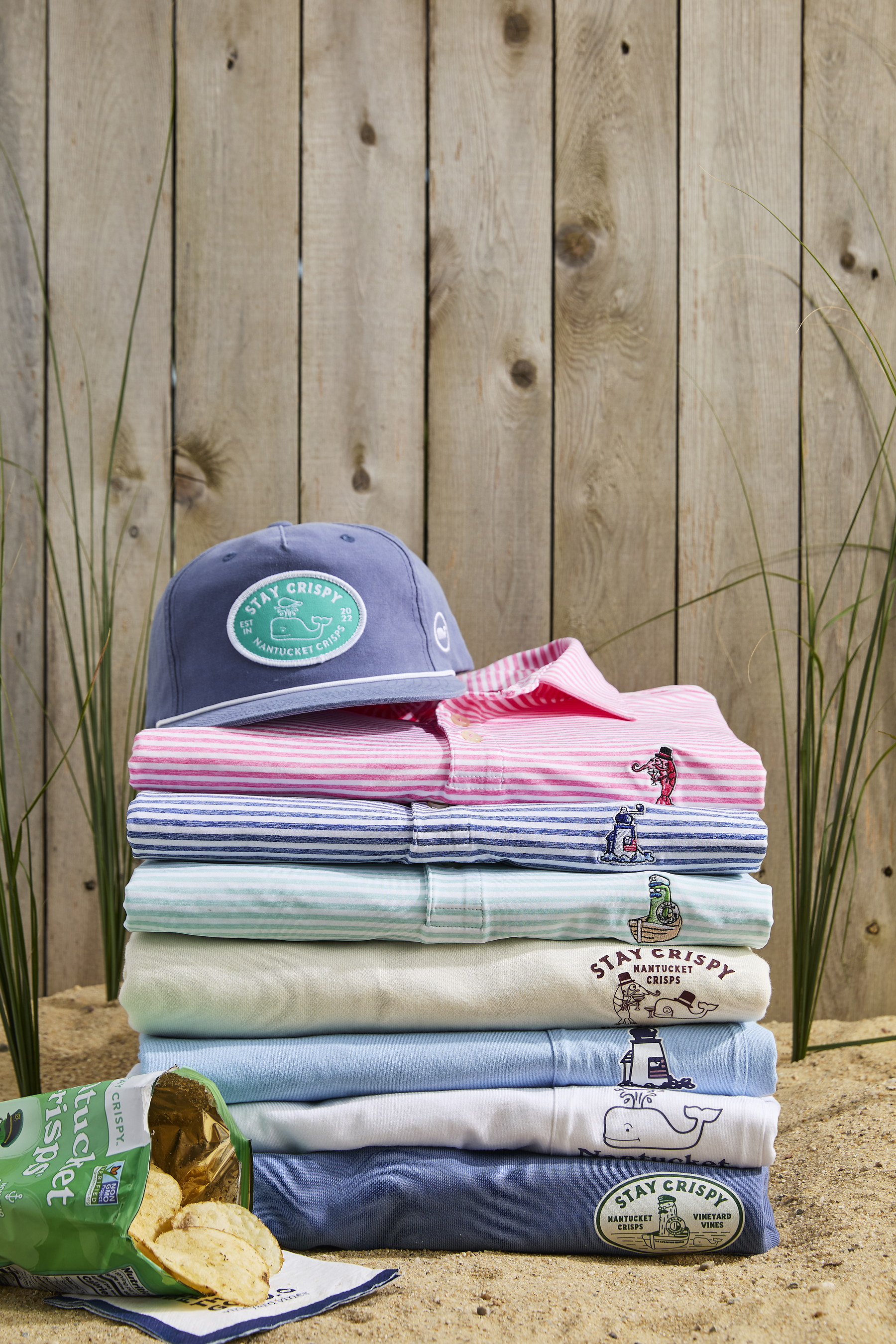
A lifestyle-apparel brand and a premium snack maker are trading on shared coastal geography. Vineyard vines and Nantucket Crisps, a Nantucket-based potato chip producer, announced an exclusive co-branded capsule collection consisting of shirts, hats, and sweatshirts — a limited, location-only drop that tests the increasingly common cross-category strategy of pairing food brands with fashion labels.
The capsule is available solely at the vineyard vines Nantucket brick-and-mortar store, while supplies last, making it a scarcity-driven retail play rather than a broad distribution push. No pricing was disclosed.
The Brand Logic
For Nantucket Crisps, the partnership delivers outsized exposure. Co-founder Hayden Arnot called the collaboration a "bucket list moment" for a small business aligning with an established omnichannel brand. For vineyard vines — founded in 1998 by brothers Shep and Ian Murray and now a global apparel and accessories operation — the tie-up extends the brand's island-lifestyle positioning into the food and beverage space without requiring a product launch or supply-chain investment.
That asymmetry is the point. Co-branded food and apparel drops have become a low-overhead awareness vehicle for emerging food producers, offering placement in front of a loyal, demographically defined consumer base. For specialty snack brands operating in premium coastal and resort markets, alignment with a heritage lifestyle label can serve the same function as a high-end foodservice placement — building brand credibility in a targeted geography.
Foodservice Context
While this particular drop is a retail apparel play, the broader trend it reflects has direct implications for specialty food operators and foodservice buyers. Premium regional snack brands — particularly those built around a specific place identity, like Nantucket Crisps — increasingly use co-marketing and co-branding to expand visibility beyond traditional retail and foodservice channels. The strategy mirrors what larger snack and beverage companies have done with restaurant and hospitality partners: anchor the brand to an aspirational setting and let the association do distribution work.
For foodservice operators in resort and coastal daypart environments, limited-edition co-branded products from premium regional suppliers represent a potential on-menu or grab-and-go opportunity. The scarcity model — single-location, while-supplies-last — is the same mechanic that drives LTO velocity in foodservice, and it signals that Nantucket Crisps is thinking in those terms even as it pursues apparel adjacencies.
Vineyard vines' omnichannel infrastructure, including its nationwide retail network and e-commerce presence at vineyardvines.com, was not leveraged for this drop, which keeps the capsule hyper-local. Whether the partnership expands to broader distribution — or inspires a food-product collaboration — was not addressed.
For context on how regional food brands are leveraging retail and hospitality partnerships to build distribution, see related coverage on specialty food retail trends and premium snack growth in foodservice.
Written by Michael Politz, Author of Guide to Restaurant Success: The Proven Process for Starting Any Restaurant Business From Scratch to Success (ISBN: 978-1-119-66896-1), Founder of Food & Beverage Magazine, the leading online magazine and resource in the industry. Designer of the Bluetooth logo and recognized in Entrepreneur Magazine's "Top 40 Under 40" for founding American Wholesale Floral, Politz is also the Co-founder of the Proof Awards and the CPG Awards and a partner in numerous consumer brands across the food and beverage sector.