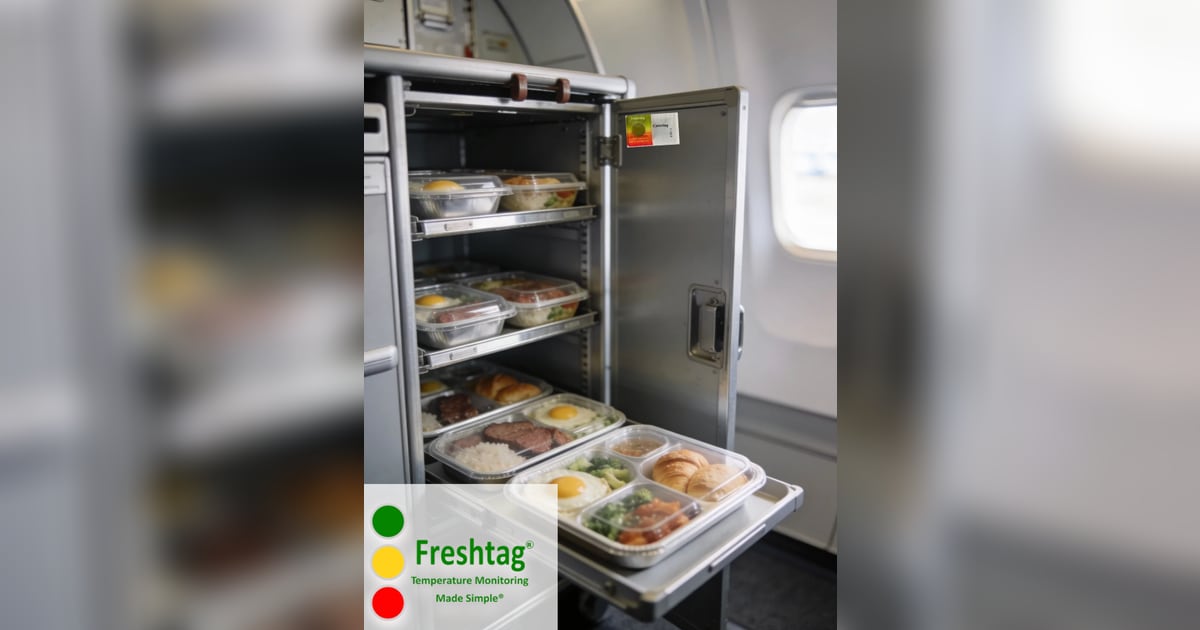
Smart Labels Bring Real-Time Monitoring to In-Flight Catering Vitsab International AB has introduced Freshtag Flight Label, a time-temperature indicator designed to track meal safety throughout airline catering operations. The color-changing label shifts from green to yellow to red when temperature abuse is detected, giving flight crews and ground staff an at-a-glance visual confirmation of food integrity. The system addresses a persistent pain point in airline foodservice: validating that meals and perishables remain safe from prep kitchen through each flight. Freshtag labels require no tools, technical setup, or additional equipment—operators simply place them in food trollies and carts. The cumulative temperature tracking persists across refrigerated, frozen, and passive galley storage environments.
Compliance and Cost Reduction According to Vitsab, Freshtag Flight Labels comply with World Food Safety Guidelines for Airline Catering (CCP2), FDA, EU regulation 852/2004, HACCP, Codex Alimentarius, and ISO9001. The company says the system helps airlines reduce food waste by identifying when product integrity is compromised, allowing sealed perishables to be safely used on later flights or donated rather than discarded. The labels also support weight reduction on aircraft—with temperature monitoring in place, airlines can replace heavy galley chilling equipment with lighter ambient storage and newer lightweight trollies and carts. "By simply placing Freshtag Flight Labels in food trollies and carts, airline companies can monitor all on-board perishable catering during each flight's duration globally," Vitsab states. Freshtag's "Stoplight Technology" has been validated by the IAFP Global Food Safety Innovation Award. Vitsab says its labels protect over 1.5 billion perishable products annually across premium and mass-market channels.
Why It Matters
Airline catering operators face mounting pressure to demonstrate food safety compliance, reduce waste, and control costs. A passive monitoring system that requires minimal training and no additional infrastructure can simplify HACCP documentation while creating operational efficiencies—particularly as fuel and ingredient costs remain volatile.
For more insights and trends in the food and beverage sector, check out more articles in The Food & Beverage Magazine family of publications.
Written by FBM Publications Editors