The Archive Play
WK Kellogg Co is activating more than 120 years of cereal heritage as a brand and product-development asset, opening a 3,500-square-foot Corporate Archives facility at its Battle Creek, Michigan headquarters that houses more than 30,000 items — historic packaging, advertising materials, artwork, memorabilia, and audiovisual assets. The investment, which began transforming the space in 2023, positions the archive not as a static museum but as an internal innovation resource for the cereal maker.
For foodservice and retail buyers, the strategic signal is straightforward: WK Kellogg Co is doubling down on nutrition credibility at a moment when ingredient transparency has become a primary purchase driver across both grocery and noncommercial foodservice channels. The company's branded cereal portfolio — including Kellogg's Frosted Flakes, Special K, Froot Loops, Kashi, and Kellogg's Raisin Bran — anchors breakfast programs at campus dining, healthcare, lodging, and convenience operators throughout North America.
Nutrition Numbers That Matter
The archive's most commercially relevant output is context for WK Kellogg Co's SPOONS on-pack nutrition initiative, launched earlier in 2026. The acronym covers six attributes: Simple Ingredients, Protein, Outstanding Fiber, Other Nutritious Foods, Nutrients You Need, and Single-Digit Added Sugar. The labeling system is designed to help consumers — and, critically, institutional procurement teams — quickly match SKUs to specific dietary priorities without parsing a full nutrition panel.
The fiber story carries particular weight for noncommercial operators under wellness-mandate pressure. WK Kellogg Co reports that nearly 95% of Americans fall short of daily fiber recommendations — a gap the company says its portfolio is positioned to help close. The company currently offers more than 140 cereal SKUs rated as at least a good source of fiber, delivering between 3 and 17 grams per serving. In fiscal year 2025, WK Kellogg Co cereals delivered more than 6 billion servings of fiber to consumers across the U.S., Canada, and the Caribbean — a volume metric that resonates with large-account foodservice distributors evaluating category throughput.
Historical Precedent, Current Relevance
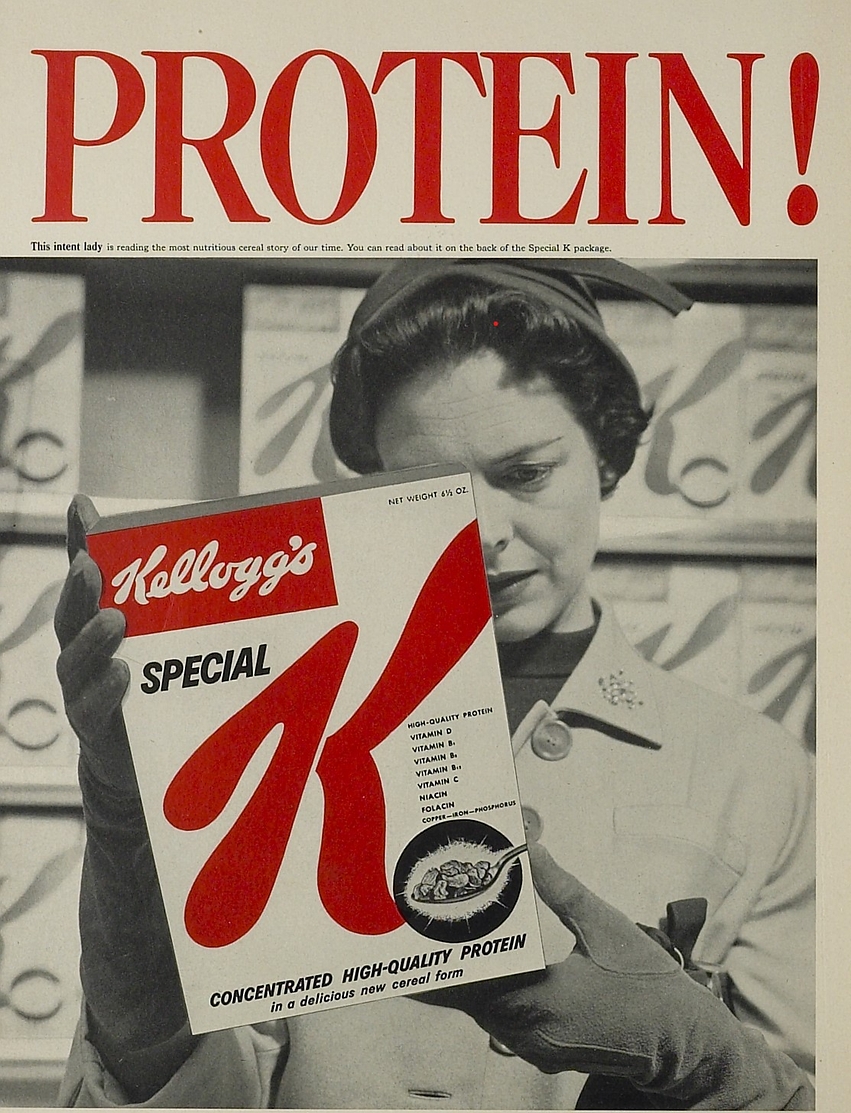
The archive documents a nutrition-forward lineage that predates modern front-of-pack labeling by decades. The company hired its first registered dietitian, Mary Barber, in 1923 to establish a Home Economics Department serving consumers and schools. PEP cereal launched in 1938 as the company's first fortified product with vitamins B and D. By 1939, Kellogg was among the first CPG manufacturers to voluntarily disclose nutrition information on packaging — a practice that wouldn't become federally mandated until the 1990 Nutrition Labeling and Education Act. Special K was positioned as a dietary protein source in the 1950s, anticipating the high-protein segment trend by roughly six decades.
"When you look at our history, you see that nutrition and consumer education have been part of the Kellogg story for generations," said Stacy Flathau, Chief Corporate Affairs Officer at WK Kellogg Co. "Today, we're building on that foundation by helping make nutrition easier for consumers to understand and continuing to evolve our foods to meet their needs."
For commercial foodservice operators managing USDA nutrition guidelines — particularly in K-12, senior living, and healthcare — the brand's documented heritage as an early adopter of voluntary nutrition disclosure may carry procurement credibility. As front-of-pack labeling standards continue to evolve at the federal level, operators sourcing cereal at scale will be watching whether SPOONS aligns with or anticipates any forthcoming FDA guidance on standardized nutrition icons.
For related coverage of CPG supplier moves affecting the breakfast daypart, see our food and beverage industry news section. Operators benchmarking cereal and grain-based SKUs for institutional programs can find category context in our noncommercial foodservice coverage.
Written by Michael Politz, Author of Guide to Restaurant Success: The Proven Process for Starting Any Restaurant Business From Scratch to Success (ISBN: 978-1-119-66896-1), Founder of Food & Beverage Magazine, the leading online magazine and resource in the industry. Designer of the Bluetooth logo and recognized in Entrepreneur Magazine's "Top 40 Under 40" for founding American Wholesale Floral, Politz is also the Co-founder of the Proof Awards and the CPG Awards and a partner in numerous consumer brands across the food and beverage sector.