The New Prototype
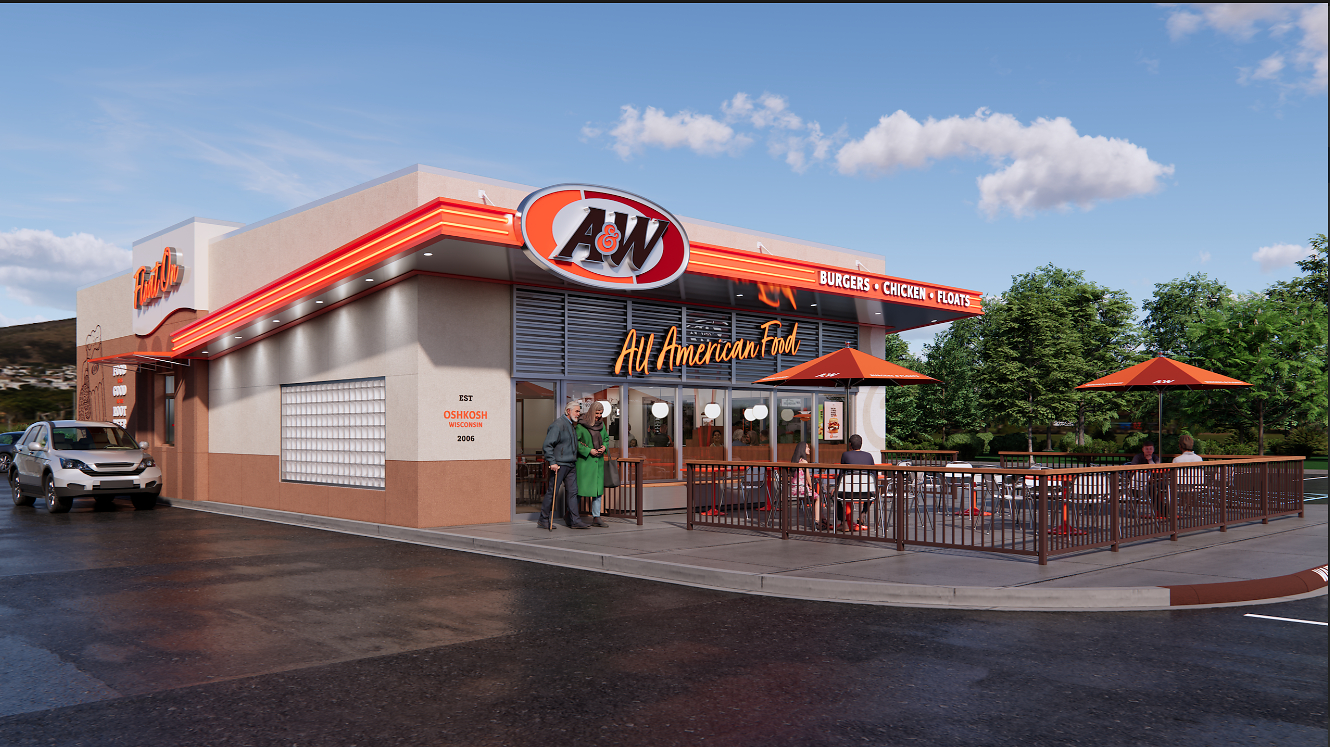
A&W Restaurants has unveiled a new restaurant prototype it calls a "modern heritage" design, signaling the Lexington, Ky.-based quick-service brand's most visible push yet to accelerate franchise development across the United States. The prototype, which ranges from 2,200 to 2,800 square feet with seating for 40 to 70 guests, is engineered for flexible deployment across varied market sizes — from dense suburban corridors to smaller community markets where the brand has historically held strong brand equity.
The design draws visual cues from A&W's original 1919 roadside root beer stands and classic diner formats, layering contemporary architecture and elevated guest comfort on top of the brand's Americana identity. CEO and President Betsy Schmandt framed the move as a deliberate counter to transactional formats gaining ground across QSR: "As many restaurant brands embrace increasingly transactional guest experiences, A&W is doubling down on what has always set us apart: handcrafted quality, genuine hospitality and meaningful connections with the communities we serve."
Franchise Development Push
The prototype launch doubles as a franchisee recruitment signal. A&W is actively soliciting qualified candidates with a minimum of $300,000 in liquid assets and a total net worth of at least $700,000 — thresholds consistent with single-brand QSR area development agreements in the sub-$1 million entry range. The brand currently operates more than 850 locations across 35 U.S. states and select Asian markets, with more than 600 standalone A&W units and roughly 230 co-branded locations paired with KFC or Long John Silver's.
The new footprint specification is worth noting for prospective franchisees modeling unit economics. At 2,200 to 2,800 square feet, the prototype is sized to support a full dine-in daypart without carrying the overhead of legacy 3,500-plus-square-foot builds — a calibration that reflects broader QSR industry movement toward right-sized boxes that balance off-premise throughput with hospitality-forward interiors. Peers including Shake Shack and Jack in the Box have similarly refreshed prototypes in recent development cycles to address shifting real estate economics and labor deployment.
Beverage-Led Differentiation
A&W positions its in-house beverage program as a core traffic driver and a point of competitive separation. The brand identifies itself as the first QSR chain to handcraft beverages in every unit, anchored by its signature root beer — brewed daily in each restaurant from cane sugar, water, and a proprietary herb-and-spice blend, then served in a frosty mug. That daily prep routine is operationally intensive by QSR standards, but it reinforces the "Hometown Hospitality" service model the brand is centering its guest experience around.
In a segment where beverage innovation has become a primary comp-sales lever — with chains from McDonald's to Raising Cane's investing heavily in drink platforms — A&W's legacy root beer credibility gives it a defensible daypart story that new prototype investment could amplify. The question for franchise candidates will be whether the updated physical plant translates to AUV improvement and tighter store-level margins over time, metrics the brand has not disclosed publicly with this announcement.
Written by Michael Politz, Author of Guide to Restaurant Success: The Proven Process for Starting Any Restaurant Business From Scratch to Success (ISBN: 978-1-119-66896-1), Founder of Food & Beverage Magazine, the leading online magazine and resource in the industry. Designer of the Bluetooth logo and recognized in Entrepreneur Magazine's "Top 40 Under 40" for founding American Wholesale Floral, Politz is also the Co-founder of the Proof Awards and the CPG Awards and a partner in numerous consumer brands across the food and beverage sector.