The Program
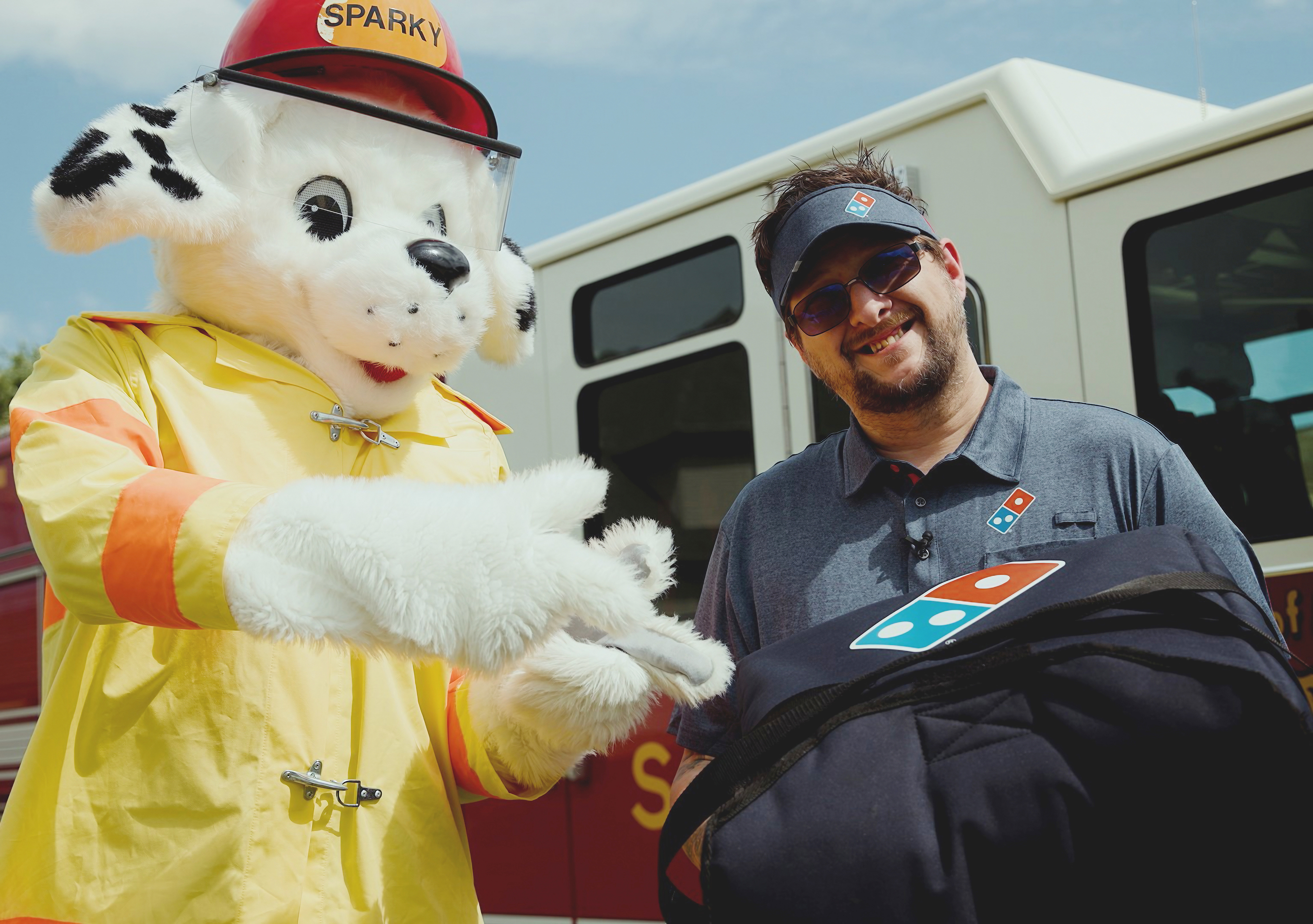
Domino's Pizza (Nasdaq: DPZ) is entering its 19th consecutive year partnering with the National Fire Protection Association (NFPA) to use its delivery infrastructure as a public-safety channel during Fire Prevention Week, Oct. 4–10. The activation enlists participating franchise-owned and corporate stores across the U.S. to arrive at customers' doors accompanied by a local fire engine — and to hand over the order free of charge if household smoke alarms are confirmed working.
How It Works
The mechanics are straightforward: if responding firefighters find smoke alarms functional, the pizza is comped. If alarms are inoperable or batteries are dead, the fire crew replaces batteries on the spot or installs fully functioning detectors before leaving. The program is voluntary for franchisees, and Domino's has not disclosed how many of its roughly 6,700 U.S. units — part of a global system of more than 22,500 stores across 90-plus markets — will participate this cycle. With 99% of systemwide stores operated by independent franchise owners, franchisee opt-in is the primary lever driving coverage.
This year's campaign theme, "Charge into Fire Safety™: Safe Charging Is a Superpower," adds a new layer: delivery crews will distribute flyers addressing the growing risk of lithium-ion battery fires — an increasingly relevant hazard as smartphones, laptops, and other consumer devices proliferate in residential settings. Lorraine Carli, NFPA's vice president of outreach and advocacy, noted that "newer technologies like smartphones, laptops, and other devices powered by lithium-ion batteries are used more widely in our homes," reinforcing why working smoke alarms remain a first line of defense regardless of fire cause.
Operator Angle
For Domino's, the partnership represents a brand-equity play that leverages its core off-premise delivery competency without requiring capital investment. The chain reported global retail sales of more than $20.6 billion in the trailing four quarters ended June 14, 2026, and generated more than 85% of U.S. retail sales digitally in 2025 — a footprint that positions its delivery fleet as one of the largest in the QSR segment. Activations like Fire Prevention Week reinforce franchisee community ties in a period when the industry broadly is competing on value and loyalty, not just price.
Maureen Pittenger, Domino's executive vice president and chief human resources officer, framed the initiative as mission-aligned rather than promotional: "Something as simple as working smoke alarms can make a meaningful difference." For area development operators weighing franchisee participation costs, the program's expense profile is modest — donated or discounted product plus crew coordination time — while local media coverage historically amplifies store-level visibility well beyond a standard LTO.
The NFPA program also aligns with broader foodservice community-engagement trends that chains have leaned into as differentiation tools. Operators looking for analogous low-cost, high-visibility activations can track Domino's playbook as a case study in deploying the delivery channel for purposes beyond transaction volume. For more on how franchise systems are structuring community programs, see our recent coverage of franchise development strategies.
Written by Michael Politz, Author of Guide to Restaurant Success: The Proven Process for Starting Any Restaurant Business From Scratch to Success (ISBN: 978-1-119-66896-1), Founder of Food & Beverage Magazine, the leading online magazine and resource in the industry. Designer of the Bluetooth logo and recognized in Entrepreneur Magazine's "Top 40 Under 40" for founding American Wholesale Floral, Politz is also the Co-founder of the Proof Awards and the CPG Awards and a partner in numerous consumer brands across the food and beverage sector.