Agri-Cycle, the Closed Loop Partners-backed organics management platform, has acquired three regional food waste haulers — Food Recycling Solutions (FRS) in Northwest Arkansas, Against the Grain in Greater Boston, and ReMix Organics in Rhode Island — in a simultaneous push that extends its collection and logistics footprint into the Midwest and deepens its Northeast density.
The deals, announced November 18, expand Agri-Cycle's recovery pathways beyond anaerobic digestion to include composting and animal feed, giving the company a multi-channel diversion offer for the supermarkets, restaurants, universities, food processors, and hospitality operators that make up its customer base.
The Acquired Assets
Each acquisition targets a distinct recovery channel and geography. FRS, a veteran-owned operator founded in 2019, serves more than 100 customers — ranging from small cafés to large industrial food facilities — in one of the country's fastest-growing metro corridors. Its composting capability converts post-consumer and post-industrial food waste into soil amendment, adding a pathway Agri-Cycle had not previously operated at scale in the region.
Against the Grain redirects spent grain from breweries, distilleries, and cideries to local farmers as animal feed — a channel ReFED ranks among the highest-value food waste diversion solutions by annual tonnage. The model is already proven in Greater Boston and slots into Agri-Cycle's existing New England hauling network. ReMix Organics, a Providence-based collector serving commercial accounts across southern New England since 2013, adds route density and composting partnerships that reinforce Agri-Cycle's coverage between existing Northeast terminals.
Why It Matters for Operators
Food is the single largest category of landfill-bound material in the U.S., accounting for 58% of landfill methane emissions according to EPA data cited by Agri-Cycle. ReFED values surplus and wasted food at over $300 billion annually, and the median U.S. landfill carries just 27 years of remaining capacity. For foodservice and hospitality operators, those macro pressures are already translating into compliance costs: disposal bans and diversion mandates in Maine, New Hampshire, Vermont, and Massachusetts require commercial generators to demonstrate compliant organics collection, with similar regulation expanding across the Northeast.
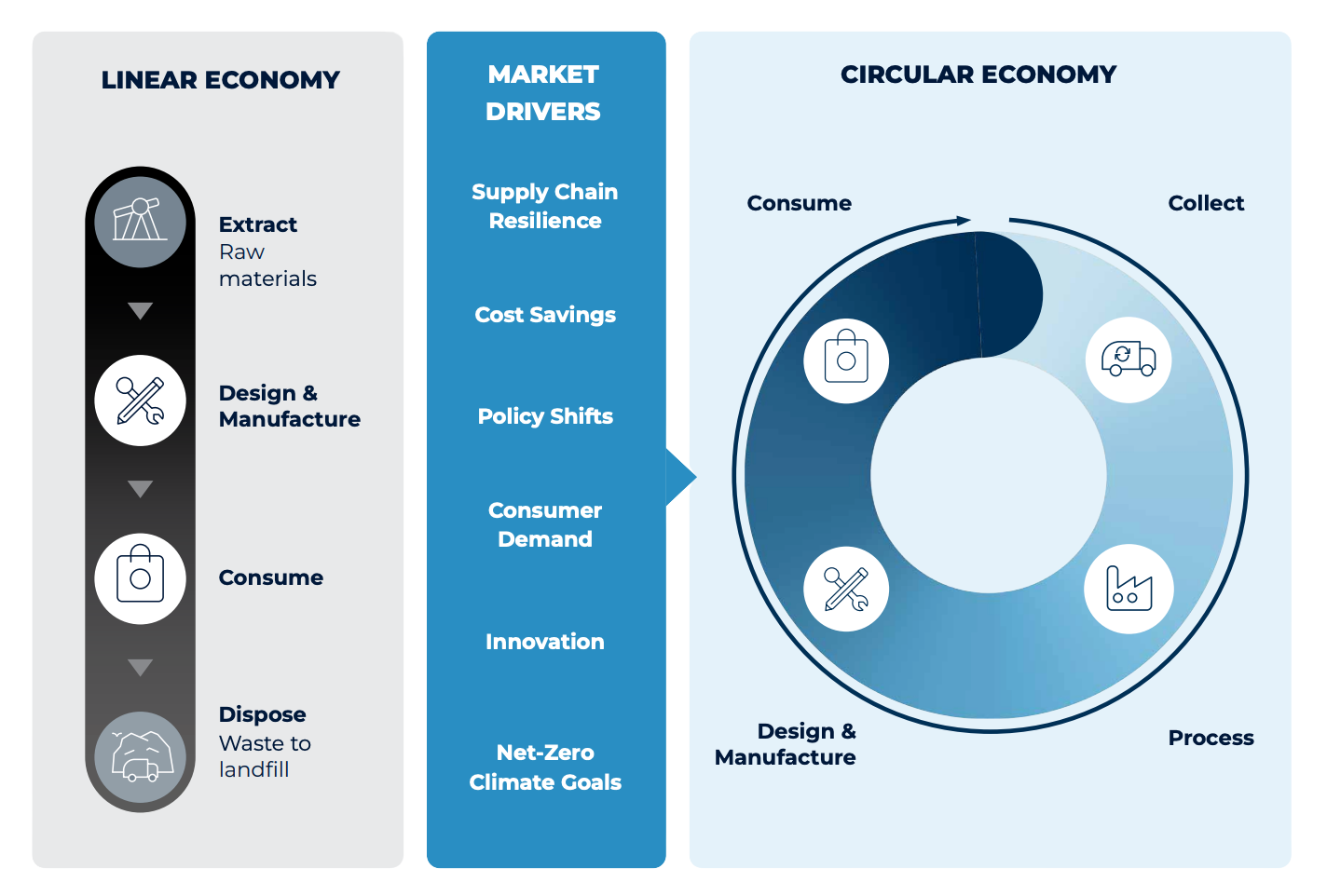
Scaled, multi-pathway haulers are increasingly the preferred counterparty for chain operators and institutional foodservice accounts trying to meet sustainability commitments without managing multiple vendor relationships. Agri-Cycle's buy-and-build approach — accelerated by Closed Loop Partners' private equity acquisition of the company in 2025 — positions it to offer a single coordinated provider across more than 30 states, a consolidation play familiar to operators who have watched similar roll-ups reshape the linen, pest control, and broadline distribution categories.
"The food and organics recovery market is large and fragmented. It needs scaled operators that combine flexible logistics, local relationships and access to processing to keep more materials in circulation," said Jackson Pei, Managing Director and Co-head of Closed Loop Private Equity. Dan Bell, founder and CEO of Agri-Cycle, framed the expansion as infrastructure-first: reliable collection is the prerequisite for any downstream recovery pathway to function at capacity.
Outlook for the Sector
The acquisitions signal continued consolidation pressure in the food waste logistics sector, a category that has historically been served by small, regional independents with limited capital for route expansion or processing investment. As municipal mandates spread and large foodservice chains set public waste diversion targets, the demand signal for scaled operators is strengthening. For operators evaluating diversion partners, Agri-Cycle's expanded geographic coverage and multi-pathway capability — composting, anaerobic digestion, and animal feed under one contract — reduces the coordination burden that has historically made compliance expensive for multi-unit chains and institutional accounts.
Learn more about sustainability and supply-chain developments in food waste and circular economy trends and foodservice supply chain news.
Written by Michael Politz, Author of Guide to Restaurant Success: The Proven Process for Starting Any Restaurant Business From Scratch to Success (ISBN: 978-1-119-66896-1), Founder of Food & Beverage Magazine, the leading online magazine and resource in the industry. Designer of the Bluetooth logo and recognized in Entrepreneur Magazine's "Top 40 Under 40" for founding American Wholesale Floral, Politz is also the Co-founder of the Proof Awards and the CPG Awards and a partner in numerous consumer brands across the food and beverage sector.