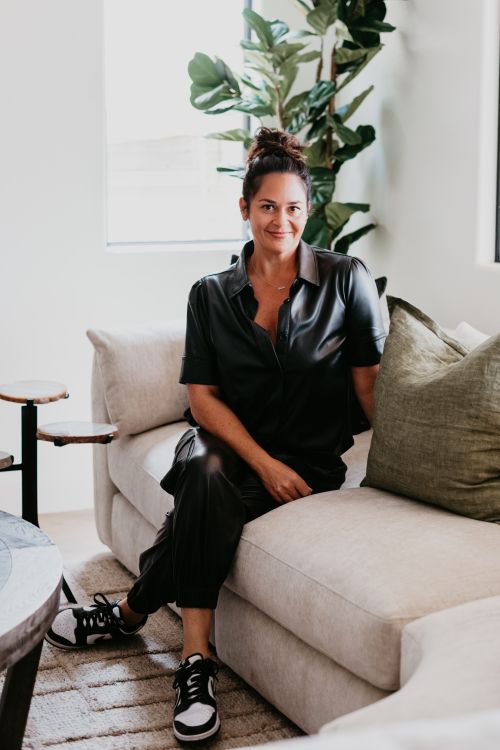
Antonia Lofaso doesn't do bullshit. Long before "chef-driven brands" became consultancy jargon, the Scopa Italian Roots, Black Market Liquor Bar, and DAMA chef-owner built her empire on instinct, not algorithms. While others chased trends, she rooted herself in something harder to fake: emotional hospitality that actually matters to the guest walking through the door.
Now, as the restaurant industry lurches between labor crises, social-media spectacle, and rising costs, Lofaso remains one of the most consistent voices in hospitality—on Top Chef, Tournament of Champions, and inside her own kitchens. She's also a founder of Chefletics, designing chef jackets that actually fit women's bodies, and a mother trying to reconcile personal ambition with the soul-crushing hours the business demands.
"I really pay attention to my intuition," Lofaso says. "I choose projects and work with people that I love and respect. If it doesn't feel right, I don't do it." That clarity comes through in restaurants that feel personal without being precious. "It took me a long time to understand that to really connect with people through food, I needed to share what was most personal to me. People feel it, and then it's not just about a popular restaurant; it feels like a place that they are connected to."
On authenticity, Lofaso's practical: "Good food is good food. Classics are always loved and are timeless. It took me a long time to be okay with not being the most creative, but definitely giving the people what they love." She designs for her 26-year-old daughter and her 75-year-old father. If both show up happy, she's done her job.
As for television inflating chef egos into entertainment brands, Lofaso sees it differently: "Chefs are teachers in the deepest parts of themselves." Whether you're on camera or running a line, the obligation is the same—educate, mentor, serve. The medium doesn't excuse the mission.
On post-pandemic survival, she's blunt. "I have watched incredible restaurants and operators close post-pandemic, people who love this industry with so much loyalty. That is heartbreaking." Her advice: "People are eating out less, and because of that, they have to choose you. So don't give them any reason not to choose you."
Burnout? She reframes it. "Usually, when people 'burnout' it's because what they are doing or how they are doing it isn't serving them. Feeling uncomfortable reminds you to adjust what you are doing." Success, she admits, has cost her presence as a mother. She's negotiated that tension, not solved it.
In an era when restaurants are built for feeds more than floors, Lofaso's approach feels almost radical: build for people, not platforms. It's a harder path. But after two decades, it's the one still standing.