For the third consecutive year, Burger King is launching a limited-edition holiday advent calendar — and based on prior sell-out velocity, operator marketers will want to study what the 19,000-unit QSR chain is doing to generate consumer urgency around branded merchandise. The 2026 BK Advent Calendar goes on sale at BKAdventCalendar.com beginning November 16, with 110 units available daily through November 20, priced at $19.54 — a figure chosen to reference the year the brand was founded.
The Product
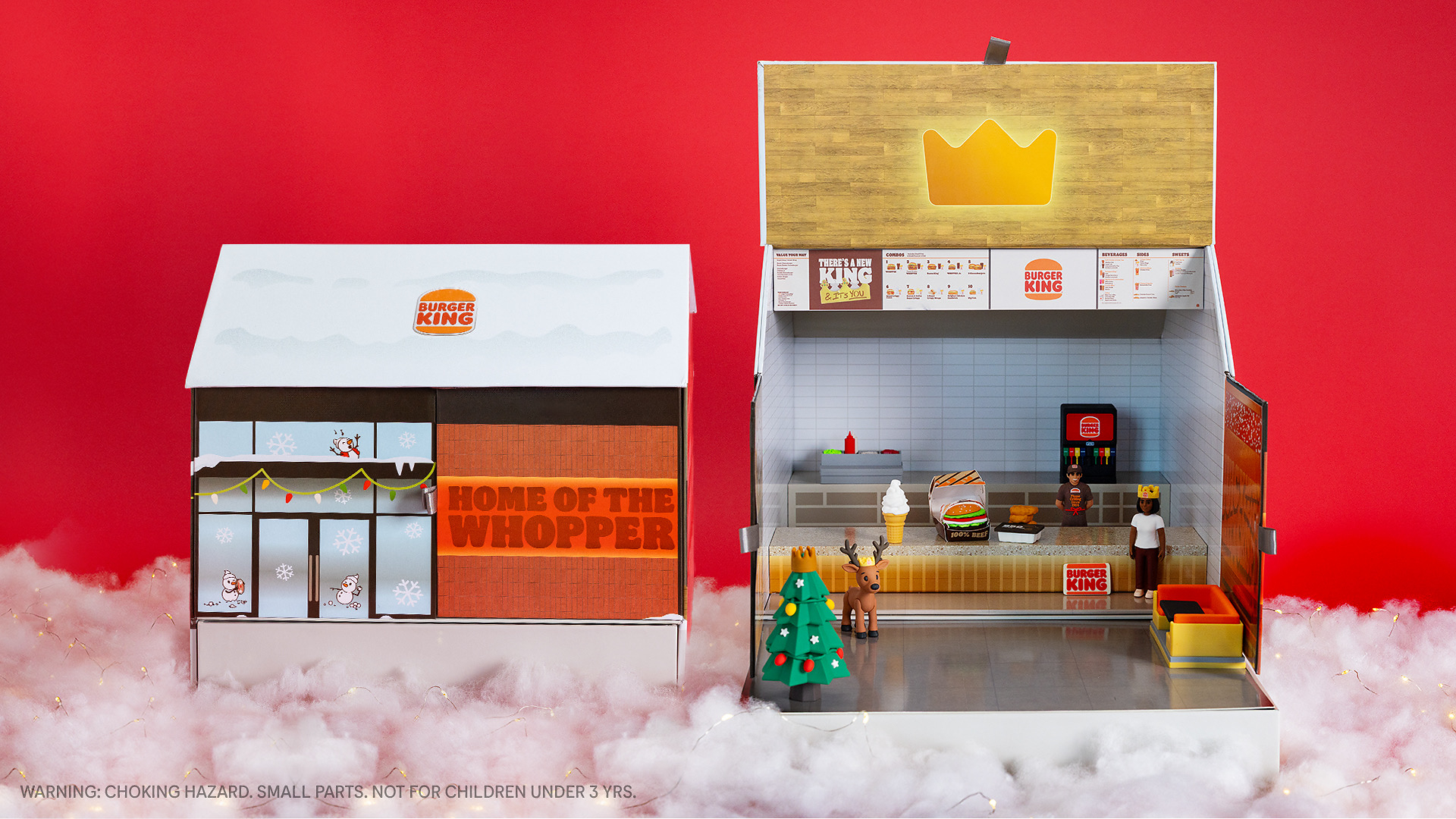
The 12-day calendar moves beyond traditional chocolate-filled formats into collectible territory: each door reveals a miniature physical piece of a Burger King restaurant, including a Whopper in the brand's new box packaging, nuggets, a soda fountain, the King's Booth, a team member figure, and holiday-themed accessories. On Day 12, the components combine into a complete, displayable miniature BK location. A miniature $5 digital coupon redeemable via the Royal Perks loyalty app is tucked behind the final door — a tactic that ties the physical collectible directly into the chain's digital engagement funnel. Joel Yashinsky, Chief Marketing Officer for Burger King US&C, noted that the calendar lets families "bring a little BK home for the holidays" while showcasing menu items — including the new nuggets — that defined the brand's 2026 lineup.
Loyalty and Urgency
The mechanics here are deliberate. By limiting daily inventory to 110 units and running the sale window to just five days, Burger King is engineering scarcity at a scale that drives social amplification without meaningful supply-chain exposure. The prior two editions each sold out in under five minutes — a data point the brand is leaning into explicitly to prime the drop dynamic again this year. The embedded $5 Royal Perks coupon, redeemable only through the BK app and only by registered loyalty members, is a direct conversion tool: the collectible becomes an acquisition vehicle for the chain's digital ecosystem. For franchise operators watching loyalty program ROI, that linkage between physical LTO merchandise and app-driven redemption is an increasingly common playbook across the QSR segment, with competitors in the burger and chicken dayparts deploying similar strategies around holiday drops and limited menu activations.
The mini-format trend the brand is tapping also has genuine staying power in foodservice merchandising. Miniature versions of menu icons — from Crocs collaborations to plush food mascots — have become a proven mechanism for QSR chains to extend brand relevance into lifestyle categories, particularly among younger consumer cohorts who drive social content. For a chain of Burger King's franchise scale, nearly all 19,000 locations are independently owned, so any initiative that builds brand equity and app registrations without requiring franchisee capital outlay carries outsized system-level value. The Royal Perks coupon embedded in the calendar is effectively a subsidized trial mechanism that benefits the broader royalty-generating base.
For operators tracking QSR marketing and LTO strategy or franchise brand development, the Burger King advent drop is a case study in low-inventory, high-velocity merchandise as a loyalty acquisition channel — one that costs the system very little while generating disproportionate earned media ahead of the competitive holiday daypart season.
Written by Michael Politz, Author of Guide to Restaurant Success: The Proven Process for Starting Any Restaurant Business From Scratch to Success (ISBN: 978-1-119-66896-1), Founder of Food & Beverage Magazine, the leading online magazine and resource in the industry. Designer of the Bluetooth logo and recognized in Entrepreneur Magazine's "Top 40 Under 40" for founding American Wholesale Floral, Politz is also the Co-founder of the Proof Awards and the CPG Awards and a partner in numerous consumer brands across the food and beverage sector.