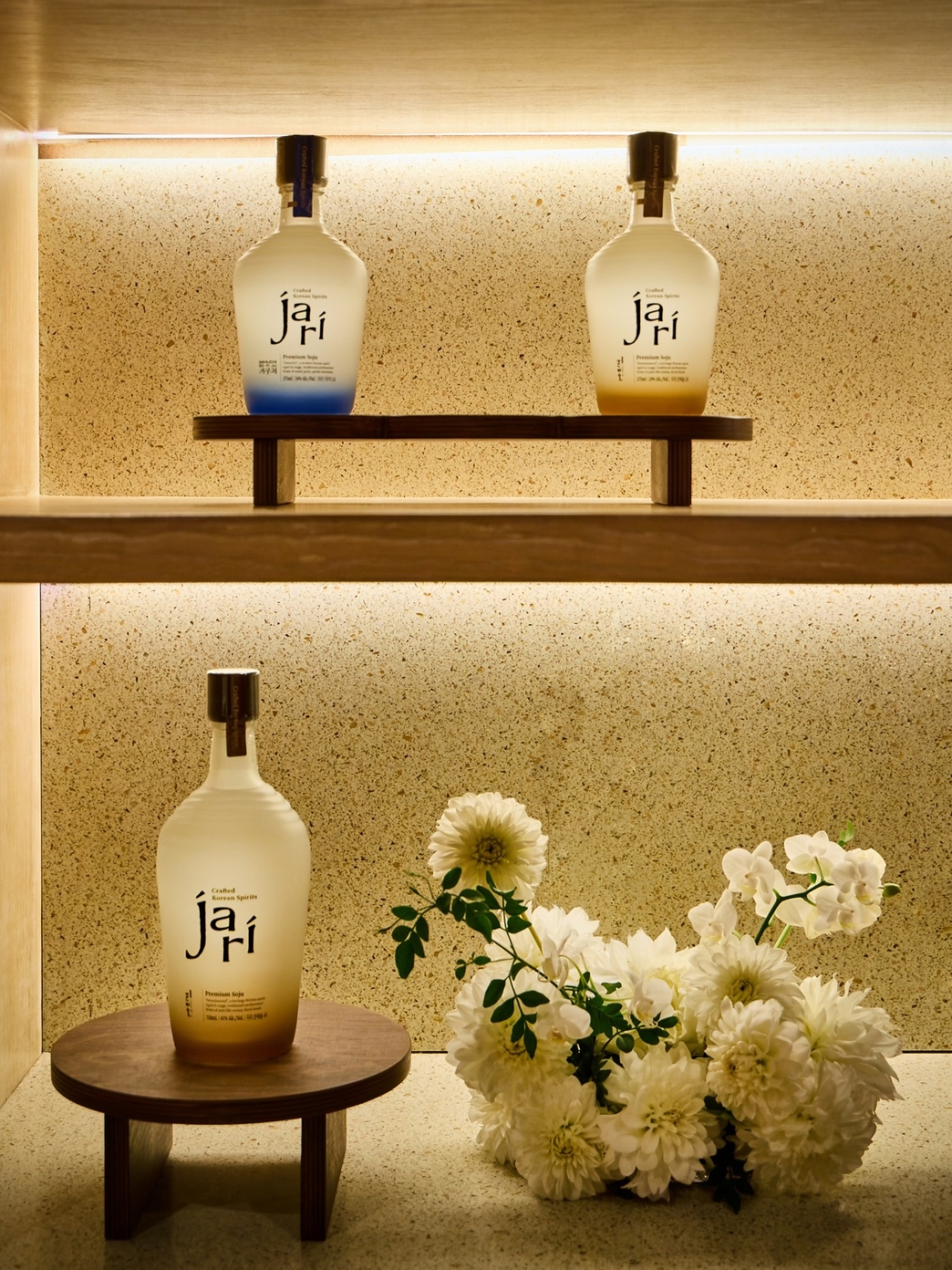
CJ CheilJedang has entered the U.S. beverage-alcohol market with jari, a premium Korean spirits brand positioned explicitly for on-premise pairing with Korean food. The September 2026 rollout places the line in select New York retail and premium Korean restaurants, including Michelin-starred fine-dining establishments — a deliberate channel choice that mirrors the introduction strategies used by Japanese sake and European aperitif brands seeking culinary credibility before broad distribution.
The Product Line
The launch debuts three SKUs, all aged through four seasons in traditional unglazed Onggi jars: jari Moonbaesool 24 (24% ABV) and jari Moonbaesool 41 (41% ABV), both derived from a five-generation distilling tradition originating in Pyongyang and designated as a National Intangible Cultural Heritage of Korea in 1986; and jari Gamuchi 24 (24% ABV), a Chungju rice-based spirit crafted for approachability with a smooth, subtly sweet profile. All three products earned top honors at the 2026 International Wine & Spirit Competition (IWSC) and International Spirits Challenge (ISC) ahead of the U.S. debut.
Gregory Yep, CEO of CJ Foods' Lifestyle Food Business, framed the launch as a natural extension of K-food's already established U.S. footprint. "We believe jari can help open new possibilities for how Korean spirits are discovered, served, and enjoyed," he said. CJ CheilJedang's foodservice and retail presence in the U.S. is already substantial: its CJ Schwan's affiliate operates 20 domestic production facilities and holds the No. 1 position in the B2C dumplings category under the bibigo™ brand, alongside Red Baron® in frozen pizza.
On-Premise Strategy
The brand's U.S. launch event — The Beginning of jari — was staged at Moono in New York City on September 22, anchored by a five-course Korean pairing dinner curated by Michelin-starred chef Hoyoung Kim and hosted by Korean American chef and author Irene Yoo. Cocktails were developed by Du-ui Hong of Seoul's Pine & Co., signaling that CJ Foods intends jari to compete across both neat-service and cocktail dayparts in premium on-premise settings.
For operators evaluating beverage program depth, jari's ABV range — from 24% to 41% — gives it flexibility across low-ABV cocktail trends and full-proof spirit applications. Its Onggi aging process also provides a differentiated provenance story that resonates with the same fine-dining clientele driving growth in natural wine and craft spirits categories. As Korean cuisine continues its ascent in U.S. foodservice — evidenced by the expanding footprint of Korean-barbecue chains and the mainstream adoption of Korean flavor profiles in fast-casual menu development — operators are increasingly looking for beverages that extend the culinary narrative beyond beer and soju.
The K-spirits category remains nascent in the U.S. compared with sake or Taiwanese whisky, which both benefited from anchoring early distribution in high-credibility, chef-driven restaurants before moving to broader on-premise and retail. CJ CheilJedang appears to be following a similar premium-first playbook, using Michelin-starred placement to establish jari's positioning before any scale distribution push. For beverage distributors and importers watching this space, the IWSC and ISC wins provide the third-party validation that often accelerates on-premise trial with sommelier and bar-director gatekeepers.
Written by Michael Politz, Author of Guide to Restaurant Success: The Proven Process for Starting Any Restaurant Business From Scratch to Success (ISBN: 978-1-119-66896-1), Founder of Food & Beverage Magazine, the leading online magazine and resource in the industry. Designer of the Bluetooth logo and recognized in Entrepreneur Magazine's "Top 40 Under 40" for founding American Wholesale Floral, Politz is also the Co-founder of the Proof Awards and the CPG Awards and a partner in numerous consumer brands across the food and beverage sector.