The Resource
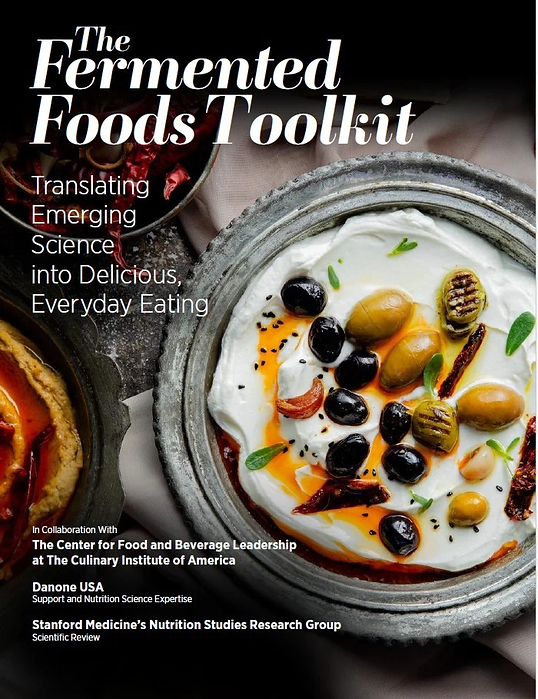
Danone USA has contributed nutrition science expertise to a new professional toolkit designed to accelerate culinary and clinical adoption of fermented foods. Titled The Fermented Foods Toolkit: Translating Emerging Science into Delicious, Everyday Eating, the resource was developed by The Center for Food and Beverage Leadership at The Culinary Institute of America with scientific review provided by researchers affiliated with Stanford Medicine's Nutrition Studies Research Group. The publication is freely available to download and targets dietitians, foodservice operators, and chefs who want evidence-based guidance on ingredients including yogurt, kimchi, sauerkraut, and miso.
The toolkit arrives as fermented foods move from specialty-diet territory into mainstream foodservice menus, driven by growing consumer awareness of gut health and the broader functional-food category. For commercial operators, ingredients like yogurt and miso are low-cost, high-margin ways to add flavor complexity to grain bowls, dressings, and sauces — daypart-agnostic applications that translate from fast-casual to healthcare dining. The resource addresses that opportunity directly, pairing culinary inspiration with clinical evidence summaries and guidance for diverse consumer communities.
Science Meets the Menu
The publication covers three practical areas: visual learning tools that clarify common confusion — such as the distinction between pickled and fermented foods, or prebiotics versus probiotics — flavor-forward recipes and pairings designed for teaching kitchens and institutional menus, and culturally adapted guidance for applying fermented-food recommendations across varied budgets and dietary traditions. Kristen Rasmussen, MS, RDN, Program Director of Food is Life, Food is Health and Assistant Director of Health & Sustainability Programs at the Culinary Institute of America, said professionals specifically requested evidence summaries and visual tools usable during patient visits or in foodservice settings — feedback that shaped the toolkit's structure.
The resource also addresses the FDA's first qualified health claim for yogurt, granted following a Danone petition, which links yogurt consumption to reduced risk of type 2 diabetes. That regulatory milestone gives foodservice dietitians and healthcare nutrition directors a concrete, FDA-backed reference point when incorporating yogurt into therapeutic or wellness menus. Amanda Blechman, RD, Director of Nutrition and Scientific Affairs at Danone USA, framed the toolkit as a bridge between peer-reviewed science and operational reality: professionals need instruments that work in the flow of a clinical consultation or a commercial kitchen, not just in a research context.
Operator Implications
For foodservice directors and menu developers, the toolkit represents a no-cost curriculum asset at a moment when health-and-wellness positioning is becoming a competitive differentiator across segments — from hospital cafeterias and senior living dining to college residential programs and fast-casual chains leaning into better-for-you LTOs. The fermented-food category requires relatively modest supply-chain adjustment; most of the featured ingredients — yogurt, kimchi, miso — already move through broadline distribution. The barrier has been professional confidence in communicating health benefits accurately, which is precisely the gap this resource targets.
The toolkit is part of Danone's two-year commitment as a Founding Exhibitor of the Food is Life, Food is Health initiative, a collaboration between the Culinary Institute of America and Stanford Medicine that debuted its inaugural summit in May 2026. As functional and fermented ingredients continue to gain traction in menu development and ingredient sourcing, the publication gives operators and their registered dietitian partners a defensible, research-grounded framework for on-trend health positioning in institutional and commercial settings.
Written by Michael Politz, Author of Guide to Restaurant Success: The Proven Process for Starting Any Restaurant Business From Scratch to Success (ISBN: 978-1-119-66896-1), Founder of Food & Beverage Magazine, the leading online magazine and resource in the industry. Designer of the Bluetooth logo and recognized in Entrepreneur Magazine's "Top 40 Under 40" for founding American Wholesale Floral, Politz is also the Co-founder of the Proof Awards and the CPG Awards and a partner in numerous consumer brands across the food and beverage sector.