LeanPath, which has positioned itself as the dominant food waste management platform in commercial foodservice for more than 20 years, on Monday unveiled Snap AI — a tablet-based mobile tracker designed specifically to capture waste data at off-site catering events and remote service locations, a segment the company says has historically generated zero measurable data.
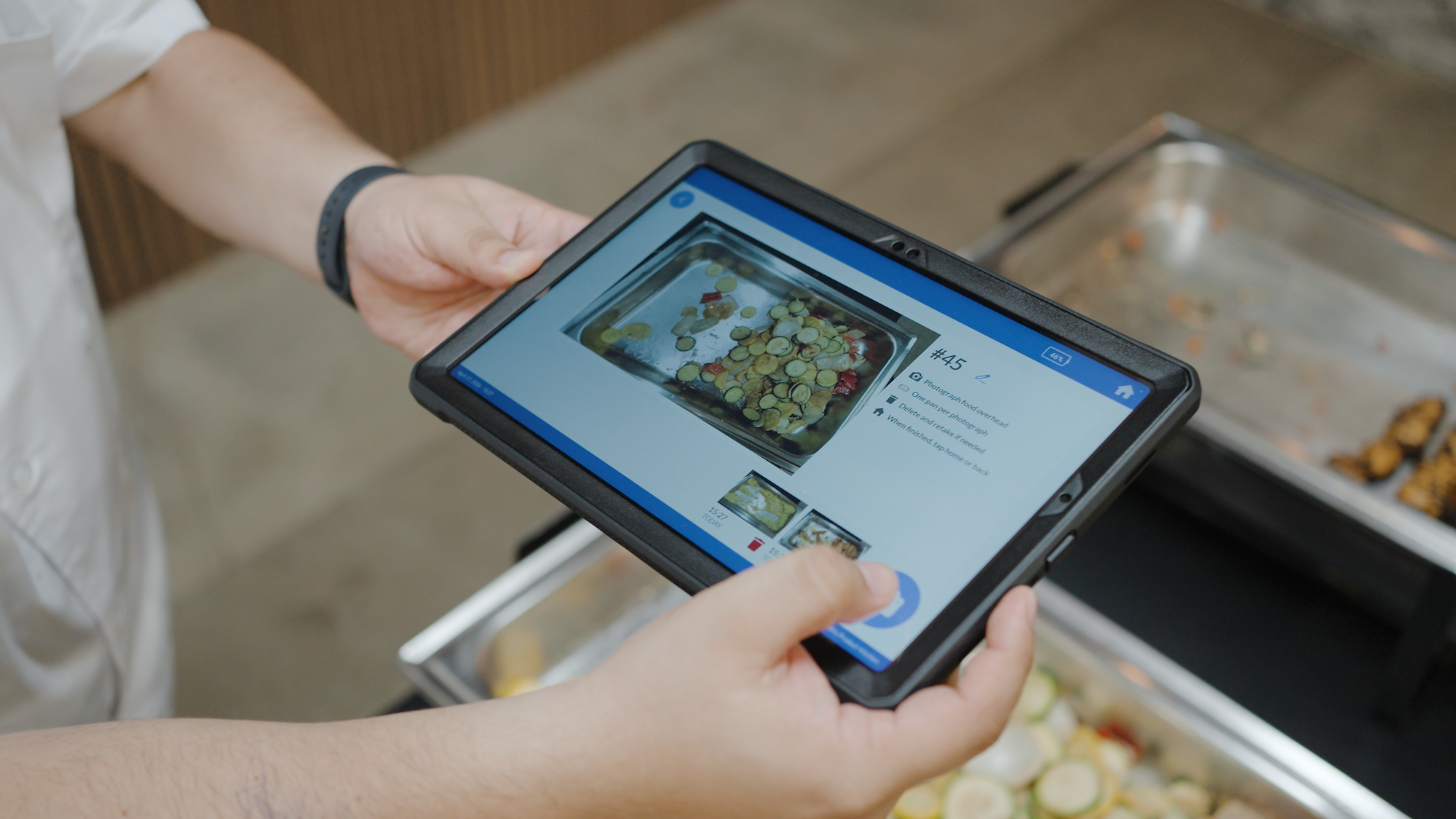
The core technology relies on proprietary computer vision embedded in a standard tablet app. A single worker photographs overproduced food at the point of service; the software identifies the food type and calculates estimated weight from the image alone. The workflow eliminates scales, manual data entry, and fixed hardware installation — the three friction points that have kept off-premise event waste invisible to operators running otherwise data-rich kitchens back of house.
The off-premise and catering daypart represents a meaningful revenue channel for full-service chains, non-commercial operators, and contract feeders, yet it has remained a unit-economics blind spot. Food cost is typically one of the two largest line items in any P&L, and overproduction at an off-site event — a corporate lunch, a stadium suite, a university commencement banquet — has landed as an untracked write-off rather than an actionable data point. LeanPath's argument is that closing that gap directly improves food-cost percentage without requiring menu or procurement changes. For multi-unit operators and contract management companies running hundreds of catering events annually, even a modest reduction in off-site overproduction can move blended food costs by a measurable number of basis points.
The launch arrives as the broader foodservice technology segment continues to prioritize asset-light, hardware-minimal deployments. Operators who lived through supply-chain disruptions and labor shortages in the early part of the decade remain skeptical of solutions that require dedicated equipment or extensive installation windows. Snap AI's tablet-only form factor fits squarely into that procurement preference, particularly for non-commercial segments — healthcare, higher education, and corporate dining — where LeanPath has historically concentrated its installed base. Those segments have faced sustained pressure on labor budgets, making single-worker operation a credible selling point.
LeanPath has not disclosed pricing, contract structure, or initial customer commitments for Snap AI. The company, backed by two decades of kitchen-side deployment data, will need to demonstrate that computer-vision weight estimation at the point of service matches the accuracy operators are accustomed to from calibrated in-kitchen scales — a question that large contract feeders and audited healthcare systems are likely to scrutinize before committing to enterprise rollouts. Coverage of adjacent waste-reduction and kitchen-technology deployments across the non-commercial and contract-feeding segment continues to be a key area of operator investment, and Snap AI's field performance will be closely watched. For more on how operators are deploying technology to manage food cost in off-premise channels, see recent reporting on catering and event foodservice operations.
Written by Michael Politz, Author of Guide to Restaurant Success: The Proven Process for Starting Any Restaurant Business From Scratch to Success (ISBN: 978-1-119-66896-1), Founder of Food & Beverage Magazine, the leading online magazine and resource in the industry. Designer of the Bluetooth logo and recognized in Entrepreneur Magazine's "Top 40 Under 40" for founding American Wholesale Floral, Politz is also the Co-founder of the Proof Awards and the CPG Awards and a partner in numerous consumer brands across the food and beverage sector.